

Slurry inoculants could help boost nitrogen content
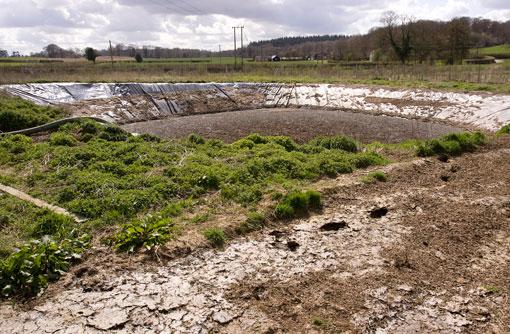
Slurry inoculants could help farmers improve slurry nitrogen content by more than 17% and reduce their artificial fertiliser use.
Trail work by independent dairy specialists Kingshay found applying the dual inoculant SlurryBugs and SlurryBooster to lagoon stored slurry resulted in an enhanced nitrogen value equating to an extra income of £2,700 on a 200 cow herd over an eight month winter period.
The 12 week trial involved introducing the inoculant at the recommended rate to the fresh cow slurry at Bridge Farm, Somerset. The slurry was analysed at four weekly intervals for total nitrogen and ammonium nitrogen content and compared with a control which remained treatment free.
Total nitrogen content of the SlurryBugs and SlurryBooster treated slurry increased by a significant 25% in the final test and averaged 17.5% higher than the control treatment over the trial period, explains Kingshay’s technical manager Peter Shipton.
“Furthermore, the treated slurry’s ammonium nitrogen content peaked at 22% higher than the control after four weeks, and achieved an average 17% over the control over the 12 weeks. Added together these increases in total nitrogen raised the level of plant available nitrogen by 0.53kg/tonne freshweight slurry and enhanced its value by 51p/tonne.”
Liz Russell, managing director of EnviroSystems the firm behind SlurryBugs and SlurryBooster, said: “These findings confirm the potential opportunities available to all farmers to boost slurry nutrient value and reduce their fertilizer spend next spring by introducing one simple minimal cost treatment which comprises two active ingredients.”
SlurryBooster is a complex micronutrient formulation that increases the bacterial activity in the slurry while SlurryBugs contains naturally occurring bacteria which metabolise ammonia, reducing odour and preserving N content.
“These same bacteria also produce enzymes that break down the organic material in slurry. When introduced together to slurry in the lagoon, they supply an inoculation that not only improves the nitrogen concentration, but also reduces the need to mix by ensuring efficient conversion of solid material in to liquid nutrient.”
She added: “The fact the nitrogen content in the treated slurry is increased by 25% after 12 weeks indicates that N content in stored slurry can be preserved effectively whilst being stored through the winter in readiness for efficient spreading in more than one application, if possible, in early spring. Testing the slurry is advised prior to spreading to more accurately calculate the reductions in bought in fertilizer.”