Crop Watch: Weed and pest control begins in oilseed rape
Thoughts this week turned to protecting oilseed rape crops, which in most areas were growing away well, and to blackgrass control in cereals.
Oilseed rape stands ranged from six leaves to just drilled on AICC crop consultant Paul Sweeney‘s Cheshire/Lancashire patch, with many growers in the latter county still tied up with harvest until last week.
“Some have six leaves, while others have only gone in this week. But we are over a week ahead of last year and soil conditions are excellent,” said Mr Sweeney.
“After suffering cabbage root fly last year, which wrecked some crops, we’re taking no chances and are out already with a second treatment of foliar insecticide regardless of seed dressings, which, by the time crops have four leaves, are so dilute as to be ineffective.”
Suffolk-based Frontier agronomist Brian Ross said rape crops were growing well – even some later stands that had emergence problems after heavy downpours.
“If the weather remains warm and wet we will have to think about regulating some crops,” he added.
And he predicted it would not be long before the area received the 20 days of rain needed after 1 August to trigger phoma infections.
“Monitoring and receiving phoma alerts will be important. Two sprays this autumn look to be on the cards if conditions carry on as they are.”
Southwest Agronomy’s Stephen Harrison also reported well established oilseed rape. “High numbers of turnip saw fly on volunteers do not appear to have manifested themselves in the growing crop.”
August sowings had around three leaves and were growing strongly, while early to mid-September crops were a little slower.
“Volunteer cereals and grass weeds have emerged rapidly. Many crops have had tepraloxydim materials to target blackgrass, which despite high dormancy predictions, is growing happily. No phoma leaf spotting is evident yet,” he added.
A good dose of rain was needed in Hampshire and Wiltshire to give small oilseed rape plants a push, said Swaran Bachoo of Agrovista.
Early-drilled fields were at the two-leaf stage, while later-drilled fields were at the cotyledon stage and struggling in dry soils.
The well consolidated, fine seed-beds coupled with dry weather meant there was little slug damage in the rape crop.
“But we need at least 16mm of rain to help small plants grow and, more importantly, to let grass weeds and volunteers germinate before drilling cereal crops,” he said.
“High dormancy has been forecast and there is little chitting. It will be imperative to choose the right products for blackgrass control in cereals.”
Mr Ross agreed. “There are some more product choices this autumn – though not new active ingredients – and these could certainly help broaden the strategy where difficult blackgrass is a problem.”
Wheat seed bills have been forced up by this year’s very high thousand grain weight, Mr Harrison noted.
“The highest I have seen is home-saved Gallant at 68g, necessitating a seed rate of 170 kg/ha to sow 250 seeds/sq m.”
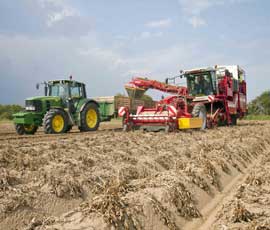
Heavy downpours this week had further delayed the already slow potato harvest in the east of Scotland, said Matthew Smallwood, SAC senior potato consultant. “Waterlogging is the major problem with most fields having some soft rot patches.”
Planning for harvest and store loading was going to be critical this season, he noted. “Know the quality of field before harvest and how you are going to handle it to maximise quality and minimise risk.”