Oilseed rape focus brings profit for Western Barometer
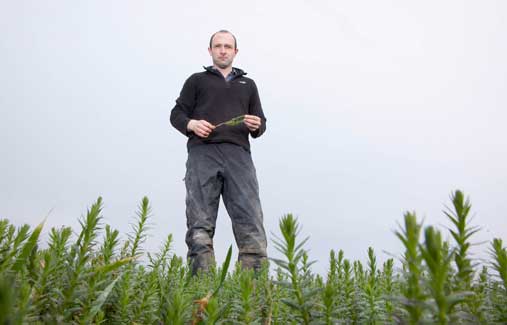
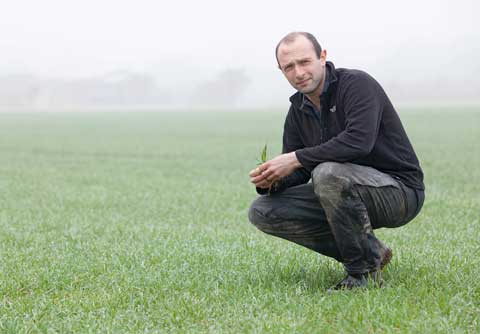
Tweaking the rotation to take advantage of the high oilseed rape gross margins is typical of the management skill of our Western Barometer farmer, James Taylor.
Identifying that growing 80ha of spring barley for seed in the rotation would produce a £25,000 uplift in gross margin is typical of the attention new Western Barometer farmer, James Taylor pays to the management of The Co-Operative Farms’ Down Ampney Estate.
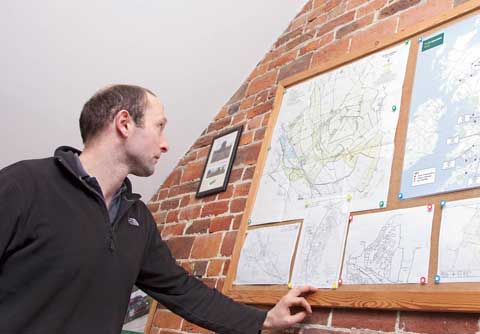
Extending over 2,160ha, the business consists of four separate farms – the 1,320ha block of owned land on Down Ampney Estate, not far from Cirencester, plus a rented block of 320ha near Swindon, and two further blocks totalling 520ha on contract farming agreements near Hungerford.
In total, the blocks are about 40 miles apart, says Mr Taylor. “It sounds a long way, but they are fairly equally spaced, and if I have the management right, we can normally bounce from one to another and back again.”
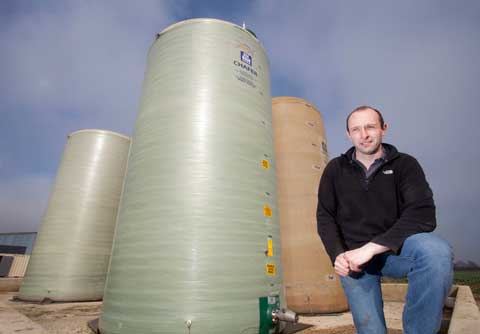
Each farm has its own liquid fertiliser tank and chemical store supplied by Agrovista to help with logistics.
“Most of the ground at Down Ampney is over gravel, so we are very reliant on rain in June and July to keep crops going to reach full potential,” Mr Taylor says. “And we have certain fields that don’t yield that well.”
That is what prompted the switch to spring barley on a further 80ha around the farm. “We have about 80ha down by the Thames, which tends to flood in the winter, on which we haven’t dared grow a winter crop, although next year we’re going to risk oilseed rape.
“But because it has only ever grown one variety of spring barley and it is clean ground, we’ve switched it onto a seed contract this year.
“And so we can keep seed production up, I’ve gone through the rest of the estate and identified another 80ha where the gravel is very near the surface, where it is difficult to grow big yields of wheat.
“So those two blocks will alternate for spring barley for seed, and actually when I did the sums, it put a £25,000 uplift on the bottom line just by doing something different with them.”
Both blocks will also grow oilseed rape in the rotation, which is less affected by the drought-prone soils, he says. “I think it is mainly because the oilseed rape has done its growing by the time the moisture stress starts to hit, whereas the wheats are still trying to grain fill, which is where we hit trouble.”
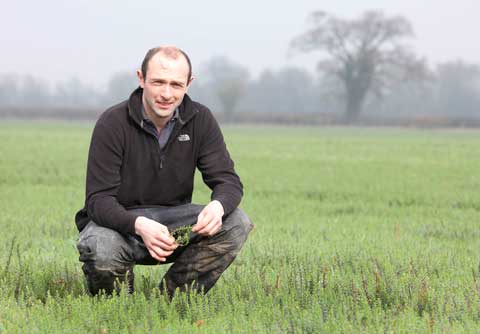
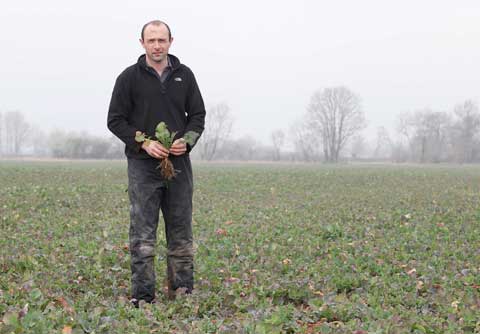
Oilseed rape has overtaken wheat as the highest gross margin crop on the farm, with yields averaging 4.1-4.3t/ha, which has led to a change in emphasis in the rotation.
“Most growers when thinking about rotation are aiming to gear everything for a first wheat. We’re now trying to gear things to getting oilseed rape in once every three years. This year we’ve swapped things around to put just over 800ha in.”
To help cope with the extra demands at establishment time, he is experimenting with winter barley this season to allow an earlier start. “Ideally we want to get all of the rape in by the end of August.”
But he does have concerns about whether the move will increase problems with blackgrass. “We don’t have carpets of blackgrass, but we’ve got enough that if we take our eye off it for a season, the way blackgrass seed return is, it will just explode.
“We’ve done a flufenacet pre-emergence, and the higher rate of Axial (pinoxaden), and we’re hoping the barley will smother it out, but it is a struggle. I’m just a bit nervous of letting it get away from us.”
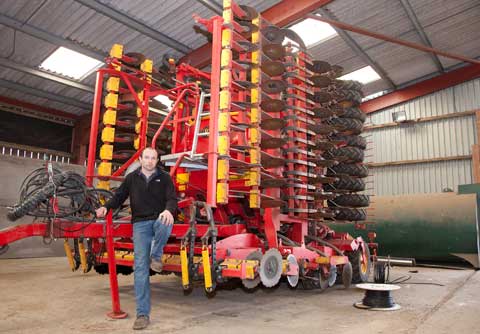
Oilseed rape establishment is either via a Simba Flatliner with a Stocks seeder unit or a 5m Vaderstad Topdown with a biodrill. Both work well on the main unit at Down Ampney where the land is fairly easy working, he says. “The Topdown tends to be used on the thinner, flintier soils because if used the sub-soiler you’d become back with stubs.
“But the beauty of the sub-soiler is that we put it on the front of the John Deere 8530 that pulls the drill, and you can set one man away with five or six bags of seed and know there is oilseed rape going in the ground all day.”
The farm uses low seed rates of 30-35 seeds / sq m at the beginning of the season, rising to 40 seeds / sq m at the end. “It is definitely the secret to good oilseed rape yields. A low plant population leaves plenty of space and allows the plants to branch.”
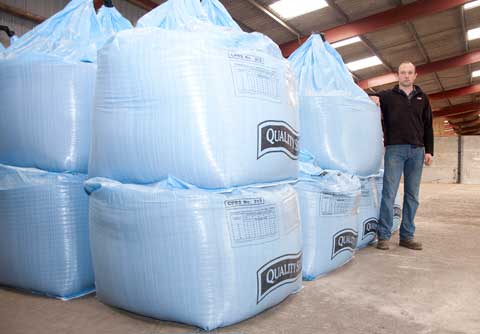
Another secret is putting nitrogen and phosphorus in the seed-bed to aid establishment, he says. “We apply liquid 16.5:33:0 to the stubble, which is worked in with the cultivator – I haven’t found an injection method I like yet.”
Slug pellets are hardly ever needed for oilseed rape, he says. “Our ground works down quite fine, we roll it in well, and the fertiliser helps get it away quickly. If we get it right, you don’t need slug pellets.”
Inputs are used to push the crop hard – two autumn fungicide sprays are used as a matter of course, a growth regulatory one in the early spring, and two at flowering. “Oilseed rape is not a break crop – we farm it intensively. Just a 0.1t/ha increase in yield makes a huge difference to the bottom line.”
Varieties change regularly on the farm. Monsanto varieties dominate this year: Extrovert, Excellium, ExPower and DK Cabernet sitting along side a small area of Fashion. “We believe in hybrids – their vigour helps get them away quickly. We could be 100% hybrids next year, unless the Cabernet continues to do well.”
The attention has paid off in higher yields. In five years, oilseed rape yields on the farm have risen from 3.3t/ha to 4.3t/ha, with the advice from CMi’s Chris Green crucial, Mr Taylor says.
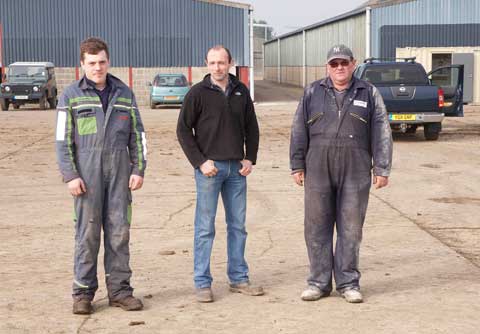
Agrovista’s Tim Bullock is another key man on the farm, helping the BASIS-qualified Mr Taylor with the day-to-day agronomy. “He really helps me question what we’re doing.”
Wheat is split between milling and feed. All the milling this season is Gallant, with Solstice being discarded because of its poorer disease resistance and yields. The area grown is designed to fill one of the grain stores on the farm – this year about 2,000t is the target.
Total storage on the farm is increasing this season to over 10,000t, which will enable the business to hold onto the oilseed rape rather than selling immediately at harvest. “If we get that right, it should add another £25,000.”
As part of the changes, the old grain drier has been pulled down, to be replaced by a Svegma drier which is in the final stages of construction.
All the grain is sold through Frontier, with all The Co-operative Farms’ wheat being pooled together. “That allows some flexibility in its movement.”
Feed wheats are the two highest yielding varieties on the Recommended List: KWS Santiago, which has replaced Oakley, and JB Diego, while Duxford is used for the minimal second wheat area.
As with the oilseed rape, inputs are not spared – four fungicide sprays as a matter of course, almost certainly including a SDHI fungicide at flag leaf.
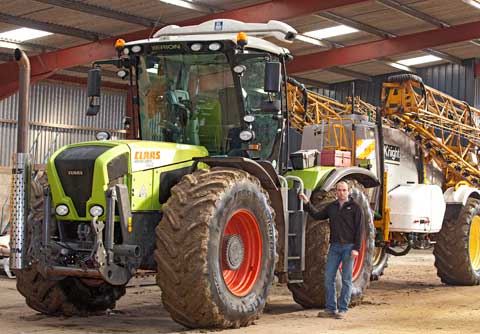
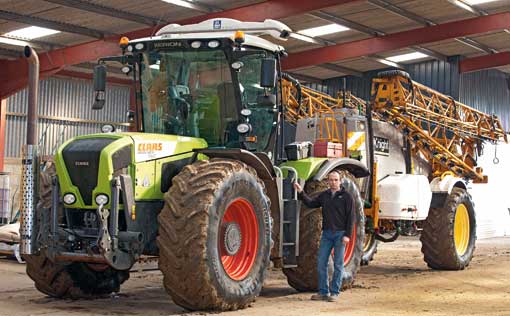
Pulling a 32m, 6,000 litre Knight trailed sprayer with a ClaasXerion 3800 might be unusual, but for the Down Ampney Estate it makes perfect sense.
The Xerion is also the farm’s main cultivation tractor, explains Mr Taylor. “It means we haven’t got the main cultivation tractor sat in the shed for eight months a year – it is out working continually.
“It came about because we had a Crawler sat in the shed, that didn’t do anything bar 10 weeks of the year. So we replaced two 24m sprayers, two tractors and the Crawler, with the Xerion and the larger 32m Knight sprayer. That now does all the fertiliser and a lot of the spraying.
“We’ve massively reduced our fixed costs, and got our main cultivation tractor doing 1,200 hours a year.”
Combines
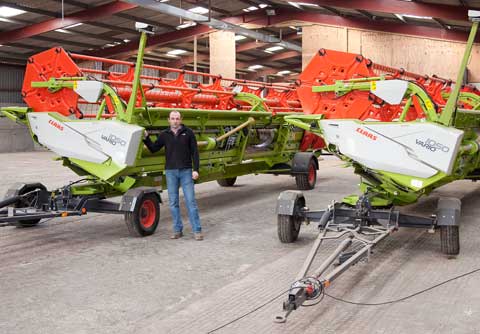
- 2x ClaasLexion 760 TT combines with 10.5m headers
Tractors
- ClaasXerion 3800
- ClaasAxion 840
- John Deere 8530
- John Deere 6920
Cultivators/drills
- 5m Vaderstad Topdown + biodrill
- 3.5m Simba Flatliner + Stocks Turbojet seeder unit
- 2x 13m Cambridge rolls
- 8m Vaderstad Rapid drill
- Kuhn six-furrow plough
- 5m SimbaCultipress
Sprayers/spreaders
- 3800 litre Knight trailed sprayer
- 6000 litre Knight trailed sprayer
- KRM Bogballe fertiliser spreader
Miscellaneous
- Claas Scorpion 7040 loader
- JCB 530-70 loader
- Kubota 8.5t 360 excavator
| Crop | 2012 area (ha) | 2011 yields (t/ha) |
|---|---|---|
| Winter wheat | 868 | Milling wheat 8.25 Feed wheat |
| Oilseed rape | 429 | 4.3 |
| Winter barley | 128 | Not grown |
| Winter beans | 78 | 4.3 |
| Spring barley | 214 | 6.5 |
| Spring wheat | 52 | Not grown |
| Borage | 1.5 | Not grown |
| Linseed | 41 | Not grown |
| Environmental stewardship | 148 | n/a |
| Grass | 200 | n/a |
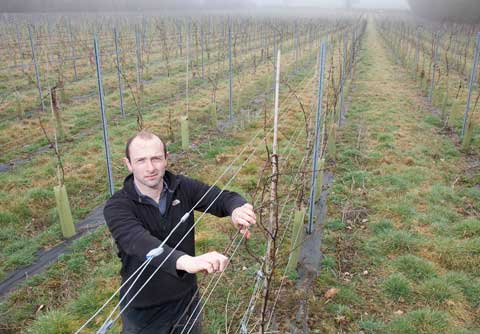
| Vines | 3 | Not grown |