Improved agricultural science key for food production increase
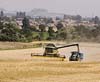
The use of improved agricultural science and technology, including GM crops, will be crucial for a long-term sustainable food supply, a panel of experts at the British Crop Production Council congress agreed during a debate.
“To say the only way of producing enough food is through agricultural science and technology is probably not true,” Bayer CropScience‘s Julian Little, chairman of the Agricultural Biotechnology Council, said. “But without it there is no chance.”
Genetically modified crops were likely to be one of the key advances, he believed. “Up until 10 years ago you could increase production by doing almost as you wanted [in terms of fertiliser and pesticide use], but it has become clear that the current way of doing it won’t work.”
That was why industry had been researching innovations such as drought tolerant maize and better nitrogen use efficiency traits, he said. “And you don’t invent those overnight. The idea that we cannot continue using the same level of nitrogen was recognised a long time ago. These crops produce the same amount of yield with half the amount of fertiliser.”
Genetically modified wheat was seen as a key advance for increasing net profitability in the crop in the USA, Daren Coppock, chief executive officer for the USA’s National Association of Wheat Growers, said.
“We have set a goal to increase yields by 20% by 2018. Biotech will be part of the solution, although not the only one.”
But the RSPB‘s Mark Avery questioned whether continual increases in the amount of food produced could go on forever. There were other limits to growth, such as water and land, and whether we wanted other species on the planet, he explained.
“Eventually we are going to come up against limits of growth, and we can’t build an extension to Earth. Maybe we need to decide how to live within our limits now.
“And if we are going to have more food, it can’t be the same type of agriculture we have now.”
But we needed to look at consumption too, he stressed. “Forty percent of our food is wasted. It doesn’t make sense if you’re talking about food security. And it is us, the developed world, the wasteful world, that is doing it. We ought to be looking at waste, and how food is distributed in more detail.
“We also need to look at what we eat. This year I have gone to four vegetarian days a week. About 40% of cereals are fed to livestock, which is quite a wasteful way of producing food. Moving away from meat consumption could help.
“Also look at how much land is used to produce tobacco. That could be used for food production, and the same argument could be made for wine consumption.”