

Searching for soya replacements in feed
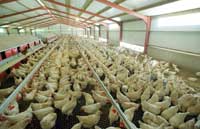
Soyabean meal is a key element in poultry rations, providing a source of high quality energy and protein.
But the UK retailer ban on the use of GM feed in poultry rations, the EU’s strict GM rules combined with tight global supply and demand, means it is becoming ever more expensive and difficult for British producers to use.
“The zero-tolerance policy over non-authorised GM varieties adds a $90/t premium to soya shipped from the USA and South America,” says Bruce Cottrill from ADAS. Any cargoes containing even traces of non-authorised varieties are rejected, at enormous cost to the exporters, who are pricing that risk into future consignments.
In addition, China imported 30% more soya this year than in 2008, and harvest problems in the USA and South America have tightened supplies even further.
Alternatives
So what alternatives are there? Considerable research has been carried out into soya replacements, with varying degrees of success, says Dr Cottrill. “The main factors that determine the scope for inter-changeability are the nutrient composition of the feed; such as energy concentration, the levels and digestibility of amino acids, and mineral content; and any deleterious aspects like anti-nutritional compounds or low palatability.
“Soyabean meal is probably the best quality vegetable protein source used. Generally, it has a high energy concentration as a result of the high digestibility of the fibre and protein, and good levels of essential amino acids, particularly lysine.” It is also a valuable source of phosphorus.
One option is rapeseed meal which contains about 34% protein – three-quarters that of soyabean meal, with a similar amino acid profile. “However, rapeseed meal has a relatively high crude fibre content, which reduces its energy content and hence its value as a feed component,” says Dr Cottrill. Fed alone, it is also unpalatable, but it can be used as a cost-effective and practical alternative to soya, provided compensation is made for its naturally lower energy and protein levels, and its poorer amino acid profile.
Studies have shown that up to 30% of the soya in broiler rations could be replaced by rapemeal without compromising productivity. However, sinapine in rapeseed makes it unsuitable for certain strains of poultry, in particular brown egg layers, which tend to produce eggs with a strong fish-like odour.
Linseed meal is already fed to some laying hens to produce eggs with large amounts of omega-3 fatty acids. It contains high levels of energy, oil and available carbohydrates, but has only 32% protein and low levels of essential amino acids. It also has a high fibre content and its laxative nature renders it unsuitable for widespread inclusion in poultry rations.
Sunflower meal is another option, as it contains up to 45% protein and is relatively rich in sulphur amino acids, although it suffers from low lysine and available threonine levels. “Sunflower meal has been successfully used at levels of up to 20% in broiler and layer diets, but complete substitution of soya resulted in lower productivity and feed conversion,” says Dr Cottrill.
“In theory, it may be possible to achieve complete substitution with the addition of synthetic amino acids, but this would add both to the cost of the ration and its protein content, with economic and environmental implications.”
One exciting new alternative is distillers’ dried grains – a by-product of biofuel production. “Distillers’ grains will become more widely used, with the establishment of biofuel plants in the UK. However, manufacturers of poultry feeds have to produce such a consistent product that they need to have confidence that every batch will be the same. That is one of the problems of sourcing alternative feeds – consistency of supply and quality.”
Legumes
Those seeking a home-grown option could consider legumes like peas, beans and lupins, all of which can be produced in the UK. “Peas are an excellent, highly palatable source of energy and amino acids. They have high levels of lysine and reasonable levels of other essential amino acids.” However, protein digestibility is slightly lower than in soya, and the variability in feeding value makes processors reluctant to include large quantities of peas in the ration.
“For laying hens, peas can be fed at up to 40% of the diet without severely affecting performance, but 7.5-10% is a more practical level to feed without compromising productivity,” says Dr Cottrill. “It is generally recommended that peas do not exceed 20% of broilers’ diets of because of adverse effects on growth rate and feed utilisation.”
Field beans contain 25-30% protein, with good levels of lysine, but they are low in methionine and cysteine compared to soya. High in energy and low in fibre, they are often interchangeable with peas, although some form of processing is usually necessary to combat anti-nutritional factors.
“A mix of alternative proteins is likely to be better than relying on one or two alternatives,” said a recent ADAS report for DEFRA. “This might help to dilute some of the anti-nutritional factors present.”
Trials showed that producers could substitute soya by up 75% with a mix of UK proteins in the form of rapeseed meal, whole rapeseed, field beans and peas, synthetic lysine, threonine and maize gluten, without reducing live weight. However, feed conversion efficiency could be affected, so the benefits of doing so would depend on the relative prices of ingredients and the value of the poultry meat or eggs at the time.