

Improved pig mortality is there for the asking
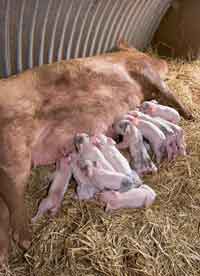
A simple change in management strategy has seen pre-weaning mortality plummet on one outdoor pig unit. Sarah Trickett reports
A pre-weaning mortality level of 22% isn’t something you are going to broadcast to the nation. But sharing the news with other pig producers during a BPEX Professional Management Development Scheme meeting was the best thing pig farmer Kate Ashman could have done.
Having only recently taken over the pig farm from her father, a fresh pair of eyes over the 900-sow outdoor breeding unit near Reading, Berkshire, revealed some issues with the level of pre-weaning mortality. “I could see there was a problem and that we were stuck in a rut, which is why I asked for some help,” she says.
Ms Ashman’s aim has always been to get more pigs out of the gate, and pre-weaning mortality was one of the major areas she was going to be able to achieve this. And with the help of BPEX’s Helen Thoday, they set about identifying where the losses were occurring.
“We started by collecting dead piglets and recording the age and cause of death. This identified the majority of deaths were occurring in the first five days and mostly due to overlaying,” she explains.
Once the problem was identified, the next step was to come up with a solution. And one of the main problems identified as a cause of high pre-weaning mortality was the way they bedded up.
Previously they were bedding up sows and feeding them at different times of the day. “This meant not only was the sow being disturbed on two occasions, but it was also proving difficult to put straw in the hut properly because without feed there to tempt them out, the sow remained in the hut,” she explains.
So a decision was made to change the technique and a “one path approach” to feeding and bedding was adopted. “It didn’t take a lot to develop this single approach all we did was weld some brackets on the back of the feeder to accommodate straw,” says Ms Ashman.
And feeding and bedding up at the same time has nearly halved mortality levels to 14%. Sows now leave the hut to receive the feed which allows bedding in the hut to be refreshed and levelled out. Levelling the bed is vital, according to Ms Ashman who says it has had a huge influence on lying behaviour. “When straw is positioned correctly and they are comfortable they will be less likely to try and move it, which is ultimately when piglets can become injured.”
Painting huts white during the summer and ringing the sows have been other strategies adopted to try and minimise the amount of rooting and disturbance of bedding in the hut. “Every time a sow stands up and lies back down again is a risk to piglets,” explains Ms Ashman. “Painting huts white in summer helps keep them cool meaning they are less likely to move bedding in a bid to keep cool and ringing has helped reduce the amount the bed is turned over.”
What Ms Ashman has adopted isn’t rocket science, but it has required some thorough investigation in order to get to the bottom of the problem. “It has been simple things that have help reduced the level of pre-weaning mortality and, although it is still not perfect, we are trialling new techniques to try and get it down further.
“A lot of people are embarrassed to talk about their figures when they are bad, but it was the best thing I did – along with asking for help.”