

Bovine TB forces farmer out of beef production
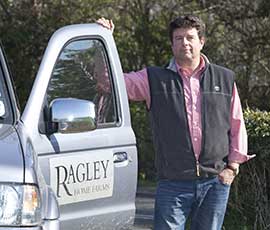
Warwickshire farmer Jon Parker is stopping beef production on his farm estate after his herd succumbed to bovine TB again.
Mr Parker, who manages 1,500ha Ragley Home Farms, near Stratford-upon-Avon, has decided “enough is enough” after his farm was struck down with TB for a fifth time last month.
“We sent a group of five animals to slaughter to bring back the meat to sell in our own butcher shop on the estate,” he said.
“The vet checked them over and found TB lesions over the back of one of their throats. Immediately, the farm was shut down.
“With other decisions that are going on with our business, we have decided ‘enough is enough’ – we can’t keep going on trying to battle this disease.
“Therefore, we will be stopping beef production on the farm and focusing on the sheep – we have 1,000 breeding ewes – and the arable.”
Ragley Home Farms is located on the Warwickshire/Worcestershire border, counties considered at the edge of “TB hotspots”, according to the government.
During the past four years, Mr Parker has witnessed the TB “creeping towards” his farm.
“There were a lot of dairy herds in the area 12 years ago, but there is about one out of 20 left now,” he said. “There were a few beef farms, too, but there has been a huge decline. People just couldn’t keep TB out.”
Mr Parker, who is a regular contributor to Farmers Weekly’s Arable Farmer Focus section , built up a 60-cow suckler herd at Ragley.
But during the past four years cow numbers have been steadily falling after he lost the bull and about half the cattle in a previous TB outbreak.
He started bringing in continental breeds to fatten for slaughter, which had been working well until the farm succumbed to TB again.
Now there are just 16 cattle left on the farm and as soon as they are finished they will be taken to slaughter and not restocked. The farm shop, Ragley Estate Meats, will source locally produced meat.
A badger sett is located about 100m from the farm building, but Mr Parker does not know whether the sett is infected with TB.
“When it snows, you can see the badger tracks going from the sett straight to the farm building,” he said.
“We are trying to make the farm as badger-proof as possible. We used to make clamp silage, but we have since switched to round-baled wrapped silage and tried to feed animals off the floor in troughs.
“We also have a huge deer population. We know there is TB in that because traces of TB have been found within the deer carcasses.”
Mr Parker is neither for nor against the badger cull, but believes the government is justified in exploring it as a control measure.
“We have to look at it as an option. There is no magic vaccination around the corner. We have got to try something and see if it has an effect or not.”
Oliver Cartwright, NFU spokesman for the West Midlands, said: “This is a tragic example of how this disease has an effect on farm businesses and hard-working farmer families.
“We have seen bovine TB march towards and through Warwickshire over the years, although traditionally it has not been a hotspot area such as the rest of the West Midlands.
“Warwickshire beef and dairy farmers, like their colleagues in the region, are subject to strict movement and testing regimes. These are becoming more and more rigorous. They are improving biosecurity, yet their farms are being decimated by this disease.”
He added: “Fortunately, Mr Parker is able to concentrate on the sheep and arable side of his business, but others are not so lucky.
“This case highlights the need to tackle TB in wildlife. We await the results of the pilot culls, because reducing TB in our beef and dairy herds remains the priority.”