2010 FW Awards: Young Farmer of the Year finalist – George Brown
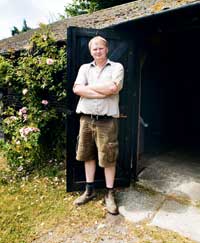
When George Brown returned to his family’s 200ha arable business at Priors Farm near Peasemore in Berkshire in 2001 he decided to put his considerable energy, and experience gained from working on a large Cambridgeshire estate, to good use.
In partnership with his father, Richard, he spearheaded a move away from direct drilling to minimum tillage on his winter crops and gradually updated the small, but ageing, machinery fleet.
Nine years on, George has developed his own contracting business in addition to running the home farm, taking on 200ha full-farm contract and 400ha of contract combining. His contracting work has paid to replace tired and expensive kit. As a result, the business’s machinery equity has risen from 50k to 200k since 2001 and the contracting operations now contribute a turnover of 100k a year.
“We don’t run brand new machines because the depreciation makes the running costs too high. I am not afraid of buying a six or seven year old machine, which has been looked after.” The immaculate tractor in his yard must go down as the bargain of the decade. He bought it on e-bay and won’t disclose for how much, but reckons it will still be worth what he paid for it in when he comes to sell it.
The move away from direct drilling to minimum tillage on his winter grain has delivered impressive yield benefits. Yields have gone up by 30%, with winter barley averaging 7.5t/ha and wheat 8.75t/ha. “We have just had two consecutive record-breaking years of more than 4t/acre on wheat,” he adds.
“It has taken a few years to get the right balance for yield, cost and establishment. I am great believer that min till is just that – cultivate once and drill,” says George.
A third of the farm is planted to spring barley each year. These spring fields are autumn ploughed to eliminate compaction and avoid the need for sub-soiling. It is also a useful opportunity to tackle pernicious grass weeds, such as blackgrass and sterile brome. Neither reared their ugly heads in the impressively clean fields of Viscount and Tipple that the judges saw during their farm walk.
He is a great believer in what the ELS sets out to do for public benefit, but doesn’t want to get involved in HLS or LEAF which “ties you in too tight”. Instead, he has put awkward dog legs into woods and hedges and planted nectar plots, which “helps the partridges and makes life easier than cropping tiny pieces of endless short work”.
Around the boundary hedges on the farm, he has planted cocksfoot and timothy grass in 3m strips which is allowed to grow long to help nesting. These grass margins, along with a an additional strip that is mowed to let pheasants and partridge dry out when the long grass is wet, are not in the ELS. “The wide margin gives good access to the field as well as cover and food for wildlife,” he explains.
And wildlife there is aplenty – the judges encountered many hares, buzzards, skylarks and a muntjac during their brief farm tour.
What of the future? “When I left the estate in Cambridgeshire, I said to myself that I wanted to farm 2,000 acres by the time I was 30.” He has since added to that ambition – hoping to add value to his barley with a beef suckler herd. “I want to provide my young daughter, and son-on-the -way, with the opportunity to take on their own farm business venture in the future with no borrowings.”
PROFILE
• 29 years old
• Farms 200ha arable business in partnership with his father
• Runs 200ha full contract service
• Plus 400ha combine contracting
THE JUDGES LIKED
• Quadrupled his machinery equity
• Focused on productivity
• Built a profitable business
• Immaculate crops
• For more on the 2010 Farmers Weekly Awards
• For more on the 2010 finalists