Allowing access to waterlogged soils would offer flexibility
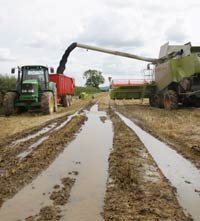
Growers will be allowed access to waterlogged soils for mechanical field operations without needing a derogation from DEFRA, but the revised Soil Protection Review (GAEC 1) introduced on 1 January will require more grower input.
Accessing waterlogged soils would give growers more flexibility, Morag Cuthbert, DEFRA’s soil policy adviser told agronomists at the AICC conference. “Under the previous SPR farmers had to wait for derogation from the secretary of state before they could access waterlogged soil.”
But in return growers must record when they accessed waterlogged land and repair any damage that occurred, she said. “You don’t have to record all access, but you do have when it has made significant damage.”
Growers still had until 31 December to complete their SPRs, but they had to complete part 4 relating to waterlogged soils throughout the year, she stressed.
The updated SPR also placed more emphasis on soil degradation occurring through compaction, erosion or loss of soil organic matter, she said. It meant growers would have to take more responsibility in assessing and recording potential risks to their soils. This year that can be done either in a table or on a map.
The risk assessment has to be taken into account when selecting land use measures. For example, when growing a high risk crop such as potatoes on high risk land, growers will have put in place three soil protection measures. These could include maintaining land drainage, avoiding planting on slopes to prevent runoff and erosion, and the use of nurse crops or planted straw to prevent wind blow.
When carrying out soil risk assessments it was essential that growers identified their soil types correctly, said Momenta cross compliance advisory team member Simon Draper. “If they don’t, they could underestimate the level of risk.”
Soil texture testing was the best way to identify soils correctly, he added. “Classing an area as heavy because it is heavier than other soils on the farm, will not be accurate enough. If it is wrong and soil washes onto the road causing an accident growers may find that insurers won’t pay out.”
| Soil protection review |
|---|
| Revised version live for 1 Jan 2010 No derogation for waterlogged land operations required Need to record waterlogged land access Risk assessments for soil degradation required |
It was also essential that access to waterlogged soils was recorded accurately, he stressed. “If you drive onto a field and create large ruts it’s important to record it as an inspector may pick up on it.”
He also reminded growers would be in breach of cross-compliance if they did not complete the blue continuation form from the 2009 review.
Crop Watch agronomist Patrick Stephenson reckoned the new SPR was a step forward. “It isn’t over-complicated once you get into it and the fact that growers can record the information on a map will go down very well,” he said.
He also highlighted the importance of accurate soil identification. “There can be three or four different soil types in a field and it’s important to identify them correctly.”
The SPR can be completed using the booklet provided, using the whole farm approach website or excel tables available on the RPA website.
The SPR is one of a number of cross-compliance good agricultural and environmental conditions now under the GAEC 1 designation. Others within that section also include post-harvest management of land and crop burning restrictions.