Farmers Weekly Interactive

Farming in Ukraine

Charles  Abel
Friday 20 July 2007 15:26

On Friday Farmers Weekly carries its latest Global Assignment feature. In it Charles Abel explains how one British-based business is turning Ukraine’s former bread-basket to truly low-cost arable farming. Here’s a preview.

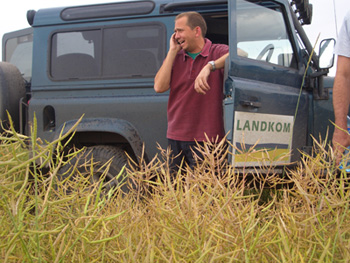
Landkom Team

Ukraine  has huge farming potential, but is clogged with small farms, growing patch-work quilts of near-subsistence cropping, between thousands of hectares of land abandoned twelve years.


This is bizarre, since the soil is superb black loam, the rainfall in western Ukraine at least is a very adequate 700mm, and long hot summer days ensure 6t/ha of milling wheat and 4t/ha of oilseed rape can be harvested under clear blue skies. 


Returning Ukranian


The trouble is there’s virtually no investment. Nobody will back what this former breadbasket of the Soviet Union. Nobody, that is, apart from British entrepreneur Richard Spinks and his colleagues.


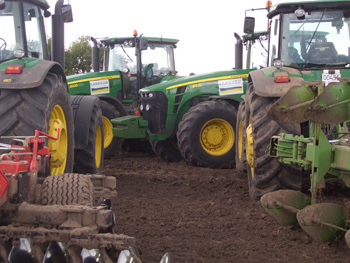
Operating as Landkom, and with multi-million pound backing from four international hedge funds, they have already secured

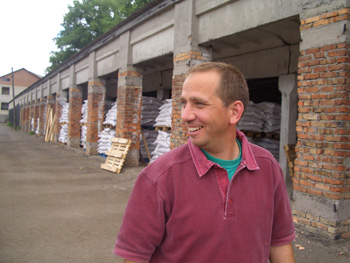
Richard Spinks
over 56,000ha of prime arable land. As I left the country they were heading off to assess a further 180,000ha. Their goal is 500,000ha in five years time.

It’s mind boggling. But its not pie in the sky. A blend of commercial skills, political footwork and clear routes into the global financial markets means Landkom is growing very fast indeed. It is already the third largest farmer in Ukraine, after Cargill and ADM. Soon it will be the largest.


Just two years ago prime mover Richard Spinks started, having sold a multi-million pound fish processing firm in Poland and relocated to western Ukraine, his wife’s homeland. Expertise gained while dealing with Russian fishermen has proven useful.

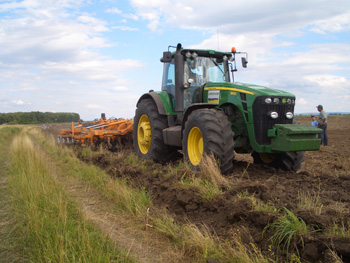
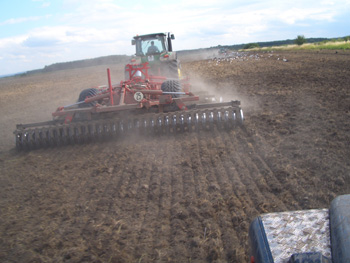
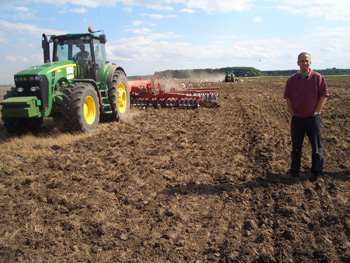
“I’m not a farmer and never have been,” he admits. But getting the most from assets and securing more is his forte. Now in his third season of cropping, he is personally supervising the preparation of 10,000ha of ground for oilseed rape drilling in four weeks.

For the first two seasons Mr Spinks and his colleagues financed the farming themselves. Three months ago their backers came

Winter wheat
on board, injecting an initial £7m. SAC agronomy advice complements local agronomists.

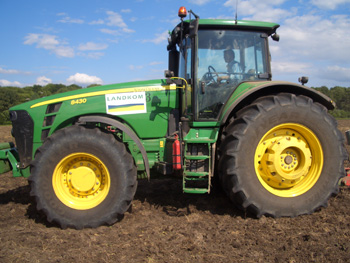
Due diligence was conducted by Credit Suisse and three UK law firms structured the lease agreement. Since then 16,000ha of arable land has been formally registered, drivers have been hired and machines bought.

Crop marketing is co-ordinated from Landkom’s headquarters in Stevenage, Herts. Supplying biofuel processors in the EU is one option, 64t railway wagons being easy to load within 11km of the main farm premises.

Securing land has been a major exercise, involving careful relationship building with key political influencers and local government officials. “It is where we have secured the business,” stresses Mr Spinks.

Fortuitously western Ukraine offers ideal growing conditions. “Three hundred kilometres further east the soil is still as good, but rainfall is half what it is here, slashing 7million t from expected output through drought this year, for example,” he notes. 

The business is booming. “Prices are way ahead of budget and costs are lower than we estimated.” Enough crop is sold forward to cover operating costs and the rest is traded from Landkom’s Stevenage office in the UK.

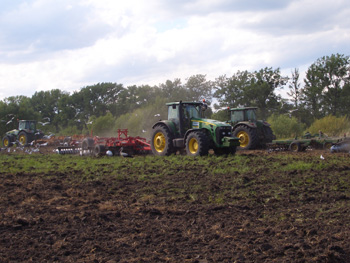
Loamy soil
So will Landkom hit its 500,000ha land acquisition target? Securing land agreements is a full-time task, employing a team of twenty at one time. Few would bet against Landkom’s success. Listing on London’s AIM market for smaller growing companies in November will indicate ITS true potential.


Gallery pages 1
Gallery pages 2
Gallery pages 3

Ukraine links

Wikipedia/Ukraine
The Economist/Ukraine
Scottish Agricultural College/Ukraine Bio Fuels
Scottish Agricultural Colleg/Ukraine
London Stock Exchange


blog comments powered by Disqus