Stalwart sees farming revolution
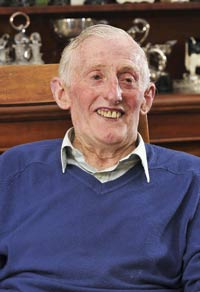
In the fifth of our series celebrating commitment and service to agriculture and the countryside, Jeremy Hunt meets Tom Drinkall
The sixth generation of the Drinkall family is working at Catshaw Hall Farm, which looks out across the stunning upland landscape of the Trough of Bowland in Lancashire.
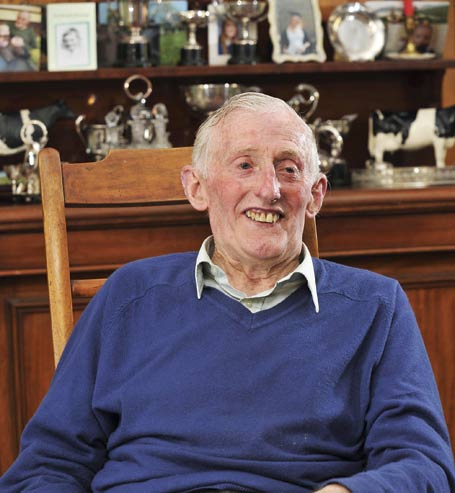
Tom Drinkall has just celebrated his 80th birthday, and is the fourth generation of this family, who have spent 180 years on the same farm. But he reckons it’s during his own lifetime that farming has undergone the biggest change.
“From milking by hand and using horses on the farm we’ve now got an industry that’s unrecognisable from my childhood days. Some changes have been for the better, but not all. You can’t stop progress, but you do wonder sometimes where it’s all going to end up,” says Tom.
The fell road to Catshaw Hall Farm at Over Wyresdale gives glimpses of the grandiose mansion of the Duke of Westminster, owner of the Abbeystead Estate. He’s been the Drinkall family’s landlord since he took over the estate almost 30 years ago, a time that has seen the farm undergo significant expansion.
“We’ve come a long way from the 28 cows I can remember milking in a shippon here as a boy,” says Tom, whose grandfather’s uncles, in the early 1800s, had been the first Drinkalls to farm at Catshaw.
At his 80th birthday party recently in Abbeystead village hall, over 150 friends and family turned out to celebrate – testament to Tom’s popularity and the respect in which he is held by so many.
Although Catshaw is a hill farm, it has always relied on dairy cows for part of its income, both from milk and from the sale of in-calf heifers. Tom’s childhood memories are of cows being milked in the summer and dried off for the winter. “Some of the milk was made into butter, but most was made into 50lb blocks of Lancashire cheese and taken to Lancaster market. But when war was declared in 1939 we switched to selling milk. It was collected in ‘kits’ and went to Libby’s at Milnthorpe in Cumbria,” says Tom, who farms with his nephew John and John’s family – wife Elaine and three boys Thomas, William and Henry.
Horses were used on the farm until the late 1930s. A tractor was ordered, but the ship bringing the consignment from the USA was sunk, as the war had started. It delayed the arrival of the first tractor until 1940.
Those were days of Dairy Shorthorns at Catshaw Hall Farm, but the Drinkall family gradually began to use Friesian bulls and were among the first to try black-and-whites in the early 1930s.
“We were selling heifers at that time to a dealer called Tom Carr at Chipping near Preston, but he told us he found it difficult selling the Friesian x Dairy Shorthorns, so we went back to breeding them pure.”
Tom, with his father – also Tom – and his late brother Bill then tried Friesians again and enjoyed success with the locally bred Ellel Albert 2nd and the homebred Pennine Rufus. And so the foundations were laid for the Drinkalls’ well-known Pennine herd.
“Looking back you see how certain decisions made such a big difference. Pennine Rufus was by Ironside Rufus and out of a cow from the famous Dalton herd. We’d had a bull calf ordered off this cow, but it calved a heifer. Then we saw the cow was entered in a sale at Hexham and we went up to buy it. She was carrying the Rufus bull when we bought her.
“We eventually sold him to the Milk Marketing Board in the 1950s and he was widely used and very successful,” says Tom who recalls some of the most enjoyable times of the past spent with local Friesian breeders would visit each others farms to look over their cattle and discuss how certain bulls were breeding.
“They were very happy days, but now there seems to be no time to do these things. The pattern of local farming life has changed.”
But Tom still remembers how excited the family was when they were able to milk 28 cows in one shippon. “That was quite something at the time. We could never have imaged we’d now be milking 180 cows on the same farm.”
The first Pennine Friesians were registered in 1940. “Feed was scarce at that time so yields of around 700gal weren’t as high as they could have been.”
Selling calved heifers has always been a part of the Drinkall business and the Pennine herd is greatly respected for the consistent quality of stock produced over many years.
Tom has been great supporter of the Lancashire Holstein Club (originally the Lancashire and Adjacent Counties British Friesian Breeders Club) for over 60 years. And has been a regular supporter of its sales at Lancaster. He’s been its chairman and president and went on to become president of the Holstein Friesian Society in 1989.
“It was a wonderful experience and a great honour. I thought it was something that was meant for much more important people than me,” says Tom.
- In association with Wareing Buildings
Farming Stalwarts is a monthly series celebrating men and women who have devoted their working lives to farming and the countryside