OFC 2010: Business as usual will not feed the world
A “business as usual” approach to increasing food production would be useless against the challenge of feeding a growing world population, the conference heard.
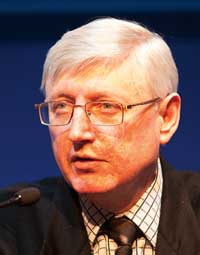
John Parker, globalisation correspondent for The Economist, told delegates that agriculture needed to achieve the kind of technological breakthroughs in plant breeding and livestock development last seen in the 1960s and 70s.
“The UN predicts a world population of around 9bn by 2050 – that’s about 30% more people to feed. And for a 30% population increase, world wheat yields will need to increase by the same amount over the next 20 years.”
That was without accounting for the 1bn-odd undernourished people in the world today, he added. “So therefore we need about 40% more cereals by 2050.”
And scientists, politicians and farmers must not be hoodwinked into thinking that the doubling in yields seen in the last forty years could be repeated. “Already we’ve seen what happens when there is pressure on demand for cereals against a pattern of stable yields – when prices spiked in 2007.”
Agriculture had been living off the gains in output seen in the post-war Green Revolution, when new technologies and scientific advances transformed food production, he said.
However, the food commodities price spike in 2007 had led many governments around the world to drastically re-think their food policies, and attention was again focusing on investment in agricultural research and development, he said. “But it will be extremely difficult to reverse the declines in cereal yield growth but there are signs that it is beginning, with investment in new seed technologies in parts of Africa and Asia.”
But the greater challenge would be the necessity of doubling livestock production as developing countries grew wealthier and demanded greater quantities of milk and meat. As people moved out of poverty in China, Brasil and India, the needs of these new middle classes would mean meat protein, particularly poultry meat, was in great demand.
“The UN Food and Agriculture Organisation reckons livestock production will need to double by 2050. And that’s a different order of magnitude to the cereals problem,” Mr Parker said.
The biggest constraints on future food production would be the effects of climate change and in particular the availability of water, he added. “The challenge of feeding the world is much bigger than just seen in terms of population and cereals alone.”