Competition shows beet grower aptitude
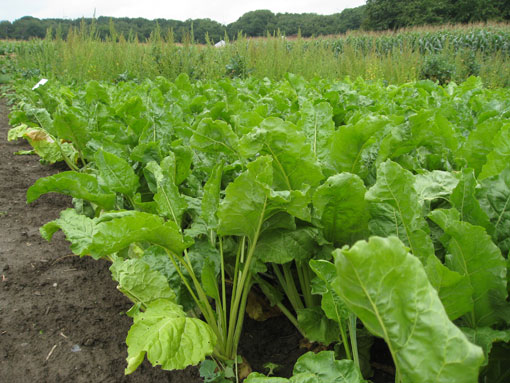
Results from the first round of our Beet the Best sugar beet competition show most growers are up to speed with key technical elements required to grow a top-yielding crop.
Correct ploughing depth, base fertiliser choice and optimum seed spacing were just some of the questions answered correctly by entrants to the joint Farmers Weekly and British Sugar competition.
“It’s really nice to see that growers have got such a good grasp of these technical messages,” says Mark Stevens, virologist for Broom’s Barn and Beet the Best judge.
But according to the judging panel, some answers showed there was still room for improvement. Choosing the optimum time for ploughing before a sugar beet crop on light soils was one question that caused confusion.
Many growers opted to plough light soils in mid-October or January, which can lead to damage soil structure, says Dr Stevens. “Ploughing too early increases the risk of seed-beds being poor due to soil ‘slumping’ and slow drying problems.”
February is the ideal time as soils will be ready for planting in early March, he adds. “I can understand why people have opted for January as it would be the first opportunity, but it’s not necessary to plough that early.”
Steve Wilcockson from Newcastle University says it also keeps the stubble for longer which is better environmental stewardship and decreases the potential for nitrogen leaching.
But understanding of when to plough heavy ground was good, with nearly all entrants choosing to cultivate in early December. This allows the soil to break down over the winter, creating good seed-beds in the spring, he says.
Indentifying the minimum temperature at which sugar beet germinates effectively also caught out a few people. Most opted for temperatures above 7C, when the minimum is between 3C and 4C.
Waiting too long for soil temperatures to rise above the minimum means you could miss out on potential yield as the crop is not in the ground and developing, says Dr Wilcockson.
“Temperatures of around 3C tend to coincide with the 1 March drilling date, but even if you put the crop in the ground before temperatures are high enough, they will get going as soon as temperatures start to rise. Sowing too early does increase the risk of bolting, so chosing a bolting resistant variety is important.”
Establishing the canopy early to access the maximum number of daylight hours over the season is more important than making sure temperatures are optimum for germination, he adds.
Optimum soil pH also caused confusion, with a number of people opting for alkaline conditions.
This doesn’t necessarily reduce yields, but can lock up certain nutrients such as manganese, says the judging panel. Growers should, therefore, aim to plant beet in neutral soils.
Identifying beet cyst nematode symptoms caught out a few entrants who mistook signs of the pest for docking disorder.
Both cause crop wilting, so where there is confusion, growers should pull up plants and inspect roots for cysts, says Dr Stevens. “The cysts appear as white specs under a microscope and you can also pick them up using a hand lens in the field.”
Care needs to be taken on sandy soils as grains of sand can be mistaken for cysts. Beet cyst nematode can be distinguished from free living nematodes as the latter do not produce cysts, he adds.
When questioned on nitrogen splits and timings, nearly all identified the correct timings, but some opted for a less than optimum dose.
The optimum nitrogen dose and application timing on sandy-loam soils with no organic maures added is 30kg nitrogen/ha applied immediately after drilling and 90kg nitrogen/ha applied before the two-true leaf stage.
Many chose these timings, but opted for 35kg nitrogen/ha at the first timing and 60kg nitrogen/ha at the second.
At £60/ha the last option is £15/ha cheaper than the optimum dose, but contains 25kg less nitrogen/ha, says Dr Stevens. “This is not the optimum dose for leaf growth and for the money saved it’s not worth cutting back.”
About Beet the Best
 Beet the Best is a competition run by Farmers Weekly and British Sugar that tests the skills of sugar beet growers, advisers and students.
Teams and individuals from the farming community are battling it out in the online competition to see who can nurture their virtual sugar beet crop to achieve the highest yield.
Round one on preparing ground for the crop is already complete and entrants are now concentrating on round two. They have to decide how to maintain yield potential though effective pest and disease management.
THE ROUNDS
Round 1 : (1-31 October) Preparation – CLOSED
Round 2 : (1-30 November) Crop protection – OPEN
Questions are based on weed, pest and disease control, plant populations and pest and weed identification.
Round 3 : (1-31 December) Delivery
Efficient harvesting strategy as well as field and clamp storage techniques will be the key. Minimising beet damage and late season challenges will also be covered.