New varieties galore on HGCA Recommended List
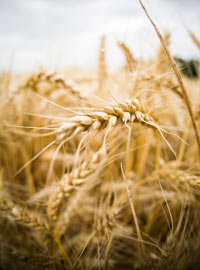
Ten wheat and eight oilseed rape varieties have been added to the HGCA Recommended Lists for 2011/12.
KWS Santiago is the new highest-yielding winter wheat variety on the list, at 108% of controls. A Group 4 hard feed wheat, it has better yellow rust resistance than Oakley and Conqueror, but is still a high input, high output variety.
In contrast, the other hard feed wheat to be added is Stigg from Nickerson. It boasts an eight for Septoria tritici and nines both for rusts and good standing power. But it comes with a significant yield penalty of 6% compared with KWS Santiago.
Two soft feed wheats, Gravitas and Denman, are also new on the RL. Both equal Beluga’s yield; Denman is rated as good for distilling but can only be blended for export, while Gravitas is only medium for distilling.
There are three new Group 3 varieties, but none provide the complete soft wheat range of marketing opportunities. Cocoon and Tuxedo are unlikely to be preferred varieties with all millers, according to Nabim.
KWS Target has produced consistent milling performance, but is rated as poor for distilling. KWS Podium is a Group 2 milling wheat with yields similar to Gallant and Cordiale and orange wheat blossom midge resistance.
A spring wheat with Group 1 credentials could attract some interest for late autumn drilling needs. Mulika from Senova has yielded more than Solstice in late autumn sown trials.
KWS Willow, assuming it is national listed, will be Group 2 spring milling wheat.
Five varieties have been removed from the list: Marksman, Qplus, Xi19, Zebedee and Hereward, which was on the Recommended List for nine years and was for much of this time considered a standard for UK bread milling.
Sesame heads the oilseed rape additions on the East/West list. Sesame is 3% ahead of DK Cabernet in the region, and 1% ahead of the hybrid PR46W21. Cash, another conventional open-pollinated variety, has also been recommended, chiefly on the back of an eight for phoma resistance.
A number of hybrids have made it on to the list too: Compass, Rhino and Palace – mainly it seems for better light leaf spot resistance.
Cracker is recommended for its club root resistance, while DK Sequoia and PR45D05 are new semi-dwarf hybrids. Fashion is now recommended in the north.
Three new feed winter barleys have been added. The two-row variety feed Florentine and the six-row variety Escadre both combine high yield with good specific weight. The hybrid six-row Element, which is recommended for the north region, has very high yields and is the first three-way hybrid to be recommended.
Two winter barleys have been removed from the list – Carat and Colibri.
There are four new spring barley varieties. Panther is a recommendation for the east region and is under test by the the Institute of Brewing and Distilling (IBD) for the production of malt for brewing. Shuffle and Moonshine are both under test for malt brewing and malt distilling. Shuffle is a UK recommendation, while Moonshine is for the North East. Summit is a feed type.
Decanter, Doyen, Jolika and Sweeney have been removed from the spring barley list.
- Check back over the next few days for more detailed reports and analysis on the new varieties