

Solar energy still makes sense for poultry sector
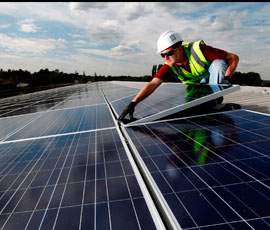
Investing in solar PV installations is a “no-brainer” for poultry producers, despite ongoing cuts in government support, according to NFU chief renewables adviser Jonathan Scurlock.
“How would you like to invest about £1m in solar energy and get a return on your capital of 6-7% before any kind of government subsidy? That’s how fast this particular sector is moving,” he told the recent poultry “breakout session” at the NFU Conference in Birmingham.
A megawatt of solar would produce about 800 MWhr of electricity a year, he told the conference. “That’s worth, if you’re buying it at 10p a unit, about £80,000 if you displace all of your electricity. The likelihood is that there will be about a 75% match between your use and what the solar system can provide. So if you get a decent power purchase agreement on your exported electricity and, say, 75% you use yourself, you’re still going to be displacing or making about £70,000 on a £1m investment. And that’s before any government subsidy.
“So, even though the government is reducing the Feed-in Tariffs, I think these kind of investments for your businesses could easily give you 10% back on your money.”
Having said that, there was no doubt the FiT budget was overspent and the government was committed to further cuts. Poultry producers needed to be aware of two key dates. The first was 3 March, the date from which newly-registered projects would definitely be subject to reduced FiTs, though this could be backdated to earlier projects if the government won an ongoing appeal in the Supreme Court.
The other date was 1 April, from when the cuts would be implemented. “We’ve got some significant worries there because there will be a requirement, at least on domestic installations, to have some sort of energy performance certificate on the building to which the solar PV unit is attached,” said Mr Scurlock. “We don’t yet know how this is going to be applied in the agricultural sector.”
NFU members had also reported problems with getting grid connections and with planning permission, and there was a need for more transparency and guidance on both.
Despite these hurdles, solar energy continued to be a viable option for supplying the electricity needed to heat young chicks and then ventilate the adult birds. With rising electricity prices and declining costs of technology “this is the sort of thing that ought to be an absolute no-brainer, simply because it won’t require any government subsidy by the end of this decade”.
* A new Farm Energy Service has been launched by the NFU in association with renewable specialists Fischer German and contract experts Farm Energy. The initiative offers independent advice and guidance for NFU members on a range of energy issues including solar panels, wind energy, grid connections and energy contracts. It will also provide assistance with legal queries, planning, finance and insurance. Benefits include a free initial survey, access to an energy contract finder service and a discounted fee structure.
Read more news from the NFU Conference on our dedicated page.