

The big debate: FOR live exports

Living only a few miles from Folkestone and Dover, and on a clear day being able to see the coast of France, I am one farmer who feels at least some affinity with Europe and for many years believed having 300m people on my doorstep that needed food would always give me security.
We are continually being told to produce for the market and, when possible, sell locally. Local to me includes France, Belgium, Holland and even western Germany. My local sheep abattoir of any size is in Holland. According to Route Planner, the driving time there from Ashford market, the main market in the south east, is two-and-a-half hours via the shortest sea route of Calais. Going via the slightly longer sea crossing to Dunkerque would be less than two hours’ driving time.
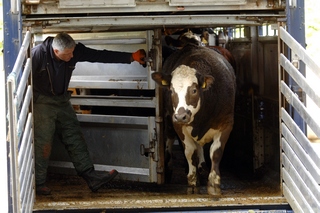
Before 2001 we used to take sheep to an abattoir in Paris, and the travelling time by road was less than four hours plus the ferry crossing. The irony is that this is a slightly shorter driving time than our normal main abattoir, RWM at Yetminster, Dorset, and we are more likely to arrive on time, not having been stuck on the M25.
We used to take stock to Wales, even organic lambs to Merthyr Tydfil, a journey of about five hours. But we are not permitted to go to Wales any more. None of these problems is relevant in mainland northern Europe, as we are all in the same bluetongue zone.
Significantly, when taking sheep from Ashford to Holland as opposed to Dorset the vehicle has to be of a much higher specification, including forced ventilation, temperature monitoring and satellite tracking, as well as having to be regularly inspected to ensure it complies with the latest regulations.
The livestock have to be inspected by a vet before loading and must have been on that holding for 21 days. They must conform to rigorous stocking levels and have access to food and water when required. A route plan has to be submitted and approved by DEFRA before the journey begins.
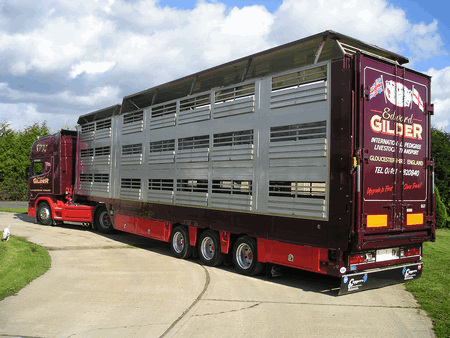
The 22 miles of the English Channel might as well be thousands
Having gone through all of these hoops, one would expect that taking a few animals to my nearest customers in Europe would be no problem at all.
But the 22 miles of the English Channel might as well be thousands, as the ferry companies will not carry livestock for slaughter due to illegal threats made to them by the animal rights lobbyists.
However, some of those same companies have no problem carrying stock from Ireland to the mainland, and many thousands of animals are moved much greater distances from the Scottish Islands. Yet we wish to carry on a legal and heavily regulated trade, but are prevented by lobby groups.
I am also horrified at the terrible waste of dairy bull calves being killed at birth because they have no value, while in Europe they are worth well over £100.
Before 1996 I transported many thousands of calves to Holland, Belgium and France. I would be the first to admit that some of the veal units were not palaces, but when you see a finished veal calf at about six months of age, they are impressive and healthy looking animals.
Crates are now banned and conditions have improved.
It is criminal that we are killing these at birth when dairy farmers should be receiving good values for them.
There have been a number of attempts to run farmer-owned ferries, but the difficulty is that these vessels are inevitably small, unstable and expensive to run.
Large commercial freight ferries running out of Dover are fitted with stabilisers and can sail in most weather, as well as being able to cross the Channel in an hour and a quarter to either Calais or Dunkirk.
It is imperative we persuade the ferry companies to allow these shipments that are a legal trade. I am not sure what the reaction would be if we as farmers blockaded Dover to support a legal trade when the lobbyists make illegal threats to prevent it.