Autumn plantings cut spring crop area
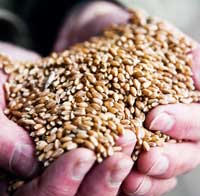
Increased winter wheat and oilseed rape plantings have reduced the area available for spring crops this season.
But with the market for the biggest traditional spring crop, malting barley, in disarray, that is no bad thing, although other spring crops do offer growers opportunities.
Wheat area is sharply up, Mark Smith of Saxon Agriculture says. “The consensus is 10-15%. The latest Strategie Grains estimate puts the UK wheat crop at 16.2m tonnes, which is a 13% increase on last year.”
Similarly oilseed rape plantings have increased, says Strutt & Parker‘s Charlie Ireland. “Anecdotally locally it is a good 10% up, mainly due to the drop in N price and last year’s good yields, so there was a bit of a feelgood factor. Very little is going to fail so there won’t be much pulled up this spring.”
It means a lower availability of land for spring crops, although winter bean and winter barley plantings have dropped, the latter to a 40-year low, according to Frontier‘s Charlie Whitmarsh.
The main loser is likely to be spring barley, with a drop in area predicted of 20-30% by Mr Smith. “The problem is the malting surplus. There was a carry-over of stocks from 2008 to 2009 and will be another one into 2010. With a slack off in the brewing sector it will probably take until 2011 before we see the impact of a smaller barley area, assuming weather doesn’t interfere.”
Limited contracts for 2010 are available, at around the £110/t level, Mr Whitmarsh says. “Depending on yields you can make money at that level, but I would consider trying to fix a base price and let the premium float free.”
A quality spring wheat might make a better option for growers looking for an alternative spring cereal, Mr Ireland suggests. “If you can grow something like Paragon for a similar cost and similar yield, and get a premium of £10/t over the Group 1 premium, it makes a better bet subject to land quality.”
Canadian red wheat is also worth a look, he says. “We grew it on four farms last year, and it yielded well, although it was a very disease-free year.”
Decent break crop options are also available, Mr Smith says. “Growers do have more to consider, such as linseed, which there is strong demand for and spring beans.”
The UK has established itself as an important player in the middle-east export market, he says. “They like our quality.”
The crop is probably the number one break crop in the east, at least in farmer friendliness, Mr Ireland says. “I don’t think beans will be affected by the French adding aid for its growers.”
Spring peas have reduced in price from last year, but the gross margins still look attractive. “But watch your combining ability. If you have lots of milling wheat or spring malting barley, peas are ready right in the middle.”
Combining date is also an issue with linseed, he points out. “You want to guarantee, which you can’t, that you can combine it in August or early September. You don’t really want grow a break that impedes your ability to get a first wheat in.”