Spring seeds: Demand could give pulses an edge
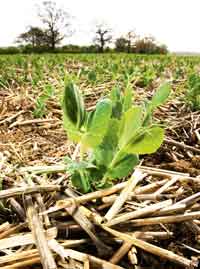
Demand for various peas and beans outstripping supply gives growers good reasons to consider the crop again this season after a successful 2009, according to analysts.
Pulse area went up 50% last spring on the back of poor establishment conditions the previous autumn and a price hike for nitrogen fertilisers, Graham Redman of Andersons says.
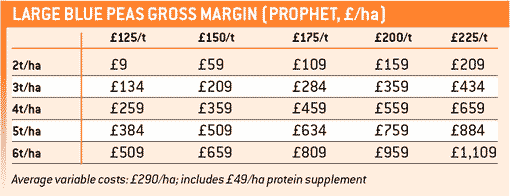
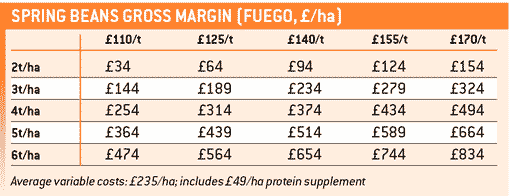
But making money from them isn’t guaranteed, he stresses. “All pulse growers spend the same amount on the crop at a cost level and receive the pulse premium of €55/ha. The difference is in the detail [to produce high yields].
“They deserve high-quality attention. Without it, you don’t get the crop response.”
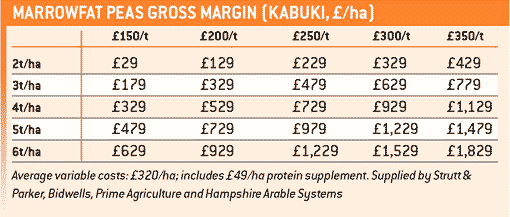
It is vital to grow for a specific market and aim for the premium. “Marrowfat peas are a good example. With the right quality, you’ll get £220/t and a margin of £490/ha. With poor quality, you’re looking at £120/t and just £150/ha.”
There are other benefits from growing pulse crops, he adds, but it is not always easy to put a value on some of them.
“For example, you get more wheat yield, often an additional 1t/ha, in the following crop. The nitrogen-fixing properties of pulses are obviously well known and the reward is clear.”
Lower overheads are another bonus, with Mr Redman putting £225/ha against a crop of spring peas or beans. “You also get a chance to improve your blackgrass control, by being able to use different techniques and alternative chemistry.
“So there are whole-farm benefits from pulses too. And, of course, they’re a GM-free source of protein.”
Dan Wherry of Wherry & Sons points out that, despite the peaks and troughs in pulse areas in the last 10 years, supply has never exceeded demand.
“In the UK and Europe, demand comes from the animal feed compounders where pulses compete against maize gluten and citrus pulp. But further afield, it’s all about human consumption.”
Export beans for human consumption must meet the strict specification of even size, even colour, 15% moisture, 3% bruchid, 2% admixture and 5% broken.
“Moisture is most important,” says Mr Wherry. “Last year was a lesson for everyone. If beans are harvested wet and stay wet, they take on a dark colour.
“They must be dried, slowly and methodically, or they will go ‘glassy’ inside.”
Egypt uses 1750t of beans/day, with 30% of this demand supplied from the UK, he notes. “Good samples are always required.”
French Pulse Subsidy
The sudden introduction of a E150/ha pulse subsidy to French growers (on top of the E55 protein payment) is unlikely to threaten UK growers this year, according to pulse traders.
“We believe it will bring back yellow pea production in France, which has fallen from 400,000ha to just 105,000ha in 10 years,” says Mr Wherry.
“The reason for introducing it is to support the French feed compounding industry, while allowing growers to make a profit from pulses. They’re not going to hand this money straight back.”
As such, it shouldn’t harm prospects for UK pea production, as there is sustainable demand for blue peas. “It may have more of an impact on feed beans, as they will plant some extra, but 2011 is likely to be more affected than 2010.”