How two farms expanded into the brewery business
Microbreweries may still be a relatively niche concept, but rising demand for regional beers has allowed the sector to grow.
The key factor for any successful microbrewery, as with all farm diversifications, is to know your target market and to do plenty of research before investing.
We spoke to a farming couple Mark and Mary Easterbrook, who opened the Pheasantry Brewery in Nottingham in 2012 and the Wold Top Brewery, founded by an arable farmers Tom and Gill Mellor in Yorkshire.
See also: Guide to Defra’s Growth Programme diversification grants
Pheasantry Brewery, Nottingham
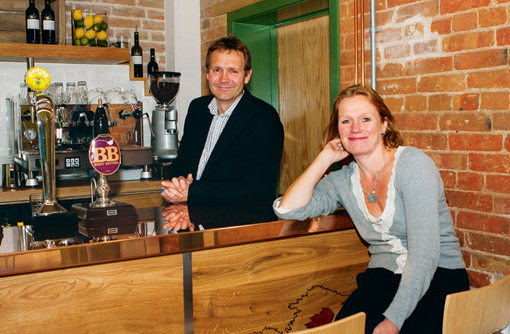
Mark and Mary Easterbrook set up the microbrewery in 2012 in old farm buildings that came with 81ha of land bought when the 1,600ha family farm business expanded. In addition to producing award-winning beers, the brewery now holds weddings and events and brewery tours.
Starting out
“The buildings were all in a state of disrepair and weren’t really suitable for modern farming,” says Mark. “Because it’s a listed curtilage, we couldn’t knock them down, so we decided to spend a bit more on the renovation and go for the microbrewery as a diversification.”
Pheasantry brewery facts
- Opened June 2012 alongside restaurant, café and bar
- Predicted to produce 38,440gal of real ale in the first year from 26t of malt
- Three main brands (Best Bitter, Pale Ale and Dark Ale)
- pheasantrybrewery.co.uk
“It was a sizeable investment, but there is potential to use the buildings for something else at a later date if that’s what we ever decide to do,” says Mark, who has worked in food manufacturing for 20 years.
Optic and Tipple malting barley is grown on the farm for Fawcett & Sons maltsters in Castleford and other major UK maltsters, but Mark acknowledges that some barley isn’t used in the microbrewery, which instead uses British Maris Otter malt.
“We’re proud to be growing barley and proud to be using British malt. We’ve had a good relationship with Fawcett for many years as a supplier of barley to them; now they’re supplying us with malt too.”
The microbrewery has production capacity of 10 barrels per brew and uses around 250kg of malted barley each time.*
Regional and local beers
There’s growing interest in regional British lagers, so hopefully it’s something that will take off as well as local ales have. The key thing is that it gives us another option and helps maximise the efficiency and income from our asset.”
“Microbreweries work best in a local sense by making the most of the local characteristics and names of the beers. A lot of our advertising is therefore by word of mouth,” Mark says.
Customers
Pheasantry supplies regional beer festivals and a local wholesaler, which expands the scope for where their beers are sold.
In addition, it has registered on SIBA’s Direct Delivery Scheme, which buys draught and bottled beers from local brewers and sells them to national pubs and other buyers that would otherwise be more difficult for microbreweries to get involved with.
“We’re very serious about trying to brew the best beer, but attached to that is the visitor centre and restaurant, which helps us sell the whole experience and attract customers in,” Mark says.
Wold Top Brewery, Yorkshire
It was the need to diversify and boost flagging farm incomes that prompted Tom and Gill Mellor to set up the Wold Top Brewery in 2003.
Over a decade later, that diversification has overtaken the farming income on the 243ha family farm and looks set to grow, priding itself on using local ingredients.
World Top Brewery facts
- Produces 162,500gal of real ale a year (3,125gal a week)
- Range of cask and bottled real ales, including gluten-free
- Tom and Gill were finalists in the diversification category of the 2009 Farmers Weekly Awards
- www.woldtopbrewery.co.uk
Much of the farm work is now done by contractors, although Tom still takes care of cropping plans and marketing, and around 120t of the farm’s malting barley is used by the brewery each year (enough to make around 100t of malt).
Set-up costs
Initial set-up costs for the microbrewery, which is housed in a converted barn, were 20% grant-funded by DEFRA and the remaining 80% funded through personal capital.
The business has steadily invested in new tanks, machinery, and extra brew capacity, increasing output from 100gal a week of real ale in the early days to 3,125gal a week today. It has a turnover of some £850,000 a year and is growing at 30%, says Gill.*
Customers
A range of local pubs and clubs, farm shops, off licences and wholesalers are supplied, as well as local branches of Waitrose, Booths, Asda and Sainsbury’s. Customers can also buy beers online through the website, which features links to a variety of social media outlets to increase brand awareness.
“We started off just producing cask beer, but because we’re in such a rural area and don’t have large towns on the doorstep, delivery costs are massive.
“We send out around 150 casks a week* and they’re expensive to buy (around £95 each) and once empty, you have to collect them. So we looked at other things we could do and eventually decided to set up our own bottling plant, which also lets us do some contract bottling for others.”
Today, around 65% is supplied in casks and 35% bottled*, although they are looking to expand the bottled proportion, she says. “We’re also using a cask rental system to reduce the upfront cost of buying casks, cut transport costs and open the market to UK-wide wholesale.”
Overseas markets
In addition, around 10% of production goes overseas, as buyer relationships have been developed in Sweden, Norway, Ireland and most recently, Italy and Canada.
The Italian buyer was found after Tom visited Milan a couple of years ago as part of a UK Trade & Investment initiative, and it all came to fruition last year.
“There’s quite a market for English beer in Italy and the buyer we found was a family business that didn’t want to deal with large conglomerates; the family commitment was most important to them,” explains Gill. “We now export regular orders of both cask and bottle beer, which are sold countrywide in Italy.”
Wold Top’s growth has also meant that, for the first time this year, it has been able to get a local large-scale maltster – Muntons – to malt the farm’s barley for it. Previously, malting barley had been sent to another local, smaller scale maltster, as Muntons requires a minimum amount to malt. “It allows us to store malt and mill it as we need it, and is good for Muntons to be seen supporting local small businesses,” says Gill.
Sustainability is a challenge. Two 55kW Endurance wind turbines have been installed to reduce the hefty power costs associated with the brewery and they are also investigating ways of better managing waste water through a reed bed.
The farm is in the Entry and Higher Level Stewardship schemes and all used brewers grains go to a local farmer for stock.
“The main and most important lessons are marketing, marketing and marketing,” says Gill.
* Facts correct at time of publication (2012)