Advice on protecting farm kit and avoiding GPS thefts
 © Tim Scrivener
 The most recent figures from rural insurer NFU Mutual show an encouraging drop in insurance claims for stolen GPS units, which decreased 71% between 2023-24, from an estimated £4.2m to £1.2m.
The reduction in incidents followed several regional and national initiatives to tackle the problem, such as “Operation Walrus” in July 2023.
See also: 7 ways to beef up your farm’s cybersecurity
Last November, two men were jailed for stealing £200,000 worth of agricultural GPS units from farms across northern England, following a multi-force operation working in collaboration with the National Rural Crime Team.
However, while there have been successes, GPS systems remain attractive targets for thieves due to their high value and portability, so maintaining effective preventative measures is vital.
What’s being stolen?
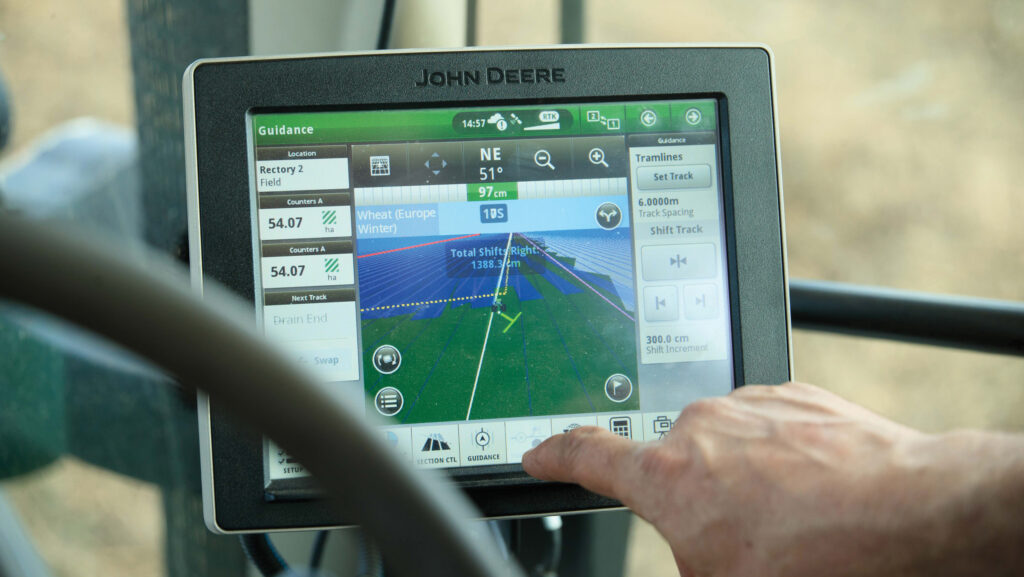
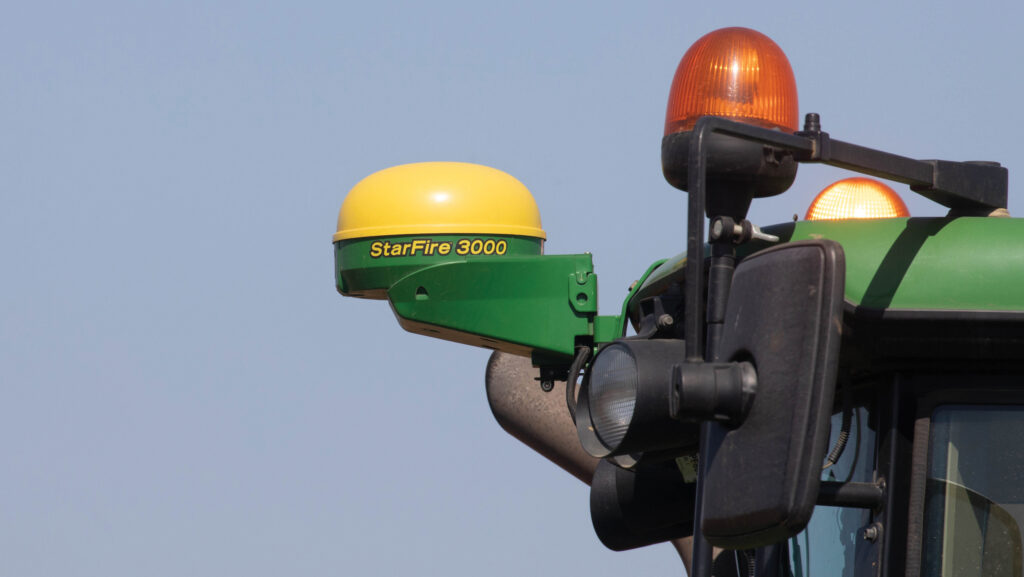
Thieves typically target high-value, portable and easily detachable electronic components, such as domes and receivers on tractor cabs, combines or sprayers, touchscreen monitors, terminals, antennas and sometimes wiring components.
As navigation systems become increasingly integrated into new machines, rather than “plug and play” bolt-on additions, they may be harder to steal, but not impossible.
© Tim Scrivener
Considerable damage can be done when navigation systems are stolen, often disabling the whole machine and adding significant costs beyond the value of the equipment stolen, as well as machine downtime, and psychological impacts on those affected.
Thefts often peak during the busy harvest period, when equipment is left in the field, away from the main farm.
How to reduce the risks
Sergeant David Lund from North Yorkshire Police’s Rural Task Force says there are two main aspects to the control measures farmers can implement, involving “target hardening” to better protect equipment itself, and wider preventive measures across the rural community.
Many measures apply to reducing risks from farm thefts in general.
“I understand the demands on time in farming, not forgetting the costs of security systems, but the need for strong crime prevention has never been so relevant,” he says.
Preventative measures include:
- Where possible and safe to do so, remove detachable GPS units, screens and other valuables when not in use and store securely away from the machine
- Record serial numbers and photograph equipment for insurance purposes
- Activate PIN security on GPS kit, with your own unique number
- Register high-risk items
- Mark equipment with a forensic marking solution (such as SelectaDNA kits) to help trace property back to you in the event of theft
- Mark in other ways, such as writing your postcode on the unit’s case, to deter thieves
- Fit strong locks to sheds, barns, workshops and gates
- Park machines out of sight in a locked building overnight whenever possible
- Always remove keys from machines and store separately
- Consider installing CCTV with night vision, infrared motion sensors, security lights and alarms around the yard, farm buildings and key entry points
- Consider fitting tracking devices to tractors, farm vehicles and other high-value items
- Join your local Farm Watch group.
Be vigilant:
- Remain alert to suspicious activity (such as unusual tyre tracks, unknown people in the yard or around equipment, drones overhead, suspicious vehicles)
- Record dates, times, locations (use What3Words), and take photos or videos, but only if safe to do so
- Report suspicious activity to your local police rural crime team and share via Farm Watch
- Be wary of second-hand GPS kit offered for sale and check serial numbers before buying.
Tool thefts on the rise
Rural crime cost the UK economy an estimated £44.1m in 2024, according to NFU Mutual’s latest report, and while GPS thefts were down, tool theft remains a major issue.
The insurer’s research shows that just under two-thirds of tradespeople have fallen victim to tool theft in the past 12 months, with theft from a site (36%), equipment stolen from vehicles (32%), taking of a vehicle (12%), and theft from a business premises (11%) most common.
With rural communities impacted just as much as those in the trades industry, farmers are reminded to protect equipment and put measures in place to deter thieves.
In many cases, tool theft is associated with thieves targeting other larger items (such as quad bikes, trailers and tractors).
“Alongside burglaries, it is not uncommon when a quad bike or tractor is stolen, for tools to be grabbed as well,” says Andrew Huddleston KPM, head of the National Rural Crime Unit and National Construction and Agri Theft Team.
“The likes of chainsaws, drills, grinders or stone cutters are favourites.”
He offers some key advice to help reduce the risks:
- Take basic security measures (fitting locks, lights, CCTV) and have a farm dog
- Buy machinery that is secure by design and does not have a universal key
- Consider tracking technology and marking (such as the Cesar scheme)
- Join your local Rural Watch Scheme
- Use identity marking on tools
Forensic marking
Following industry consultation, the government plans to introduce legislation under the Equipment Theft (Prevention) Act 2023 requiring manufacturers to forensically mark removable GPS units and register them on a database.
Systems that are integrated into the cab, or located on parts of the machine “not readily accessible” are excluded from the legislation.
Check insurance cover
Most insurance policies include some cover for GPS equipment, however details vary and there are often limits attached, so it pays to check your policy carefully to make sure you are fully protected.
Steve Cove of Farm & General Insurance Consultants, notes: “Sometimes GPS equipment will be included under the main farm policy, often it’s on the motor policy.
“In cases where navigation systems were integrated into the machine, that theft and associated damage could be classified as malicious damage for insurance purposes.”
One common issue with insurance claims is proving what has been stolen, especially where receipts or other proof of purchase is not available for older equipment, says Mr Cove.
“It is therefore worth taking pictures of any high value equipment in place on the machines, just to provide some kind of evidence should you need it.”
The same applies to high-value tools, and other workshop equipment, he adds. “Taking pictures of the tools, and the receipt if you have it, just adds another layer of evidence.
“Every farm workshop probably has much more in the way of tools than they are actually insured for, so again, make sure the sum insured is adequate.
“It is a balancing act though, between having sufficient cover and a premium that is affordable.”
Case study: Eveey Hunter

Farming on the outskirts of London, Hertfordshire tenant farmer and contractor Eveey Hunter is well aware of the realities of rural crime, and has taken various steps to protect equipment.
In September 2021, the farm had GPS units stolen from two tractors and the Claas Lexion 8800 combine, which had all been parked up overnight on land away from the main farm.
“We were almost at the end of harvest, and returned to the field one morning to find they’d taken the integrated screens out of both tractors, and the combine,” explains Eveey. “Amazingly, they’d also cut the roof section containing the GPS receiver completely out of one tractor.”
Damage totalled £60,000, which included the stolen equipment, cab repairs and wiring.
“Thankfully everything was insured, but that’s not the only consideration. The screens are integral to operating the machines.
“Without them, we couldn’t even start the tractors, so it put us back several days, at the busiest time of year.
“The damage and lost downtime is a big implication that people don’t think about.”
Although CCTV is installed around the main farm, where equipment can be locked away, there are times when some machinery has to be left off-site overnight.
To guard against a repeat of the thefts, Eveey leased a set of four mobile CCTV cameras from DeterTech.
These were placed around any parked equipment, providing 360deg coverage, up to 30m out.
When triggered, the cameras start recording video clips, as well as sounding audio warnings and illuminating a bright LED light.
An alert is automatically sent to the company’s control centre, which is monitored 24 hours a day.
The firm says each activation is reviewed, and if necessary, escalated within one minute.
“The cameras weigh about 50kg each, so are a bit of a hassle to move around, and aren’t cheap, costing us around £200 per week. But they’re an effective deterrent.
“It’s ridiculous we have to go to such lengths, but sadly we’ve got to.”