Intercropping trials show boosted protein levels with low N
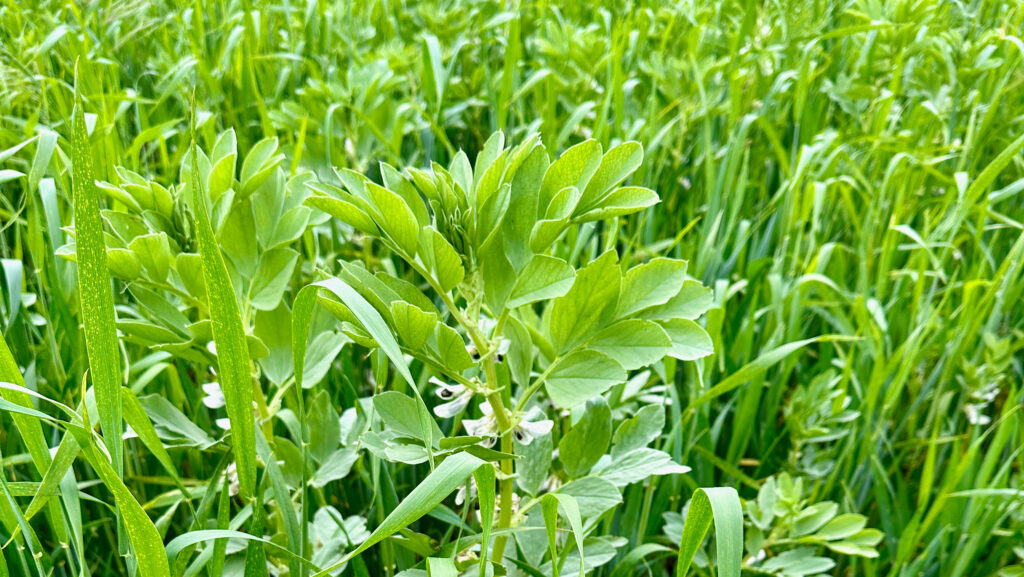 © Mike Abram
 Intercropping wheat with a pulse can improve grain protein levels in a low nitrogen input system, but only in certain seasons, according to new trial findings.
For milling wheat growers, grain quality is just as important as yield.
Achieving the 13% protein required for breadmaking wheat has become increasingly challenging as fertiliser inputs come under pressure from rising costs and environmental regulations.
See also: Agronomy firm launches new ‘very early’ maize variety
One potential solution to this is intercropping wheat with a nitrogen fixing pulse crop to supply additional nitrogen during the season.
New research from the University of Reading, carried out under the EU-funded Leguminose project, explored whether intercropping winter wheat and faba beans could help maintain grain protein while cutting fertiliser inputs.
Trial design
Over two seasons, researchers compared a 50:50 extase wheat crop and faba bean mixture grown as both mixed and row intercrops against monocropped wheat and beans.
Nitrogen inputs were adjusted to reflect a lower input system: monocrop wheat received 0, 90, 135, 180 or 225 kg N/ha, while intercropped wheat received half those amounts, applied in two sprays.
Clear benefits
Results from the 2023 to 2024 season, showed clear benefits for grain quality when nitrogen availability was limited.
At zero and low nitrogen rates, wheat grown in the intercrop achieved 1.4% higher protein content compared to the wheat monocrop.
In the same season, intercrops receiving 67.5kg/ha of Nitrogen, which is 75% of the standard rate, produced wheat yields 0.82 t/ha higher than the equivalent monocropped wheat, indicating that the improvement in grain quality does not compromise yield.
However, with the 2024 to 2025 season presenting severe drought across much of the UK, challenges arose for legume crops and reduced their nitrogen fixing ability.
Although wheat yields increased in the intercrop by up to 1t/ha at standard nitrogen levels, grain protein content fell by around 1.2% at higher nitrogen rates.
The poorer weather conditions highlight that grain quality benefits from intercropping are not guaranteed and performance is based largely on external factors.
Maintaining quality
The trial also demonstrated the importance of nitrogen management in maintaining both yield and grain quality.
As nitrogen rates increased to 90kg/ha and 12.5kg/ha, bean yields in the intercrop fell by up to 0.94 t/ha due to competitive suppression by the wheat.
The shift in crop dominance affected the overall system output and the way nitrogen was shared within it, causing implications for the wheat’s protein content.
The findings suggests that intercropping can help support grain protein levels and reduce nitrogen inputs, particularly in seasons where the pulse crop performs well.
In 2023 to 2024, the system achieved both higher wheat yields and improved protein at reduced nitrogen levels.
However, in a dry season, the system was unable to replicate the grain quality improvements, even though wheat yields still benefitted.
Practical and logistical considerations
While the grain quality benefits are promising in the right conditions, intercropping brings challenges.
Managing two crops in a single field complicates drilling, crop protection and harvest timing.
For food markets, separation, cleaning and storage require additional handling capacity, which entail additional expenses.
Grain quality and protein yield
Grain quality results from the Leguminose trials show clear benefits for intercropping systems.
Across multiple seasons, cereals grown with legumes consistently recorded a 1% rise in grain protein content, with starch and sugar levels remaining broadly comparable to monocrops.
More notably, protein yield a ha increased by 5-10%, highlighting both improved grain quality and the additional protein contribution from pulses.
This uplift offers clear value for livestock rations and highlights the role of intercropping in boosting nutritional output without increasing fertiliser use.