

Arable Insights farmers doubtful about Profitability Review
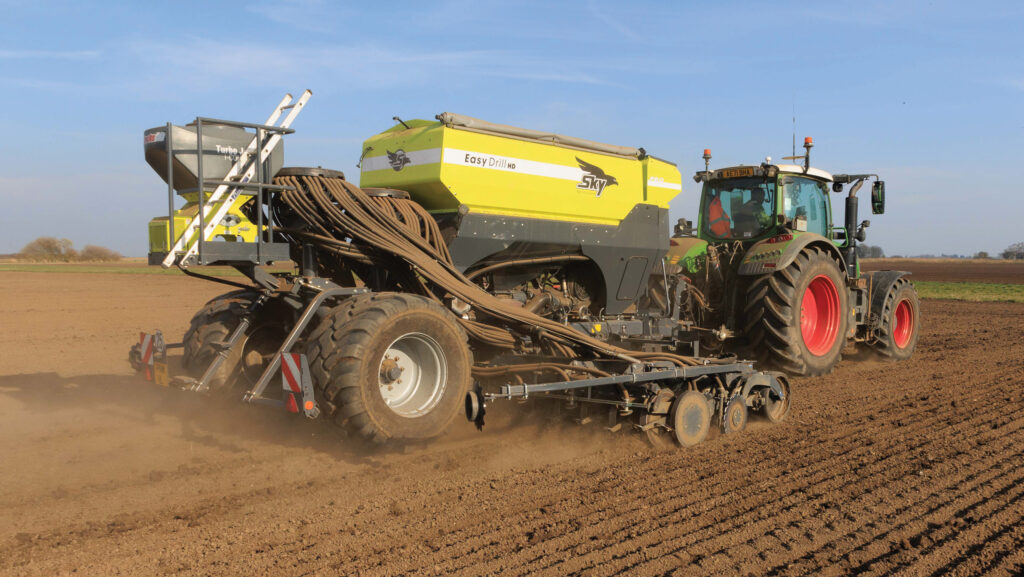 © Tim Scrivener
 Farmers on this year’s Farmers Weekly Arable Insights panel are sceptical that Baroness Minette Batters’ Farming Profitability Review for Defra will significantly affect their future profits.
A formal response from Defra to Baroness Batters 57 recommendations is still to be published, but the group’s overwhelming feeling is that it will lead to little practical change on the ground.
Yorkshire farmer Richard Bramley feels Baroness Batters analysis of the issues facing the farming sector, especially how farming is undervalued, are “spot on”.
See also: How 6 farmers are managing fertiliser use in tight season
Much of it chimes with the issues we’ve been facing all my farming career, particularly that the activity of farming delivers an awful lot more than just the end product we sell.
“The environmental side is massively undervalued, if at all. We’re caught in a capitalist system where it’s all about how little buyers can get away with paying for commodities,” he says.
Neither are new issues, he points out, and while the industry has battled through tough periods in the past by “buckling down the hatches and working hard” – creating diversified businesses as a result – Richard is pessimistic about how much further room for manoeuvre his and many other businesses have.
“We’ve addressed costs of production and improved yields while focusing on margin,” he says.
“We grow the crops most suited to our soils and our system, always looking for a quality premium – even though they are increasingly hard to find with fewer contracts and lower premiums available.”
Private funding
Tourism has provided a successful diversification and essential alternative income stream.
Richard has also looked at tapping into private funding sources including for growing wheat using sustainable practices available through Frontier Agriculture, and other opportunities via Landscape Enterprise Networks (LENs).
“But these schemes are underdeveloped and complex to navigate,” he says. For example, he’s unsure of whether being part of the Pladis scheme will negate any opportunities with LENs.
For those reasons, Richard and others in the group are broadly supportive of creating shared metrics for measuring carbon, soil, water and biodiversity outcomes as outlined within Baroness Batters Soilshot + Nature recommendations.
The idea is this will resolve the proliferation of conflicting metrics and provide the basis for the high-integrity data needed to unlock private sector funding.
“It would help eliminate the variability and make sure everyone is on a level playing field,” he says.
International standard
Scottish farmer David Aglen believes a unified, international standard is the only way these markets will ever fairly work. “Currently, the quickest and most efficient way to improve your carbon footprint is to change the calculator,” he says.
“But if governments and supply chains are serious about nature markets, there needs to be a standard – just like there is for feed wheat and other commodities – so it is clear what is required to help make informed decisions.”
David recently carried out a carbon audit for Inverarity Farms Ltd, but with less immediate pressure on finances with the Scottish government still providing a proportion of former Basic Payment Scheme (BPS) funding and a productive farm that doesn’t have large areas of natural capital, he’s not looked into natural capital schemes.
“We have big, square productive fields, so the cost would have to be very attractive to take land out of production for wildlife,” he says.
Scotland’s ecological focus area requirement increases to 7% in 2027, but for David that will mean an increase in cover cropping, rather than putting in extra margins. “I’ll recoup some of the cost from grazing livestock,” he says.
More widely, there is consensus in the group that the industry should focus on being extremely market-focused rather than relying on government support.
Building stronger markets for protein crops is another of Baroness Batters recommendations in the report, highlighting the opportunity for replacing the nation’s reliance on imported soya.
Pulse support
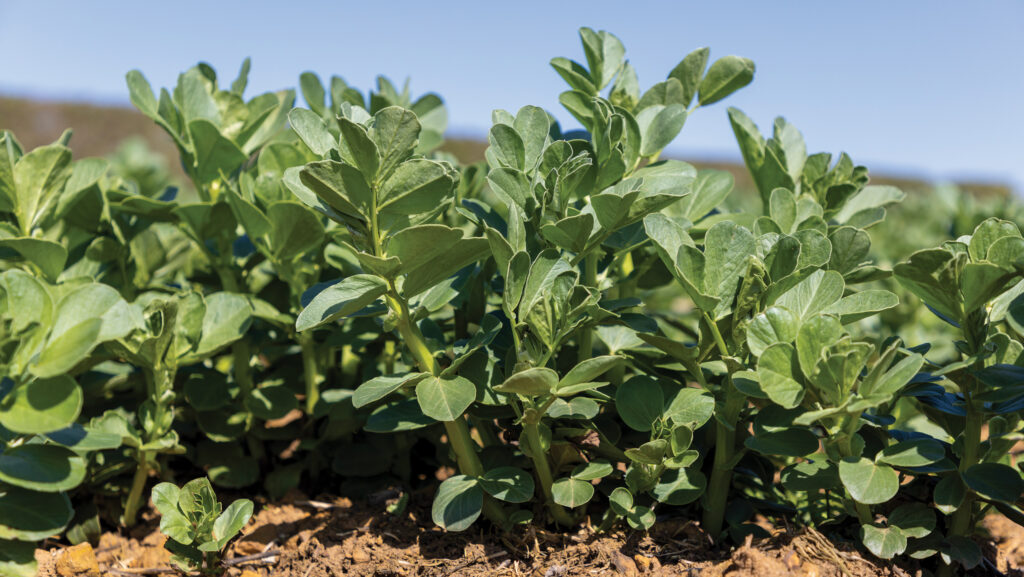
Government support for growing beans would need to be matched with an increase in demand © GNP
The report recommends establishing the Great British Farm advisory board to take a strategic approach to increasing the market share of British raw ingredients, while also pointing out the benefits of growing legumes crops for long-term soil fertility and resilience.
Baroness Batters suggests that support for growing pulse crops should be included in the next SFI iteration, helping also link it to food production and building on-farm resilience.
It’s not a change that meets universal acclaim within the group. David points out pulse payments failed in the past because they did not create market demand.
Meanwhile Dorset farm manager Andy Meecham has concerns about an incentive creating oversupply that could crash the market. “If you do, then it is a race to the bottom again.”
An important crop in the farm’s seven-year rotation, particularly as an entry for winter wheat, Andy says more demand would need to be created as currently supply and demand are reasonably well correlated.
He’s been part of the British On-Farm Innovation Network (Bofin) project that’s aiming to increase pulse and legume cropping to 20% of arable rotations.
One of the challenges, Andy says, is that the protein level in beans is much lower than in imported soya. “It is very hard to compete and get livestock farms to switch to home-grown protein.”
One positive outcome of an SFI incentive would be if it encouraged growing of more niche protein crops, such as lupins or chickpeas, he suggests. David is not so sure.
“Everybody wants to make hummus from chickpeas, but why are we not making it from faba beans? I’ve done it and it was yummy. Why are we trying to reinvent the wheel?
“It’s a marketplace that could be developed easily, and it’s for human consumption, so even better. We’ve got to be better businesspeople. It’s all about producing what the marketplace wants,” he says.
What the market wants
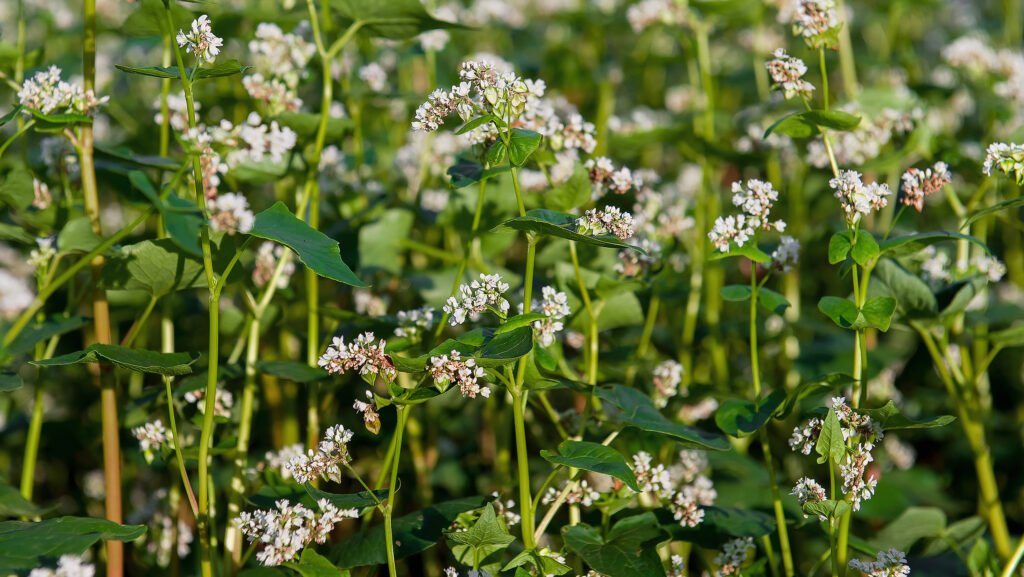
Martin Caunce is hoping to sell into the growing domestic buckwheat market © Adobe Stock
That’s exactly the route farmer Martin Caunce has taken for his 54ha business in the heart of the Lancashire intensive veg production region.
It’s not lettuces, carrots or onions he’s producing, but wheatgrass seed, buckwheat pillows and wheat flour – all sold direct to consumers through his Brow Farm online store or via local bakeries.
“It’s the story as much as the product,” he says.
In many cases that’s built around his customers looking for products that are grown using regenerative practices without pesticides, allowing him to charge a massive premium compared with his conventional farmer neighbours.
The markets might be tiny – for example, two local bakeries have just started taking two 20kg bags of flour a week – but they are profitable, he says.
“I’m selling it at £1.25/kg, whereas wheat is £168/t or £0.168/kg. I can reduce my area by 10 times and still make the same money.”
Spotting opportunities and gaps in the market where he can supply a finished product is a key skill he’s developed.
The business started when he supplied wheat to the Natural Wheat Bag Company, which led to the formation of the online store to sell direct.
His latest idea is to supply a growing domestic buckwheat groat market.
That will require capital investment of about £60,000 to set up a processing line that grades buckwheat seeds into different sizes, specialised rollers to pop off one side of the husk, and a vibrating tower to separate the groats and husks.
But before investing he’s using social media to test demand, with initial feedback positive, he says.
Not surprisingly, he views the Farm Profitability Review as irrelevant to his situation. “We’re probably ahead of the curve in lots of ways.”
In Suffolk, renewable energy production has been an important diversification for James Porter of Porters Farm in Walpole.
“The solar panels have brought in extra money, but we’ve gone as far we can with that, so we are looking into a couple of ideas to bring in another income stream,” James says.
At least one of those ideas could potentially be helped by the proposed easing of planning regulations and changes to capital allowances within the report.
He’s already involved in natural capital markets through Agreena, although he is yet to see any financial return for tracking his establishment and input use.
He’s expecting his first carbon credits are due to be issued this spring, but he’s a little hesitant about whether to sell them for offsets in case he needs them to offset his own carbon footprint in the future.
Natural capital
A major frustration is that current markets often fail to reward established natural capital.
“You can get grants for planting new hedges, but those we paid and planted 20 years ago that are giving much more benefit to wildlife and for carbon sequestration don’t qualify for any income generation.”
While he views standardised metrics for natural capital measurement as a positive, he hopes future schemes will have two distinct tiers – one to incentivise new projects and another that properly values existing natural capital.
Over in Dorset, Andy Meecham has also embraced the private carbon market through Soil Capital, joining the scheme to mitigate the financial risk of transitioning away from intensive cultivations to reduced tillage as BPS began to reduce.
“As a bigger farm, I knew we would lose our BPS payments quicker than most farms,” he says.
The farm is also hoping to be part of the River Allen Landscape Recovery project as part of the Cranborne Chase cluster group.
“We have a lot of water meadows – the project will be rerouting the rivers back to the original path to slow the water down, deepen the channels, and flood meadows to prevent flooding of our largest town, Wimborne.”
But with roughly 22% of the farm currently enrolled in either SFI or Countryside Stewardship due to end in December 2026 and 2027 respectively, there is concern over how the shortfall in funding can be met.
“We’re pretty lean having reduced machinery costs and cut fuel consumption by 30%.
“While we would still be profitable usually, but we could be looking at a 15% loss in our profit margin, which just makes it harder to reinvest in the business,” he concludes.
Flooding risk changes cropping strategy
Greater flooding risk on 80ha of arable land, combined with a profitable beef enterprise has prompted Tess Lincoln of Burton Lazars Farms in Leicestershire to increase livestock production.
Situated on a floodplain, about 20 years ago a dam was installed to protect nearby Melton Mowbray, Tess explains. “When the dam is operational, our land floods.
But we were given a map that suggested areas that would be flooded one year in 20, or one year in 400 – and it’s the one-in-400 occurrence which is happening all the time now.”
That’s making winter cropping on the land unfeasible, while spring cropping is proving unprofitable, she says.
With the help of a farm business consultant with a fresh set of eyes and without emotional attachment, a decision has been made to crop with grass, while doubling the size of the Aberdeen Angus herd.
“We can make money from beef, especially with the way beef prices are currently, so we’re aiming to reach 200 head of fattening stock,” says Tess.
Reliable income
Even when inevitably the beef price drops, the analysis suggests that switching from arable will give a more reliable income, she says.
Tess is also hoping to renegotiate the current tenancy agreement to provide more confidence to invest back into the business.
Currently just a one-year rolling tenancy agreement, albeit in place for nearly 40 years, it doesn’t provide the security for banks to lend money, she notes.
Inspired by the Crown Estate’s innovative and longer-term environmental farm business tenancy to ask for a 20-year tenancy, Tess is hopeful that agreement might be forthcoming from her landlord, the Ernest Cook Trust.
“It seems keen to work collaboratively, and we share the same principles of wanting to farm with the environment in mind,” she says.

Staying sharp shouldn't be a chore
Explore more / Transition
During the series we follow our group of 16 Transition Farmers through the challenges and opportunities as they seek to improve their farm businesses.
Transition is an independent editorial initiative supported by our UK-wide network of partners, who have made it possible to bring you this series.
Visit the Transition content hub to find out more.
