

Why spring linseed could be a strong option in 2026 rotations
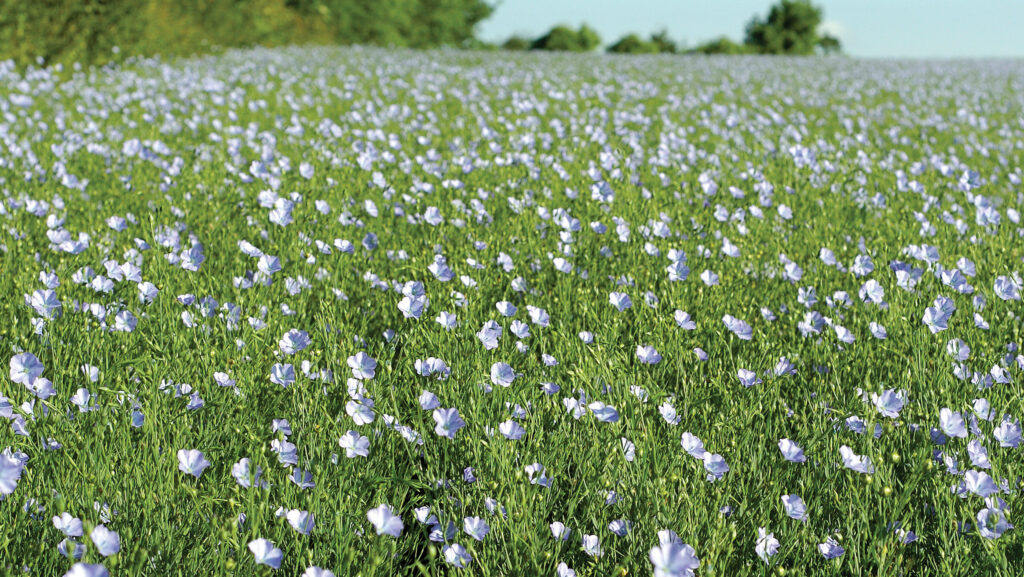 Spring linseed in flower © Elsoms Seeds
 With demand for UK-grown linseed continuing to remain high against a backdrop of depressed markets and uncertainty surrounding many other spring crops, spring linseed could be the solution for many growers currently considering a rotational rethink this spring.
Linseed offers a combination of low input costs and strong market opportunities with spring contracts for harvest 2026 on offer at £550-£600/t.
Boston Seeds commercial director Jack Holgate says the crop can deliver competitive gross margins with high yielding varieties.
See also: Poor grain outlook sees farms rethink rotations and machinery
Jack Holgate © Bostons Seeds
Beyond the headline figures, the wider rotational benefits offered by spring linseed are just as important, he adds.
“As a true break crop, it helps disrupt cereal and oilseed rape pests and disease cycles providing a useful tool for weed management.
“Its rooting structure is unrivalled, offering significant benefits to soil condition, improving soil structure and making it a great entry for a first wheat.”
One grower who sees the benefit is Lincolnshire farmer Alex Jasinski, who has readily achieved yields of more than 2.5t/ha over the years.
He first began growing spring linseed as a low-input, low-risk break crop 20 years ago.

Alex Jasinski © Alex Jasinski
Farming 700ha at Ingoldsby, near Grantham, he recognises the agronomic and economic benefits of linseed and still regards it as one of the most profitable break crops.
He says it is a superb entry for a following wheat crop. “Our establishment method is direct drilling and we’ve consistently found, over a number of years, that our drill runs much better each autumn behind a previous crop of spring linseed.”
Variety
With a seed yield of 109%, the variety Bingo, from Dutch breeder van de Bilt, tops the latest Descriptive List (DL).
“A popular and well established variety with robust agronomics, Bingo has consistently delivered high yields across a range of soil types,” says Jack.
He points out that its maturity and stiff straw help reduce harvest risk, while its disease resistance and good standing power make it a practical, straightforward variety to manage.
That reliability is crucial when spring drilling windows are tight and with weather patterns becoming increasingly unpredictable.
Alex grew 40ha of the variety Bingo last year. It was drilled into a limestone brash soil at a seed rate of 95kg/ha in April.
He then applied 100kg/ha of liquid N on 9 April with the dry, early spring conditions the only major concern at that stage.
“Due to an unfortunate delay on receipt of the seed, we actually drilled Bingo a couple of weeks later than we’d ideally wanted to, given that soil temperatures were already above 7C by mid-March.
“With no further rainfall at all in either May or June, Alex decided not to apply any fungicides to the crop – even post flowering.
His only other input was a post-emergence herbicide applied on 22 May for control of broad-leaved weeds including cleavers.
“Following persistent near-drought conditions, we eventually harvested on 8 August – much earlier than in previous years.
However, despite yields that were well below our usual farm averages, we still recognise the unique benefits of spring linseed and will be drilling 40ha again this spring.
“With linseed prices holding up well due to consistently high market demand, good buy-back contracts available for this spring, plus pricing uncertainty over other spring crops, spring linseed has fewer questions to answer and looks a solid choice for spring sowing,” he says.
Newer variety
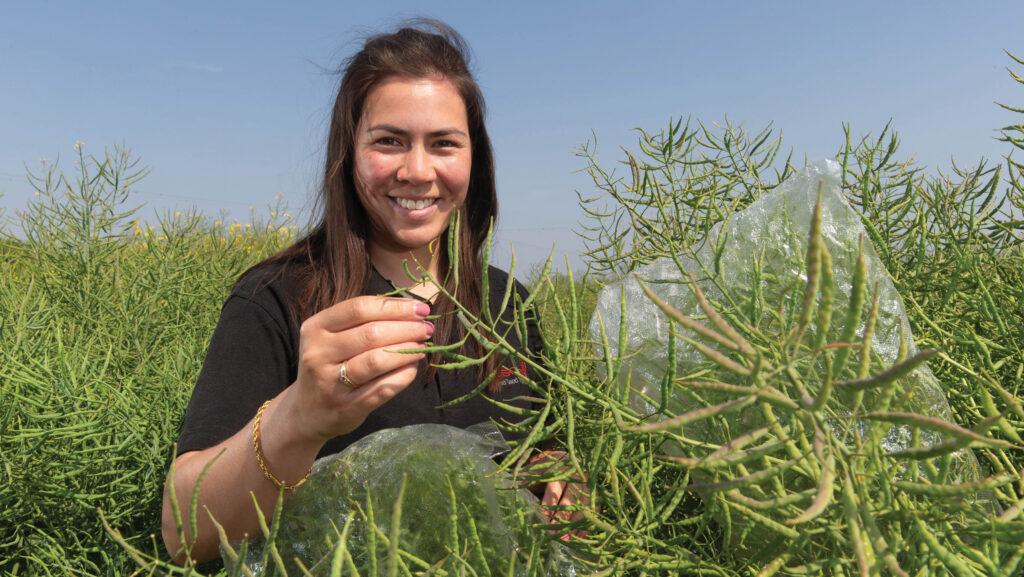
Panida Wadsworth © Elsoms Seeds
With a seed yield of 108%, Balance, another variety from van de Bilt, is a new entrant to the DL sitting just behind Bingo as the second-highest yielding variety.
Panida Wadsworth, a linseed breeder at Elsom Seeds – the UK sales agent for both Bingo and Balance – has been monitoring the performance of Balance across both the AHDB and Independent commercial trials for the past four years.
“Through 2022-25, it has shown high levels of consistency and has matched the DL’s highest yielding variety, Bingo, on most of the key metrics including plant height, seed quality and annual seed yield,” Panida says.
Despite being awarded the same maturity rating on official trials figures, Panida has found that Balance consistently matures later than Bingo, enabling it to be potentially drilled a few days earlier as long as soil temperatures permit.
This gives Balance a wider growing window allowing the plant more time to accumulate greater biomass and take advantage of an extended seed filling phase.