Farmer Focus: Hard to tell if liquid gypsum improved soil
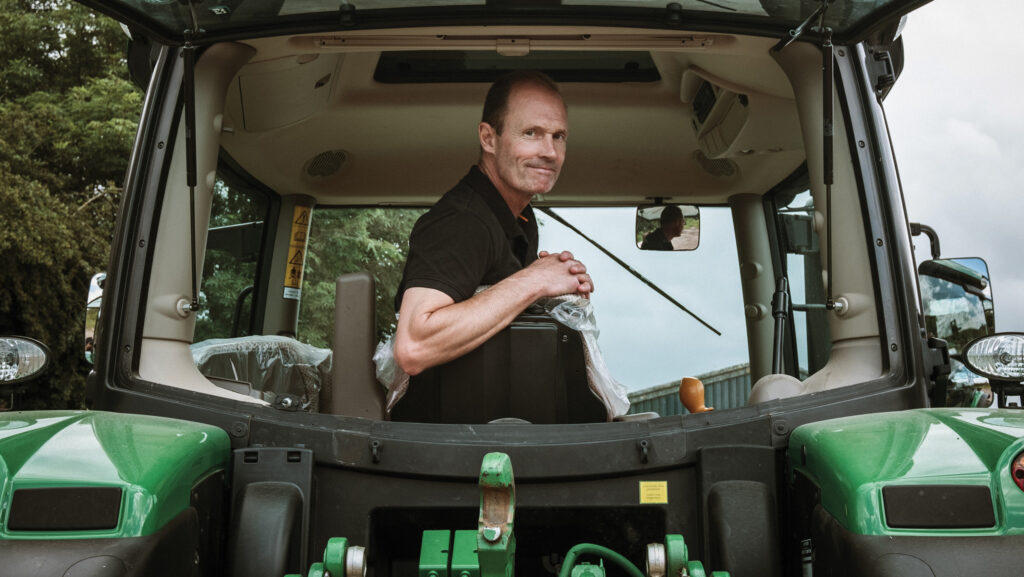 Andy Barr © Colin Miller
 The weather has got cold enough to put the propyzamide on the oilseed rape, which eventually should have a welcome effect on the blackgrass. Is it me or does propyzamide work better alone than when mixed with aminopyralid?
What would not be welcome is the loss of the propyzamide, an integral part of our agronomy across the rotation, as are cynmethlin and glyphosate, all of which seem to be under some kind of threat. Talk about shooting an industry when it’s down.
See also: How a farmer is planning weed control without flufenacet
About the author

There is a lot more oilseed rape around than there has been. It all looks really strong, and although there’s obviously a long way to go this would be a highly welcome comeback for the crop.
Interestingly, the German Association for the Promotion of Oilseed and Protein Crops has reported that flea beetle “has reappeared in significantly greater numbers compared to last year”.
I feel guilty this got my hopes up with regard to our own OSR prices for next year and sad that profits are under such pressure that hoping for problems elsewhere in the world is what it has come to.
Unfortunately, they went on to say the area was up and, despite the beetles, crops generally look good.
They had good autumn planting conditions like us. Our seed-beds were some of the best we’ve had, which has made it tricky for me to tell whether my first time use of liquid gypsum has actually improved soil structure, as I had hoped, as it all looks good.
Certainly the liquid formulation happily didn’t come with as many bricks in it as the recycled plasterboard version I tried last time.
Crucially the pre-planting glyphosate I applied with it worked absolutely fine, just as the independent agronomist who gave me the idea said it would, despite concerns that its calcium content would deactivate the chemical.

Staying sharp shouldn't be a chore