Farmer Focus: More land needed to maximise machinery use
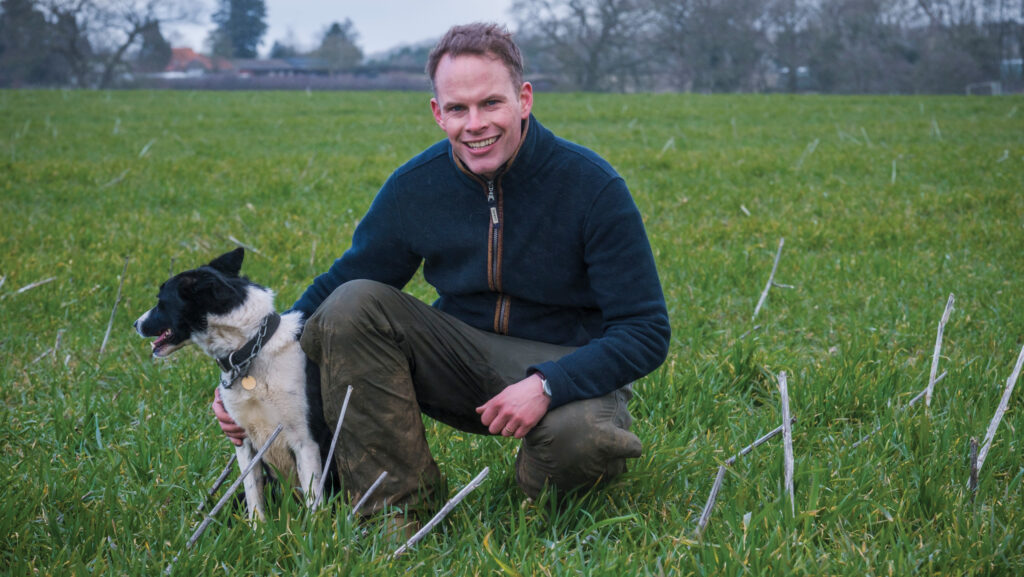 Robert Scott © Jason Bye
 November has been a typically slow month. We lifted more sugar beet when conditions allowed, and store lambs continued to arrive on our farms to graze cover crops.
The machinery is now all washed, greased and wearing metal changed ready for spring. Everyone is working slightly fewer hours, using up holiday and going home early to spend time with family.
I had the opportunity to accept a Farming Equipment and Technology Fund grant offer for a camera-guided inter-row cereal hoe.
See also: How a farmer is planning weed control without flufenacet
About the author

After much deliberation I declined. I just didn’t think I had a strong enough business case to justify this expenditure in time for the March payment deadline.
The use of the hoe would have been specific to only one of our seed drills, ineligible for hire purchase funding, and it would have been a new concept for my customers to embrace.
A “want” and not a “need”, in what is increasingly looking likely to be lean year ahead.
The day after I declined the hoe, I learned of flufenacet’s likely demise as part of Labour’s “dynamic alignment” with the EU.
The “less is more” approach definitely takes a lot more field-by-field management than a blanket approach
Typical, I thought. Another badly timed policy announcement to rub salt in the wound.
November has also meant a run of contract farming quarterly meetings. The 2025 profits show our system of farming is holding up, despite drought and low prices.
Inputs have been carefully purchased and applied, and arable income topped up by additional revenue streams.
These range from Countryside Stewardship, Sustainable Farming Incentive land-based actions, lamb fattening and, this year in particular, straw sales.
Taken as a whole, the system has been robust enough. It has been hard work to get here, and the “less is more” approach definitely takes a lot more field-by-field management than a blanket approach.
What is now evident is that we’re becoming over machined. This is because of the removal of farmed land into non-farming schemes across our entire customer base.
Our cropped area has fallen as a result. My task this winter is to locate more land to rent or contract farm, to fill that void so that we operate at optimum capacity.
Anybody considering a change of system, or wanting to pull a lighter harrow, please do get in touch.