Farmer Focus: Spring barley is now risky and unpredictable
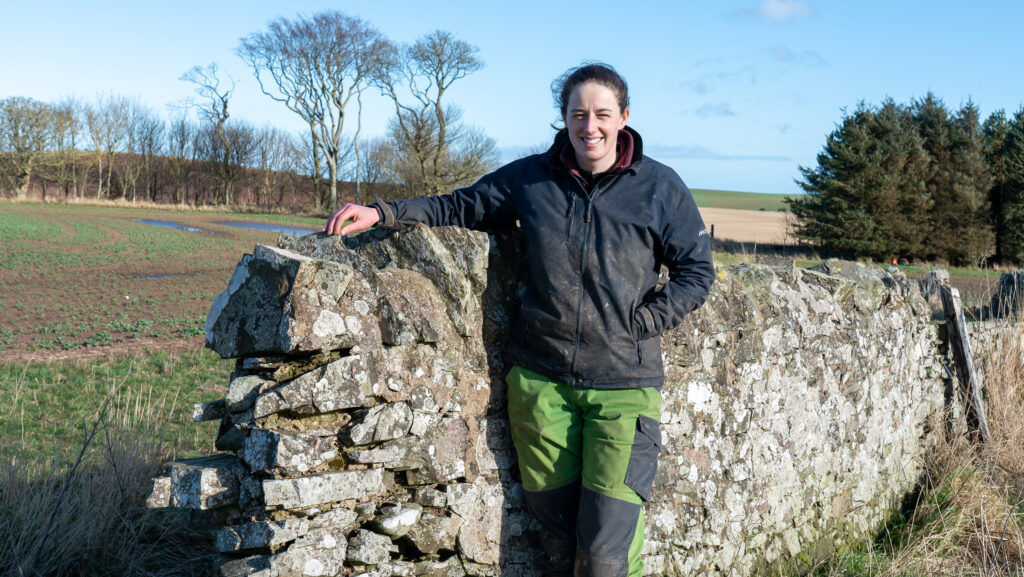 Annabel Hamilton © Angus Findlay
 January is the month when new year resolutions begin and some end, we see night-time temperatures dip below 0C and we begin to look ahead at the upcoming workload.
Before Christmas I secured our malting spring barley seed order.
Over the four different accounts we have 986t on contract to Simpsons Malt, a mixture of Laureate and Belter, which in the dictionary means “something unusually good or unusually powerful”.
Let’s hope it lives up to its definition.
See also: Farmer Focus: Is it time to scrap the Environment Agency?
About the author

A couple of years ago growing spring barley used to be simple and bring in profitable returns, but with drier springs and a diminishing demand for Scottish whisky it has become risky and unpredictable.
High screenings and high nitrogens bring added complications, but as we look at our rotations we need spring crops to fill in the gaps.
Anyway, we plough on and hope that the spring weather is in our favour.
I may not have any new year resolutions, but I have a wish list for 2026.
Hopefully, our new grain store will be up and running for harvest, we will receive approval for our free-range hen shed, and as a family we will continue to discuss succession and move the business forward.
I shall keep you all informed throughout the year on all three.
Our January Agricultural Discussion meeting was a panel night with the subject “Financing the Agricultural Transition”.
The panel consisted of a senior agricultural director for Virgin Money, one of the vice-presidents of NFUS and a managing director of a large contract farming operation.
It was an enjoyable evening with many topics covered, including the quality of further education in Scottish colleges and – particularly thought provoking – the UK’s journey towards net zero in 2050 and whether it is worth it.
The discussions were that to allow farming businesses to survive, government support or profitable returns are required, which in return brings sustainability.
Fortunately for us in Scotland the government support is staying afloat – but for how long?