Farmer Focus: We must take resilience more seriously
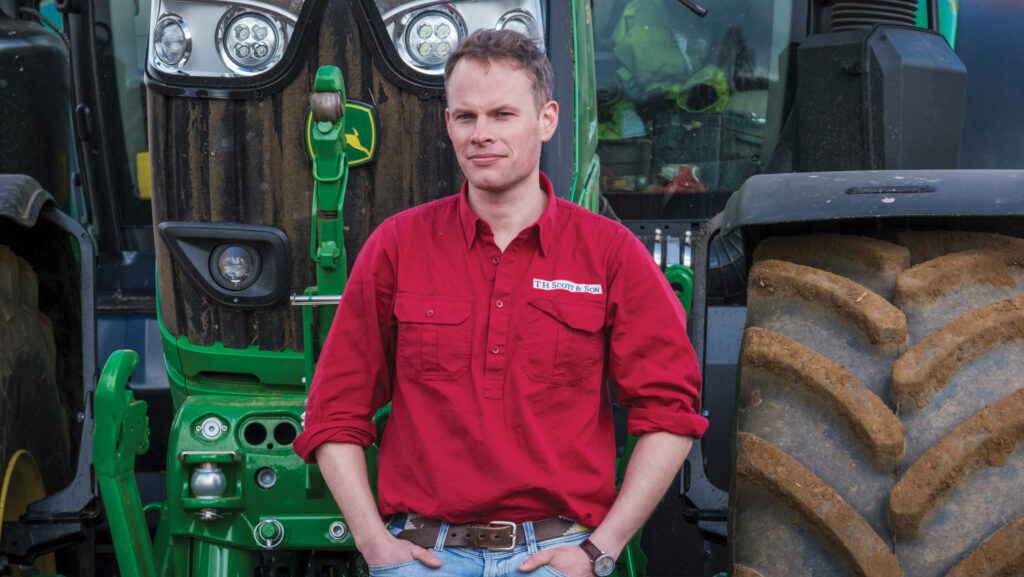 © Jason Bye
 Donald Trump’s war with Iran has rocked fuel prices. The initial rises are a worry, but securing supply during peak periods is a far bigger concern.
Input security costs money, and this is one reason farmers perhaps don’t pay enough attention to it. Especially while there is no slack in farm cashflows.
As a small-scale producer, I have started to make small changes to protect my business. This started with the purchase of a larger fuel tank this winter.
See also: Advice on key focus areas to ease pressure on arable margins
About the author

It’s all very well having shiny tractors and a big combine, but they aren’t a lot of good without fuel.
I believe this is the sort of practical thing government grant schemes should cater for, keeping the wheels of industry turning, rather than the more tenuous items that get touted to us annually.
Clear-eyed planning for vulnerabilities starts at the farm gate, but I do think we should be doing more collectively as a sector. Especially when it comes to headline input procurement.
I’m a member of a farm buying group and I hope “just-in-time” supply chains are scrutinised at their next board meeting.
This brings me to the industry’s favourite buzzword: resilience.
It is a term much loved by Whitehall, usually deployed just as they announce the tapering of support payments or a fresh layer of environmental bureaucracy.
Resilience has become a euphemism for “coping with less.” It is a passive compliment used to justify inaction.
Let’s be clear: “resilience” is defined as the capacity to withstand or recover quickly from difficulty.
This requires pragmatic and proactive management of risk, and the flexibility to respond. We all need to start taking resilience a bit more seriously.
We have planted three quarters of our spring barley, but are now waiting for the wetter parcels to dry up.
A “false spring” to start with presented less-than-perfect conditions to open our campaign. It has been a challenge, with a lot of darting about the countryside to grab fields here and there.
Next, we will be restoring former outdoor pig fields to the arable rotation, and then it’s on to sugar beet drilling.
Seed was only delivered to the farm on 16 March, and with cold soil temperatures we haven’t rushed to plant.