Farmer Focus: We’re always jumping the next farming hurdle
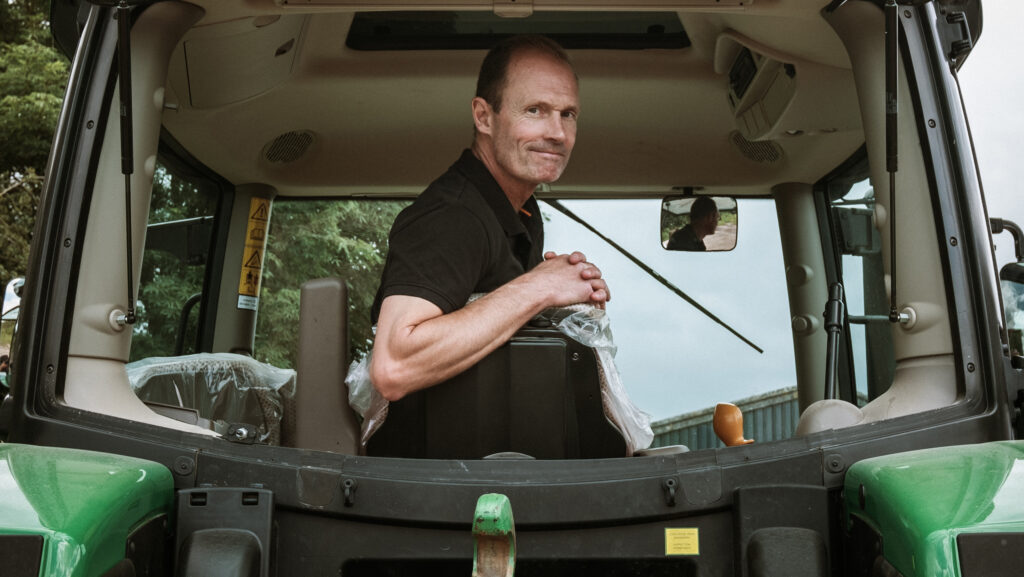 Andy Barr © MAG/Colin Miller
 And they’re off…the tractors are racing around again locally, albeit with the odd pull-up.
It’s not so much that we’re getting huge amounts or rain, but when it drizzles and remains thick with fog until lunchtime it’s all a bit heavy going.
You’ve got to love farming – there’s always a new hurdle around the corner.
After fertiliser, the most pressing need was to provide some help to the winter beans, suffering like a lot of places by the sound of it, with unseasonal chocolate spot.
See also: Yellow rust forces rethink of wheat fungicide programmes
About the author

The cool fog also produced a whiff of yellow rust on the Bamford winter wheat, which additionally needs some breaks applied having galloped along some lengths ahead of the Vibe.
We’ve managed to sneak in the spring barley in two hits. I have cultivated the previously grazed cover crop ground prior to planting, although I’ve achieved decent establishment with direct-drilling in the spring for many years.
Rather inconveniently, the cultivated ground has had a habit of yielding more in the Syngenta Conservation Ag trials I host. This contrasts with the autumn drilling where yields are always very similar.
This spring I dragged an old Techmagri Profilab cultivator out of the nettles and, despite probably only being worth scrap value, it did a lovely job.
I recently had my Red Tractor audit, which, having been Leaf audited for several years, I didn’t find particularly onerous to be honest.
However, I would like to see a similar system brought in for world leaders. With the recent developments I’m glad I’ve bought all my fertiliser but am not looking forward to next year and the introduction of the Carbon Border Adjustment Mechanism or Cbam.
As I understand it, the main goal is to prevent companies moving production to countries with weaker climate rules to avoid costs.
If this is deemed sensible then surely we should introduce a Pbam, or Pesticide Border Adjustment Mechanism, in order to avoid moving food production to countries with weaker environmental rules?