Farmer Focus: What I’ve learned about potato production
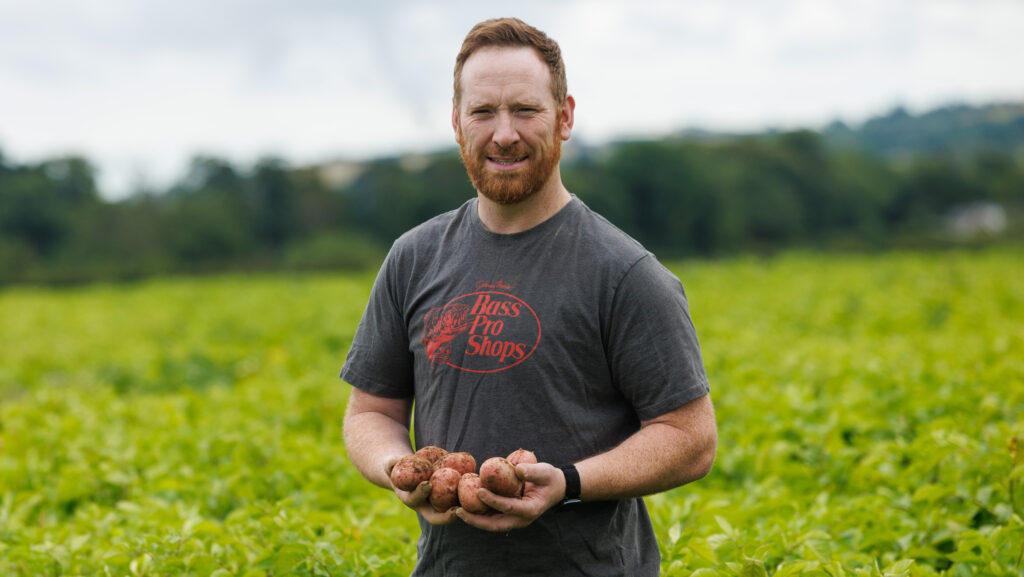 Peadar Whyte © Damien Eagers Photography
 Potato planting has begun, and I’ve been reflecting on what has worked well over past years.
It’s tricky, as we have about 25 weeks from planting to harvest. It’s always a quick dash to get crops established, give it everything it needs to grow 50t/ha, while avoiding pests and disease.
See also: Key bean fungicide timing set for earlier window this season
About the author

I’ve learned a lot over the years, and we’ve got better at growing a more stress-free, balanced potato crop.
For a start, it’s important to supply enough nitrogen to get a canopy emerged to intercept sunlight.
In the past, too much nitrogen was our biggest problem, which meant a taller, more dense canopy resulting in a soft crop with more hiding places easily attacked by insects and disease.
On top of that, you also have more leaves and stems to kill at the end, which is costly on desiccant and time.
There is a balance to be struck to place just enough nitrogen to build a canopy, then foliar feed to keep it producing until senescence.
We famously suffer with potato blight in Ireland so it is essential to spray fungicide every seven days in the main growing season.
Give me any blight forecasting you want, but the best option is always to spray as close to seven days as possible.
I’ve only seen blight get into crops when there’s a gap in the fungicide programme, so I go for a strong plan and alternate modes of action.
I believe weekly fungicide sprays should consider the crop’s nutritional needs.
A healthy crop is less susceptible to pests and disease and this is often underestimated.
Yes, foliar feeding takes time, but elements like sulphur, calcium, silicon, boron, nitrogen, magnesium and potassium all influence the outcome.
Sap testing can help paint a picture of how a crop progresses. But being reactive to deficiencies usually means you are too late to make an impact.
I look back at a few years of testing to identify trends of when to apply nutrients. This is key to growing a resilient plant that stays healthy and produces a storable potato.

Staying sharp shouldn't be a chore