

How arable farms are adapting as public funding disappears
 © GNP
© GNP Falling government support for arable farms is creating significant financial strain and uncertainty, with direct payments being phased out and environmental funding abruptly paused.
People farming, earning from social media, direct selling grains, and signing up to biodiversity net gain (BNG) agreements are some of the ways that arable farmers have responded, growing their businesses without government support.
Farmers Weekly looks at how five farmers have adopted different solutions.
See also: How climate change is reshaping crop agronomy
Jock McFarlane, Blairgowrie, Perthshire – People farming
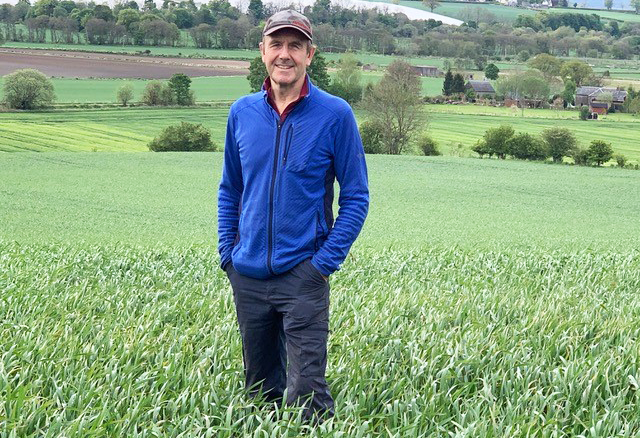
Jock McFarlane Jock © McFarlane
Despite still having the security of Scottish government support, grower Jock McFarlane reveals that changes made to the 210ha business near Blairgowrie mean unsubsidised enterprises are providing half of the farm’s income.
“People farming” is now part of the business, whether that’s selling Christmas trees and providing food and drink to seasonal customers, or having two holiday cottages and some DIY livery stables.
“Farming subsidies have existed for all of my farming career,” says Jock. “Even so, we’ve always had to alter our business activities to adapt to changing circumstances.”
Today, Easter Rattray Farm near Blairgowrie looks quite different to when Jock started farming in 1981. Originally a mixed farm producing combinable crops and beef, the addition of more land in 1984 prompted an expansion into soft fruit.
“We grew raspberries, strawberries and rhubarb, with the latter being our most profitable crop, reaching a peak production of 300t/year,” recalls Jock.
When the local cannery closed suddenly, he switched to producing more raspberries, initially for Scottish Soft Fruit Growers and then for Angus Soft Fruits.
The farm went from having 1ha of polytunnels to 15ha, with 150 seasonal workers picking 100t/year for a raspberry price of £6,000/t.
When the profitability of raspberries fell and the price dropped to £200/t, Jock took the decision to move out of soft fruit production.
“We came full circle,” he says. “My niece became a partner in the business in 2015 and we looked for a cheaper way to farm.
“I joined Base-UK in 2016, did some farm visits and then bought a drill that would allow me to start direct drilling.”
They now run a low-input system based on home-saved seed, a wider rotation, reduced artificial inputs and no P and K applications, producing combinable crops.
“Our yields are lower, but margins haven’t slipped and our soils are in much better condition,” Jock says.
A Christmas tree enterprise has been established, with customers choosing a pre-cut tree or cutting their own. Visitors are given an opportunity to buy food and drink, in the form of coffee and pizza.
Two farm cottages have been turned into holiday lets; there are 20 DIY livery stables and the farm is also the home of Blairgowrie Riding for the Disabled.
A truffle orchard was planted in 2022, with the ambition of producing the first truffles by 2028.
Jock says: “In Scotland we are still accepting government money, but the changes made will give the farm a future, regardless of what happens to support.”
Ryan McCormack, Woodbridge, Suffolk – Resilient business model
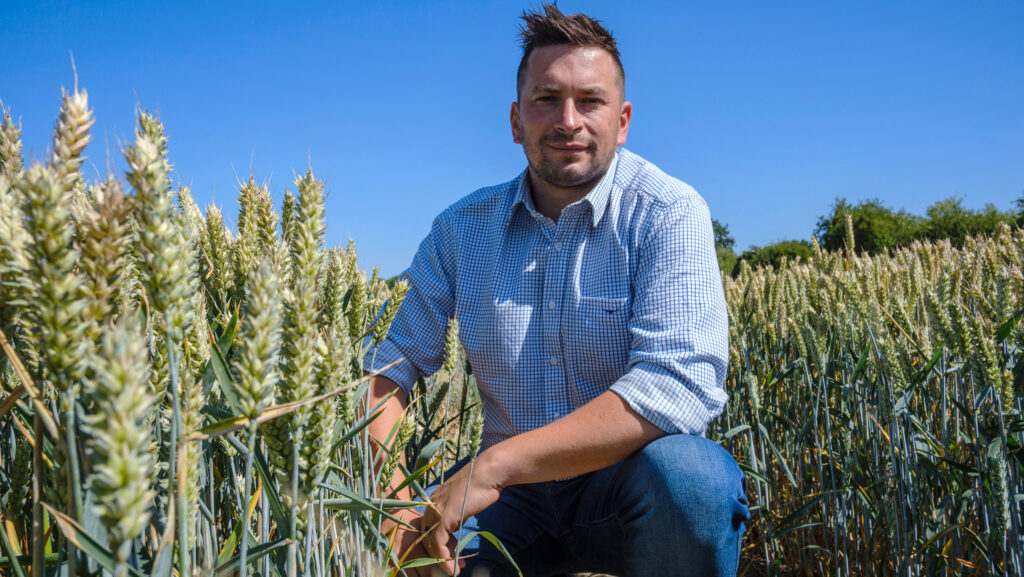
Ryan McCormack © Jason Bye
Commodity production is just one activity at Dennington Hall Farms in Suffolk, where farming is part of a resilient business model that embraces diversity and spreads risk.
Farm manager Ryan McCormack says that although food and farming is at the core of the business, it’s not enough on its own.
“We have also developed environment, energy and development as income streams, so we’re not too reliant on a single pillar,” he says. “They support each other, but they all make their own contribution too.”
A 12-year rotation is in place on the 1,500ha farm, so that workloads can be managed and pest and disease pressure is kept low.
Cover and catch crops allow enterprise stacking through integrating livestock, while adding value via supply chain initiatives is done wherever possible.
Low-input cattle and vension are sold direct to the public in meat boxes; best use is made of data and technology; tillage has been reduced; and knowledge exchange activities are embraced.
The environment offers huge income potential, believes Ryan, who highlights that there are 115 ponds and 100 miles of hedges on the farm, as well as wetlands and specialist habitat for red-listed birds including turtle dove.
© matthewleesdixon/iStockphoto
“Some of it is managed using pigs, so these conservation areas are both a management tool and produce low-input meat,” he explains.
Emerging BNG markets are being assessed as a way of bringing private money onto the farm.
“Countryside stewardship and the SFI [Sustainable Farming Incentive] won’t look the same in five years, so we need to have control over future opportunities.”
The business is also an active producer of energy, with biomass used for heating and hot water and solar installed for the farm and events business.
“It helps to decouple productivity from high HP use and keeps the money in our business.”
For the same reasons, an anaerobic digestion plant is being considered, he reveals. “We won’t rush into it, but volatile energy markets mean we have to look at alternatives.”
Redundant farm buildings have been developed, bringing long-term stability across the estate.
An events business, a multi-purpose meeting and training space and both residential and commercial lets provide predictable year-round income.
Development land in the village is another project, but any new buildings have to add value and be in keeping with their surroundings, so that the local community benefits.
“The real risk to a business like this is drifting,” says Ryan. “We have to choose how we change and have a strategy.”
David Wheatley, Wisbech St Mary, Cambridgeshire – Social media
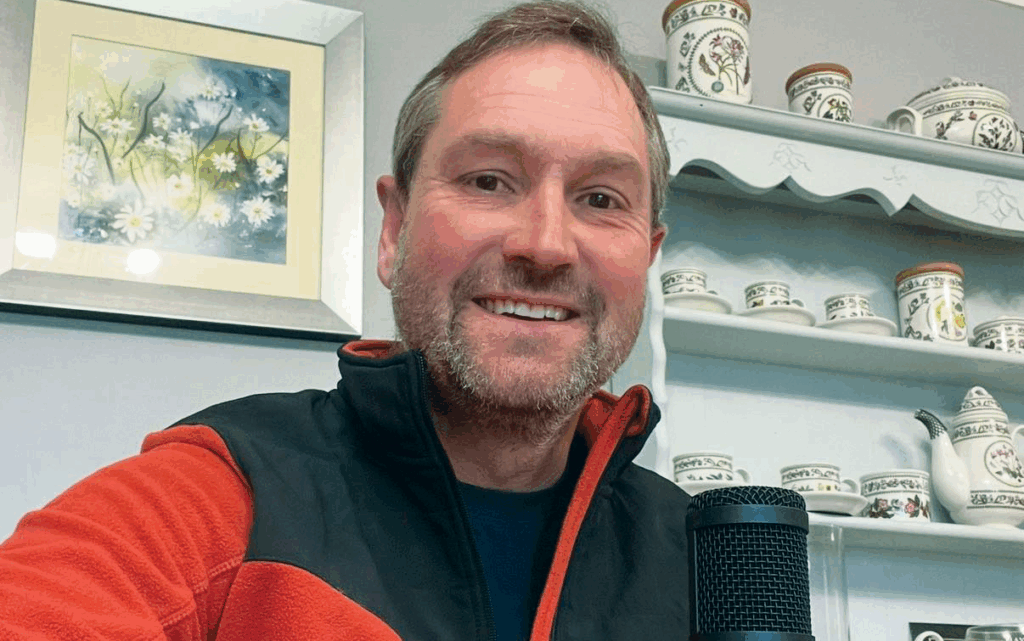
David Wheatley © David Wheatley
Social media rescued David Wheatley’s farming business when he was facing bankruptcy in 2021, and has since become an income stream in its own right.
In the past six months, Facebook alone has paid him £10,850 for views of his posts, while sales of flowers, fruit and vegetables through his farm shop have taken off due to his 500,000 followers across various platforms.
Last year, he sold 100,000 peony stems direct to people’s doors, cutting out the middleman and controlling the price he received.
After a farm fire in 2019, followed by the pandemic when flower sales to supermarkets plummeted, David had to find a way of earning £22,000/month for two years, if he was to stay in business.
Recognising that traditional farming and marketing methods were not a solution to his problems, he also knew he had to add value.
Selling on social media proved to be the answer.
With 2.8ha of peonies, just under 1ha of reject Christmas trees and 12ha of commercially unviable orchards to market, he started with the peonies.
By posting every day and making a story over time, he attracted followers and found some peony lovers.
With eight different varieties to sell, he was able to extend the season to five to six weeks and sold the crop for three times more than the supermarkets would have given him.
On the last day of the season, he had sold 20% of next year’s crop upfront, in the form of peony subscriptions.
Reject 10ft-tall Christmas trees were repurposed – with David cutting them up and putting them in foliage boxes for wreath-making, again with direct delivery.
The farm’s old orchards – home to 250 different heritage varieties of fruit – were another challenge. David knew that through traditional routes to market, he couldn’t sell the fruit for more than it cost to pick.
Although they hadn’t been sprayed, the apples weren’t organic, he explains. “By posting about them for four months, I sold the lot for £1/apple.”
He has also had success with potatoes, selling 26t in three weeks for 25p/kg plus post and packing. Since buying a mill in France, he has sold flour for the equivalent of £2,000/t.
“I do sell out a lot. On average I sell one product every 1,000 views but it’s not just product sales: I also receive payments from the platforms for advertisement views.”
David Wheatley’s top tips for selling on social media
- Be yourself
- Get on with it
- Get in front of the camera
- It’s not about you
- Do the right thing
- Post on all channels
- Enjoy the ride
James Bucher, Knettishall, Suffolk – Biodiversity net gain
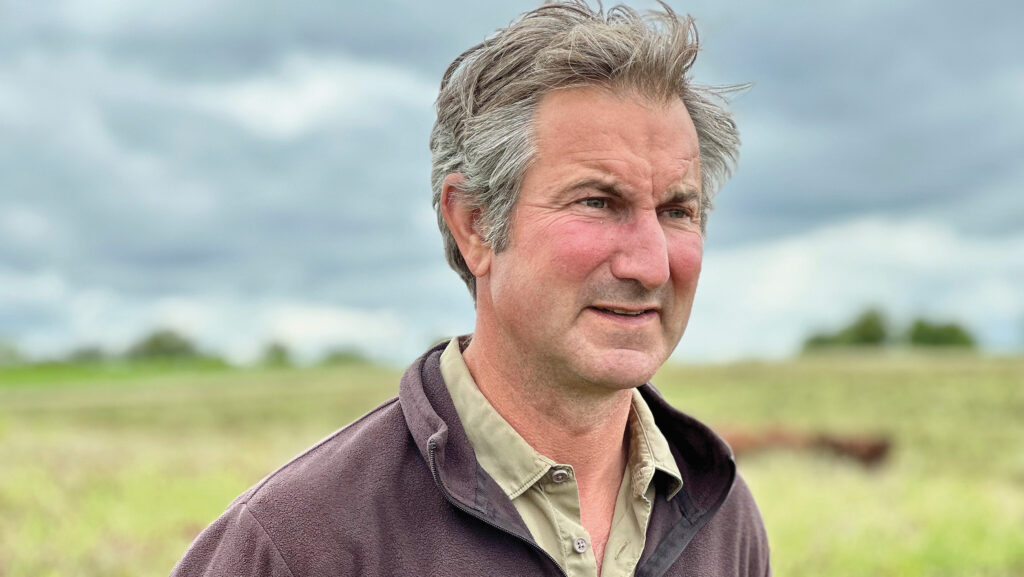
James Bucher © Mike Abram
A BNG deal is allowing Suffolk farmer James Bucher to hedge his bets and drive income from marginal land, as he addresses current challenges.
He has committed 20ha, about 5% of the farm, to a 33-year agreement, having signed up with Environment Bank in 2024.
Biodiversity credits will be generated via a mix of lowland meadow, species-rich grassland, native mixed scrub, ponds, trees and hedgerows.
James has retained ownership and management and will be paid annual rent and an annual management fee.
Using Tees Law to advise on all aspects of the process, his costs have been covered by Environment Bank and he also received a one-off £10,000 welcome fee.
James looked at different models for delivering BNG but settled on the land rent option rather than going direct to the developer or doing a profit-share agreement.
“We are in quite a remote location so we needed to share the risk and be removed from any liability,” he explains.
Otherwise, his approach on the farm has been to build relationships with businesses that respect his low input, regenerative approach and offer premiums.
As a result, he works with Wildfarmed, Hill Farm Oils, Hodmedod’s and the Bold Bean Company, as well as local bakery Woosters.
He has cut out fungicides, insecticides, plant growth regulators and seed treatments, with the aim of keeping costs below £600/ha for all crops.
A Mid Tier Countryside Stewardship agreement expires in 2028 and there are two SFI agreements in place, which also come to an end in the next couple of years.
“We know government support is waning and that climate change is an increasing threat to food production, especially on our lighter soils,” notes James.
“Having my eggs in more than one basket is essential. The biodiversity offering is spreading our risk and allowing us to make better use of some poorer land, bringing income from another source.”
Martin Caunce, Ormskirk, Lancashire – Direct sales
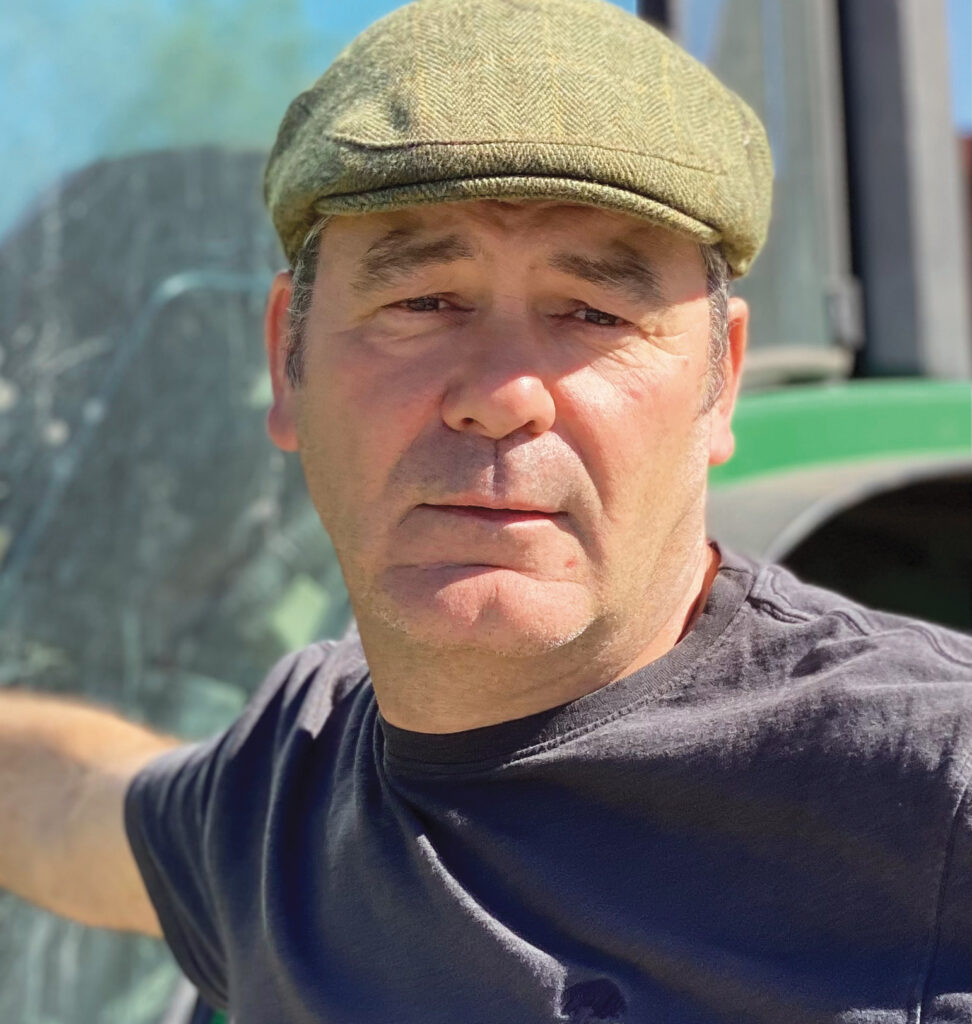
Martin Caunce © Martin Caunce
Doing things in a different way, growing crops that others aren’t providing, and selling direct to customers is how Martin Caunce is ensuring that his small family farm has a profitable future.
Farming in the salad bowl of England, he has deliberately stopped producing lettuce and vegetables typical of other farms in the region and now sells grains, seed, flour and associated products through his website.
From wheat-containing heat packs to buckwheat pillows and wheatgrass seed for use in juicing, as well as various grains and flour, the products in the online shop are described as eco-friendly and promoting wellbeing.
His regenerative agriculture approach supports that ethos; caring for the land enhances his reputation for caring for his customers and their health.
“We originally adopted a low-input approach to growing crops because it was cheaper,” he says. “But it turns out that it’s also what our customers want.”
Martin accepts that he could have just rented out his land to local lettuce growers but points out that has has always wanted to farm.
Recognising that commodity production on 57ha was never going to stack up, he had to find ways of accessing markets that valued what he was producing.
His customers include small bakeries, restaurants and local consumers, all of whom will either eat or use his cereal-based offering. “The lowest price that I’ve accepted for my wheat this year is £660/t,” he says.
Martin believes every farmer has a great story to tell, but stresses that the provenance offered by Brow Farm is unique.
“Cereals are a commodity that we can sell all year round – we just don’t sell them in bulk like others do.
“Almost all of our products are grown, cleaned and milled on the farm.”
Any government funding still received in the form of grants goes into infrastructure, he says. “We know it won’t be there forever and if the farm business can’t support itself, it won’t survive.”
The farm’s location down a long, narrow lane means that markets such as Christmas trees won’t work.
“We’ve adapted by building direct relationships with our customers and being prepared to sell them what they want, produced in a way they like.”
Staying sharp shouldn't be a chore
Explore more / Transition
During the series we follow our group of 16 Transition Farmers through the challenges and opportunities as they seek to improve their farm businesses.
Transition is an independent editorial initiative supported by our UK-wide network of partners, who have made it possible to bring you this series.
Visit the Transition content hub to find out more.
