Seismic technology to help map UK’s true soil quality
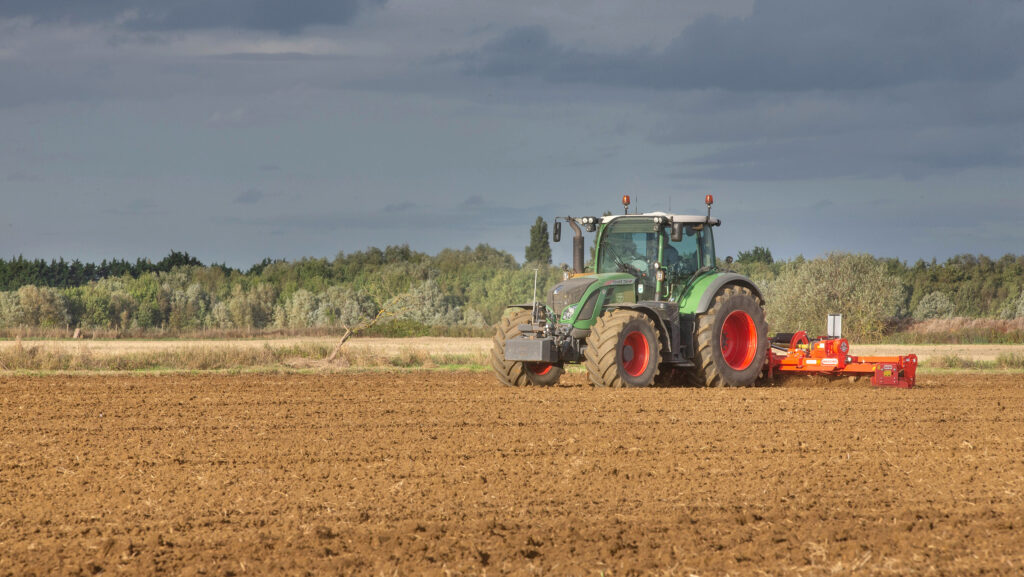 © Tim Scrivener
 Researchers in the UK are claiming a breakthrough in soil science, using mini sensors to send ultra-high frequency waves into the earth to collect data on soil depth, moisture and composition.
Testing farm soil depth and quality normally requires a shove of a spade at regular intervals, but this disturbs the structure it seeks to study, while being time-consuming and expensive at scale.
The new sensors will eventually be able to do a much more cost-efficient job in a fraction of the time.
See also: 4 ways to solve common soil issues on arable farms
With the help of the Bezos Earth Fund, the non-profit team, led from the UK, has been working to drive down the cost of the sensors from $1,000 (£750) to £10.
It is hoped that the emerging technology may ultimately allow Britain’s future farmers to grow more crops using less fertiliser, and also store more carbon to tackle climate change.
The Earth Rover Program launches globally today (5 December) on World Soil Day with an aspiration to take much of the guesswork out of farming.
It has trialled in the UK near Harper Adams University in Shropshire, with similar trials in Kenya, Colombia, and Germany.
The next step will be to combine seismology with an AI model to enable fast, affordable, and scalable soil health monitoring – and ultimately to do the tests using an app.
The project is being run by Tarje Nissen-Meyer, a professor at the University of Exeter.
His team will sell the technology at a commercial rate to large farmers and use the profits to reduce the cost for small farmers.
He pointed to a “massive demand” for this technology from farmers, particularly in developing countries.
“There has been growing interest in soil science in recent years,” Prof Nissen-Meyer said. “People are realising what a bad state the world’s soils are in.”
Depleted soils
Some estimates suggest that up to 75% of soils are degraded, although data is poor and there is great uncertainty.
There is little doubt, though, that in a heating world, soil degradation threatens food security, ecosystems, and climate stability.
British environment journalist George Monbiot, a co-founder of the programme, welcomed the progress.
He said: “The result could be something I’ve long wanted to see: consistently high-yielding agroecology. Then we can feed the world without devouring the planet.”
Dr Harrabin was an environment correspondent at BBC News and is an honorary fellow at St Catharine’s, College, Cambridge