Soil tech solutions target compaction and farm energy generation
 © Tim Scrivener
 Two emerging technologies offer a novel way to crack soil compaction and harness electricity generation from soil bacteria.
We take a look at how they work.
See also: Home-grown pulse incentive required to replace soya imports
Capsules target compaction
Could breaking up compaction be as simple as planting a seed in future?
That’s the ingenious solution one company is hoping to develop with its tiny, seed-like Aeropod capsules.
The capsules use layered materials and pressure-sensitive technology, activating when soil reaches a critical level of compaction and moisture, explains co-founder of Muju Earth, Lu Afolayan.
When triggered, Aeropods release a controlled burst of energy that affects around 1.4cu m of compacted soil, creating microchannels that improve drainage and restore oxygen flow, without harming soil.
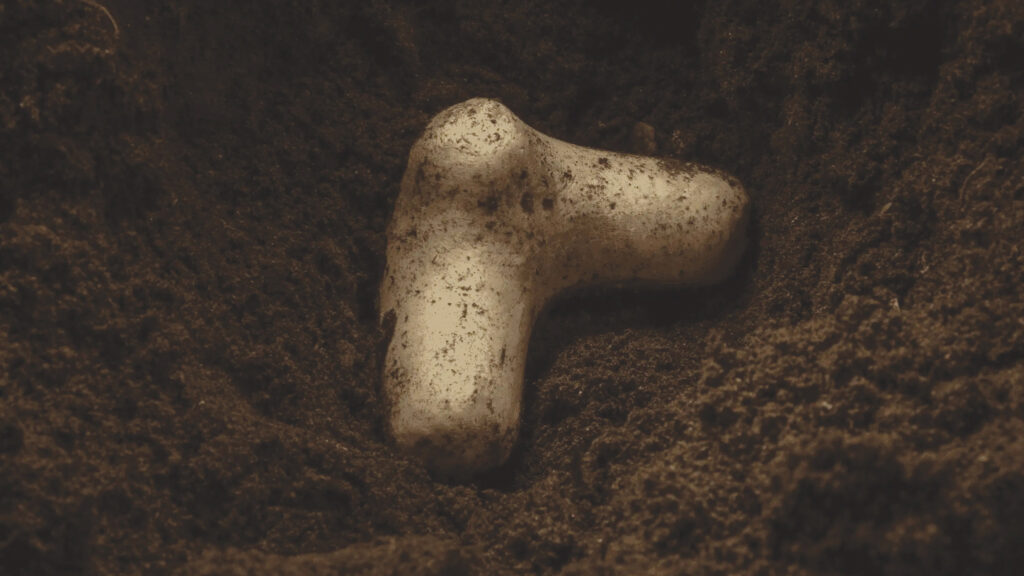
Aeropod in soil © Muju Earth
“The aim is for Aeropods to be plantable alongside seed, ideally through standard drills,” she says.
While the current proof-of-concept hasn’t quite achieved that with its odd-shaped design, the firm is confident it can be achieved, and calculate about 6,500 Aeropods a hectare likely needed for average compaction levels.
The solution is designed to activate at different points in the season.
“The pods can have slightly different designs, which means some respond earlier, while others activate later in the growing cycle as soils become denser.
“This staggered response helps maintain soil structure over the full season without repeated mechanical intervention,” says Lu.
Soil bacteria electricity generation
Soil contains naturally occurring bacteria that consume organic material and release electrons, which can be used to harness energy.
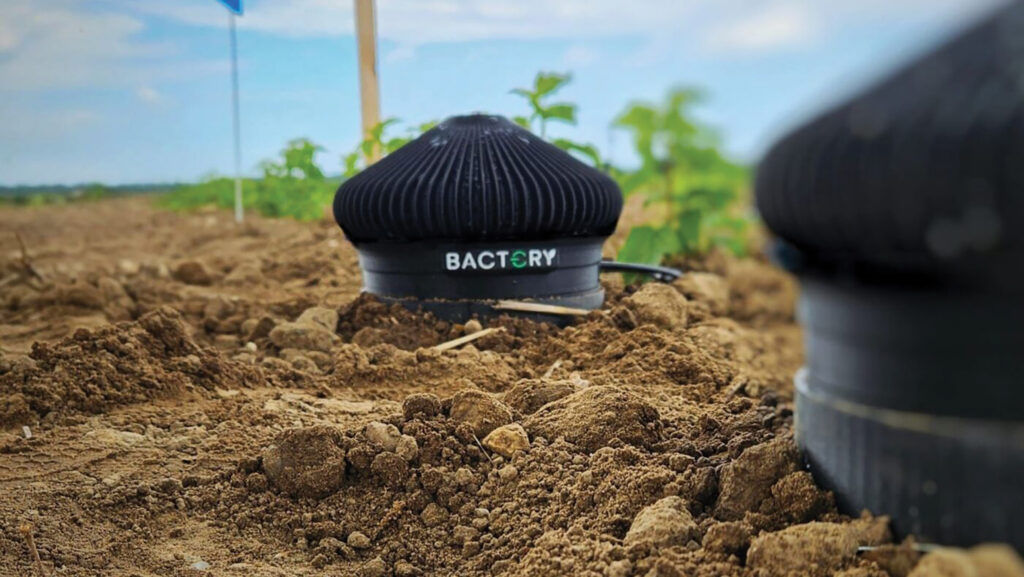
Startup firm Bactery is using these bacteria to generate electricity from soil.
Founder of the company Jakub Dziegielowski explains: “We’ve figured out an efficient way of tapping into this biology and harnessing it in the form of green electricity.”
Advantages of making power from soil include that it is possible continuously, whatever the weather, it’s inexpensive and makes power delivery to remote and hard-to-access locations viable, he says.
Bactery’s first device is capable of generating the amount of energy that can be stored in roughly 10 AA batteries in a year.
“But in our labs, we already have systems that are six times more powerful, and we’re on track to reach levels where soil one day could compete with grid-like energy,” he claims.
© Bactery
Initial use for these devices could be precision agriculture, he suggests.
“The backbone to a lot of technology being developed are sensors and technologies that generate data to drive decision-making.
“Despite their value, they can be tricky to scale because they’re expensive, costing on average around £1,000/sensor a year.
“A big chunk of those costs is related to powering them because current energy solutions, such as single-use batteries or solar power, are not compatible with harsh agricultural environments.
“In comparison, our device is much more durable with an anticipated lifespan of 30 years, and it’s less expensive,” he says.