Scottish growers battle with the harvest
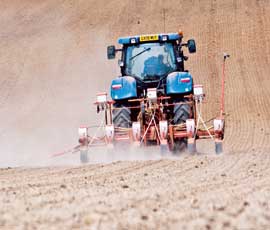
Winter wheat drilling has begun in earnest in some areas and thoughts are already turning to weed control programmes. However, Scottish growers are still battling with the harvest.
With memories of last season’s disappointing cereal yields still raw, drilling of first wheats has begun in the East as growers take advantage of good conditions, reports Suffolk-based Marion Self of Prime Agriculture.
“As drilling dates are pushed forward it is ever more important to focus on achieving good seed-beds,” she says. “Residual pre-emergence herbicides work best on fine, friable, moist soils.”
Fields with a blackgrass history should receive a pre- or peri-emergence flufenacet-based herbicide (such as Crystal and Liberator), she advises.
Other actives can be stacked or sequenced with flufenacet according to blackgrass pressure and resistance status.
Most rapeseed has emerged and established well in the East, and Iain Richards of Masstock Arable reports the same in the south, thanks to plentiful August rain.
“Oilseed rape plantings are well up on previous years. Slugs are becoming more evident, but a single well-timed application of pellets should see most crops safely through to the two to three true leaf stage,” he says.
Good blackgrass growth is providing the chance of a reasonable kill with Roundup Max ahead of cereal planting.
“Even so, as we start wheat drilling the most effective in-crop weed control is uppermost in our minds,” says the Oxfordshire-based agronomist.
“We’re sowing the most competitive varieties at the most appropriate seed rates and will build on this with robust pre-em programmes.”
Winter wheat drilling started at the beginning of last week on AICC agronomist Bryce Rham’s Shropshire patch.
But, with fields in the Midlands the driest they have been since 1976, they could do with a decent drop of rain.
“Seed-beds are very good, but germination will be the issue – some have moisture, others don’t. Due to the severely dry conditions, I am holding off pre-ems until we get some moisture.”
Winter OSR drilling is finished and again, local rainfall is all that makes the difference between crops germinating or not. “Quite a few are just sitting in dust and will not germinate until we get a decent spell of rainfall.”
It’s a very different picture further north. Perthshire-based AICC agronomist Hamish Coutts says growers are still grappling with a weather-affected harvest.
“Winter oilseed rape has been the jewel in the crown with countless examples of whole-farm averages around the 5t/ha mark.”
But growers have had to snatch at spring barley or winter wheat fields. “Drying charges are going to be colossal.”
In the central belt, many fields of Concerto are barely ripe enough to spray with glyphosate. Further north the harvest has been delayed even more.
Oilseed rape crops already sown are growing well. If a pre-emergence spray was missed then an early post-emergence application of metazachlor/quinmerac should suffice, he says.

Staying sharp shouldn't be a chore