Student of the Year takes third-gen family farm to new level
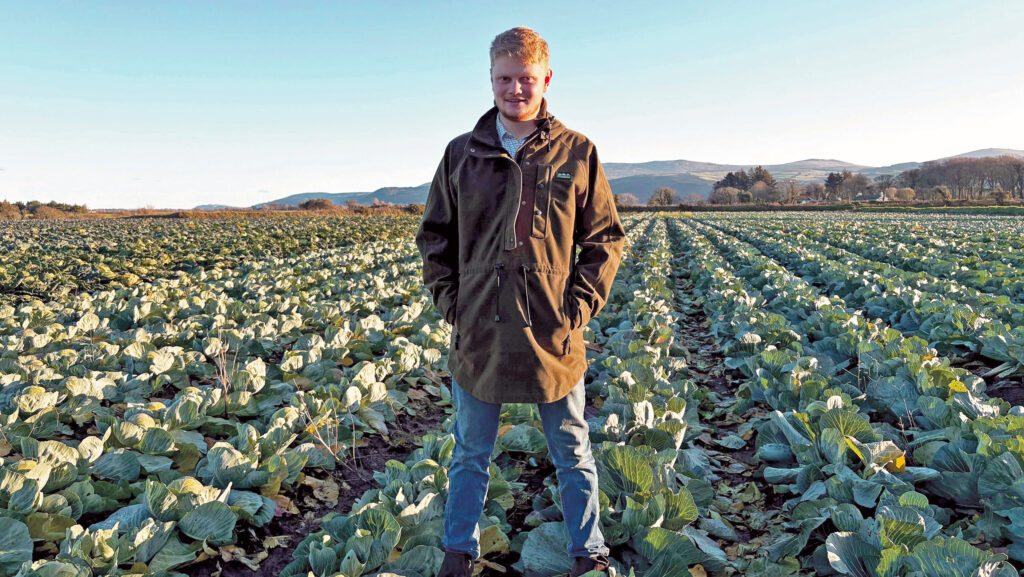 James Allanson © MAG/Lois King
 After being named Student of the Year at Harper Adams University in 2025, James Allanson has returned to his third-generation family farm with a new level of precision which is already seeing yields increase by up to 30%.
Since taking on the land work during the Covid pandemic, James has become a key figure in his family’s vegetable farm on the Isle of Man.
Five years on, at the age of 23, he is driving the modernisation of the business by introducing new technology, fresh ideas and a clear ambition to future-proof its operations.
See also: Suffolk beet grower counts huge cost of beet moth
Rhendhoo Farm, in the north of the island, was bought by James’s grandparents, Howard and Sheila Allanson, nearly 40 years ago.
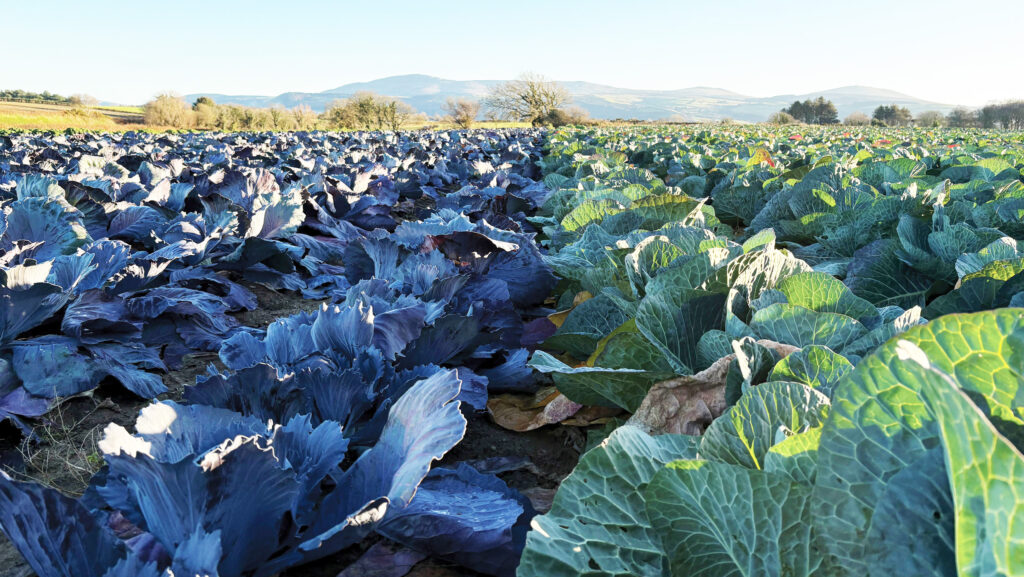
The 130ha farm grows potatoes, swede, carrots, cabbages, broccoli and beetroot and has a selection of break crops including grass, barley and spring oats.
Potatoes remain a staple crop within the rotation, with varieties such as Nadine, Orla, Caledonian Rose, Sagitta and Rocket all produced for retail and local outlets.
The numbers
- 12 Different crops grown, with more than 20 varieties
- 7.76 Average spring barley yield (t/ha)
- 61 Average potato yield (t/ha), depending on the field
Study
In 2021, James left the island to study Agriculture with crop science at Harper Adams University.
Graduating in 2025 with a first-class degree and winning both top student and dissertation of the year, he is now firmly involved in the day-to-day running of Rhendhoo Farm.
During his time at university, James completed a year in industry, working on a potato, onion and cereal farm in Cambridgeshire which expanded his wealth of practical knowledge and experience.
James is taking on more responsibility for the management of the farm from his father, Stuart Allanson, who has been solely managing the business since his father died in 2008.
Top dissertation delivers crop solutions
During his time at Harper Adams, James completed a dissertation investigating whether lupin species could act as a trap crop for potato cyst nematodes (PCN).
The study explored whether lupins could stimulate hatch without allowing the nematodes to complete their lifecycle, and whether this approach could contribute to an integrated control strategy within arable rotations.
The project strengthened his understanding of soil-borne pests, nematode biology and the practical challenges of applying sustainable control methods on farm.
It also developed his ability to design and run field and laboratory trials, analyse data and interpret results in a way that informs real-world decision making.
The research also deepened his appreciation of integrated pest management and demonstrated how small adjustments in cropping, rotation or plant choice can deliver long-term agronomic and economic benefits.
Overall, James says the experience has equipped him with greater confidence in applying evidence-based solutions to crop production challenges.
Technology input
Since leaving school, Stuart has played a key role in running the business and is pleased with the interest James and his sister Jess have in taking on the farm.
“It’s worrying that nowadays more time should be spent in the office and not on the tractor seat, but James and Jess have taken us forward massively in that respect with their computer skills and understanding of technology,” says Stuart.
Stuart has been amazed by the experience James has gained at university and the wealth of technical knowledge he has brought back to the farm.
The impact has already been substantial, with yields improving by up to 30% in certain fields.
James began by choosing varieties with strong resistance to the diseases which are most prevalent on their farm, including rhynchosporium and brown rust in barley.
Second, he strengthened establishment of crops through even seed-beds, accurately calculated seed rates and rolling to secure improved seed-soil contact.
Third, James front-loaded fertiliser to drive early growth ahead of anticipated dry spells and improved the timing of fungicide applications to keep disease pressure low.
“It is about understanding what the crop needs at each stage.
I am planning to go back to Harper in January to do a Facts course, which will, hopefully, assist me in continuing to improve the efficiency of our crop system,” he says.
Alongside agronomy, James hopes to modernise the machinery fleet.
A move towards lower input tillage is on the cards as he looks to reduce ploughing, protect soil structure and make the business less reliant on certain costly operations.
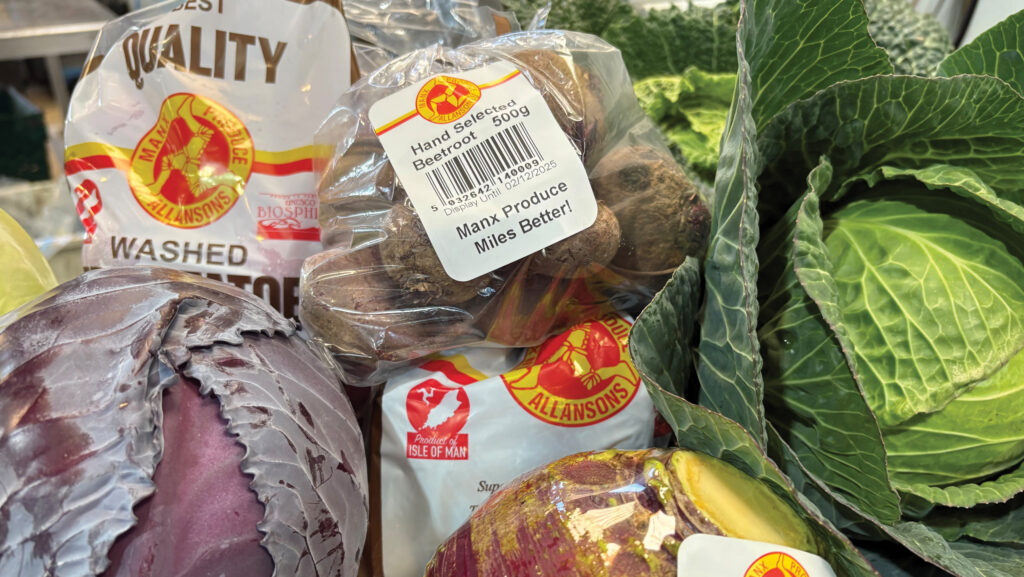
“One of our biggest costs is labour, and when it comes to packing it is crucial that we are efficient because there are only seconds between making a profit and a loss with the cabbages,” James explains.
© MAG/Lois King
Division of work
Supporting James on the farm is his 22-year-old sister Jess, who has taken on increasing responsibility for the packing and distribution side of the enterprise.
Having worked continuously on the farm since the pandemic, she oversees the packing lines, manages staff and maintains strong relationships with customers.
Her organisation skills and enthusiasm make her key to ensuring produce reaches retailers on time and in spec.
With the farm supplying and delivering to every Tesco store across the Isle of Man, her efficiency keeps the operation running smoothly.
Tesco has been one of the farm’s largest customers since October 2023 when it bought out the main supermarket chain on the island.
However, the partnership has come with challenges for the farm, and greatly increased admin.
There is also the constant pressure of competing with imported produce that can arrive at lower cost, even where equivalent crops are grown locally.
“They import a lot of produce that is available here, simply because it is cheaper,” Stuart explains.
Despite this, the family remains committed to maintaining high standards and strengthening their position as a key supplier to the island’s major retailer.
“I thoroughly enjoy working with my family,” Stuart says. “We all get on and work well together, it’s nice to be able to work with people I can trust and rely on.”
Stuart, James and Jess all believe the farm must continue adapting if it is going to compete with imported vegetables and meet retailer expectations.
© MAG/Lois King
Looking ahead
The Allanson family’s journey will be familiar to many family farms.
Faced with the demands of rising production costs and the need for ongoing investment in technology, the next generation is essential to securing long-term growth and resilience.
James and Jess bring scientific understanding, strong organisational skills and a youthful drive, all of which are already influencing the future direction of the business.
With Stuart’s experience and guidance alongside them, they are preparing the business for a future defined by precision, sustainability and innovation.
The evolution of Rhendhoo Farm
The Allanson family arrived on the Isle of Man in 1975 when Sheila and Howard left their dairy and arable farm in Yorkshire, seeking a quieter life and wanting to step back from farming.
They soon found themselves back in the business, starting with a small arable and soft fruit enterprise before their eldest son, Paul, developed a passion for vegetable production.
That early interest set the direction for the decades that followed, even when Paul relocated to New Zealand and Stuart took over his role.
Stuart joined the farm straight from school, working alongside his father and brother to supply local shops.
Over the years he steadily grew the acreage as land became available and expanded the vegetable enterprise.