Sugar beet campaign set for earliest finish since 2016
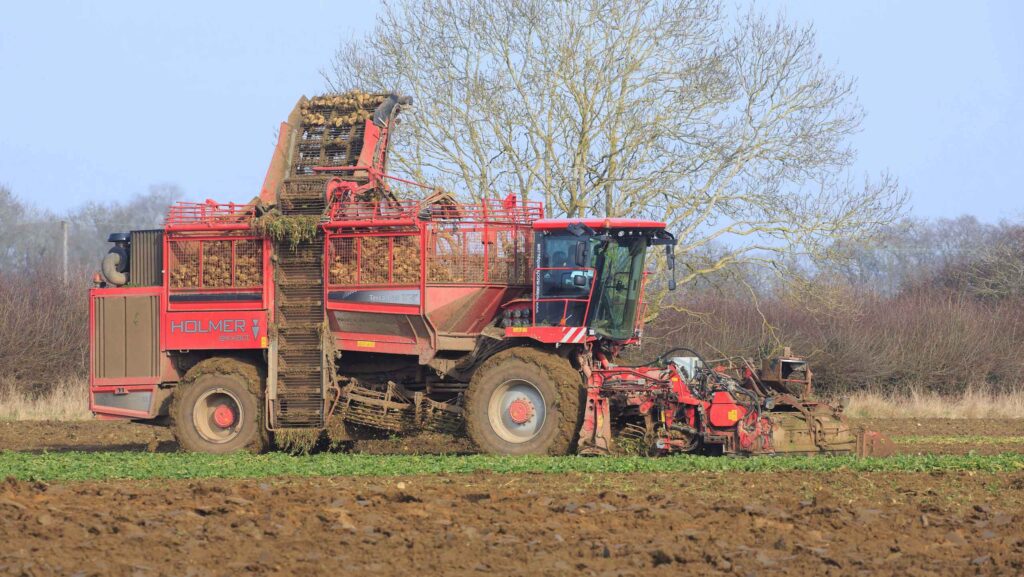 © Tim Scrivener
 The 2025-26 sugar beet lifting campaign is drawing to a close, with frost insurance triggered, yields sharply divided and growers facing mounting trade pressure from imported sugar.
The campaign, which began in September, is now forecast to end by February – the shortest since 2016 when British Sugar introduced a “contract holiday”.
According to British Sugar, the national yield this year is estimated at 78t/ha adjusted, well above the five-year average of 72t/ha, despite a sharp fall in sugar content following prolonged cold weather.
See also: Outlook 2026: Sugar beet faces lower prices, increased costs
Speaking at NFU Council’s meeting on 27 January in Stoneleigh, Warwickshire, NFU Sugar Board chairman Kit Papworth said the season had been marked by contrasts.
“We are reaching the end of the sugar beet campaign which began in September. It’s been characterised by really excellent lifting conditions and reasonable factory performance since a shaky start back in September.”
But Mr Papworth warned that yields varied dramatically. “In terms of yield, however, it’s a case of the haves and the have-nots,” he said.
“We have seen some record-breaking yields, but also some extremely poor ones.”
One grower reported yields ranging “from 136t/ha down to 26t/ha”, with beet moth causing “some real problems, particularly in the Bury [St Edmunds] area”.
Frost insurance triggered
Frost insurance has been triggered after temperatures at RAF Marham in King’s Lynn averaged below the threshold over a 10-day rolling period.
“This triggers the industry’s frost insurance across the growing area. Sugar beet growers have already notified. They don’t need to do anything,” Mr Papworth said.
Despite the higher national yield forecast, low prices for surplus beet above contracted tonnages are reshaping the market.
With British Sugar paying £5/t – or £3.60/t for those who bought yield protection – Mr Papworth said it was “not surprising” that growers who have already fulfilled their contract “are finding other places for their sugar beet to go to”.
ATQ criticism
Alongside the campaign update, NFU Sugar renewed its criticism of the Labour government’s decision to expand the autonomous tariff quota (ATQ) for raw cane sugar by 25% to 325,000t.
Mr Papworth said the policy, which allows tariff-free access for raw cane sugar imports from any origin and is effective until 31 December 2033, “poses a fundamental threat to our home-grown sugar beet sector”.
During a question and answer session, he spoke about the growing threat to UK beet producers from dominant sugar-producing countries such as Brazil.
“You can’t get away from it. They [Brazil] are a huge producer in the world and they see their market as much export as ever. Things like the ATQ doesn’t help small countries – that helps Tate & Lyle’s bottom line,” he said.
Lincolnshire beet grower and NFU Council delegate Andrew Ward highlighted regulatory disparities on agri-chemicals, pointing to sugar imported under the ATQ and refined by Tate & Lyle that can originate from countries such as Australia, where crops may be grown using products like Gramoxone (paraquat), banned for use in the UK since 2003.
“That is why this ATQ and this whole thing about sugar is really, really wrong,” he said.
British Sugar response
Dan Green, agriculture director at British Sugar, said: “The 2025/26 sugar beet campaign is set to conclude over the coming weeks, with nearly 90% of the crop already lifted and processed by our four factories.
Our processing campaign began with a strong start in September, and overall factory reliability has been up there with some of the best in recent years. In addition, we expect sugar yields to be well ahead of five-year averages.
“More recently, the cold temperatures and frost have inevitably affected some of the crop remaining in the ground.
“For Bury and Wissington, we would encourage any growers with beet still in the ground to deliver as soon as possible. Cantley and Newark will be open for around another month.”
He added that British Sugar is also “very disappointed” with the government’s decision to increase the ATQ for raw cane sugar, “which undermines the domestic sugar market”.
Staying sharp shouldn't be a chore