Sulphur deficiency appears in oilseed rape crops
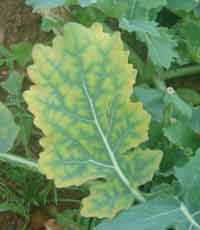
Sulphur deficiency, which can cause dramatic yield losses of up to 50%, has shown up in winter oilseed rape crops this autumn.
The characteristic of S-deficiency – plants yellowing between the leaf veins – was seen by NIAB TAG agronomist David Parish in several fields 2-3 weeks ago.
Mr Parish said it was unusual to see these symptoms in the autumn, but growers should not be too worried – yet.
“It’s unlikely to be yield threatening at this stage of the growing season,” he explained. “However, if it isn’t managed in the long term it could lead to yield losses of up to 50%.”
Growers should recognise that come spring, sulphur demands would not be met from the soil for affected plants, he added. Light sandy soils were most at risk due to their lower holding capacity for nutrients.
Mr Parish said it was unclear why this autumn has seen a higher than normal incidence of S-deficiency.
“The general reduction in atmospheric pollutants, including sulphur, is well known,” he said. “It’s possible that the higher than normal rainfall in August and September has carried nutrients beyond the rooting zone.”
Mr Parish said applying a foliar spray to crops this autumn, such as manganese sulphate, could help reverse the deficiency.
However, an application of a sulphur containing fertiliser product may be required in the spring.

Staying sharp shouldn't be a chore