The agri demo centre and farm showcasing sustainable farming
 © FarmED
 An agricultural education and demo centre in the Cotswolds is promoting British farming, welcoming new entrants and hosting an array of topical events and courses for farmers.
Each year, 25,000 visitors are welcomed to the FarmED food and farming educational centre at Honeydale Farm in Oxfordshire which aims to inspire, educate and connect people to sustainable agricultural systems.
Whether you are a farmer, policymaker, researcher, food lover, student or just generally interested in discovering more about agriculture, the FarmED centre offers something for everyone.
See also: Wildfarmed: How regen farmers can benefit from premium
Officially opened by King Charles in June 2021, the founders and directors of the centre, Ian and Celene Wilkinson, aim to:
- Promote awareness of food and farming
- Enhance understanding of a range of farming practices
- Host educational events for farmers, growers, horticulturists and more
- Accelerate the transition to regenerative agriculture
- Demo potential future farming methods
- Act as a foundation to welcome new entrants into the industry.
The organisation is a not-for-profit community interest company that relies on generous help, donations and support from local people and organisations.
“Our motto ‘Let’s talk about farming’ means just that. We host people with different ideas, providing them with a place for open, honest debate,” says Ian.
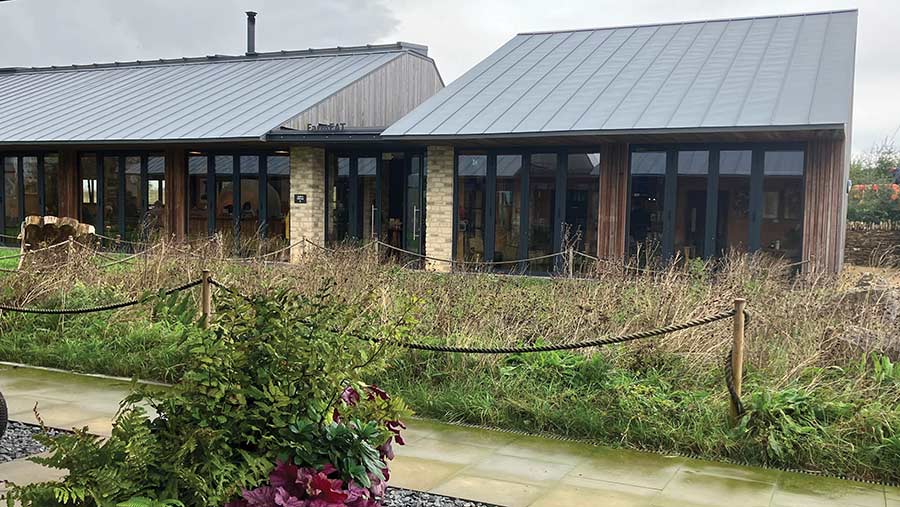
FarmED centre © MAG/Emma Gillbard
What’s on show at Honeydale?
Honeydale Farm boasts 45ha in the beautiful Cotswold countryside.
Visitors can freely roam the heritage orchard, micro dairy, kitchen garden, eight-year rotation trial plots and natural flood management, and take a self-guided tour to find out what’s happening on the farm.
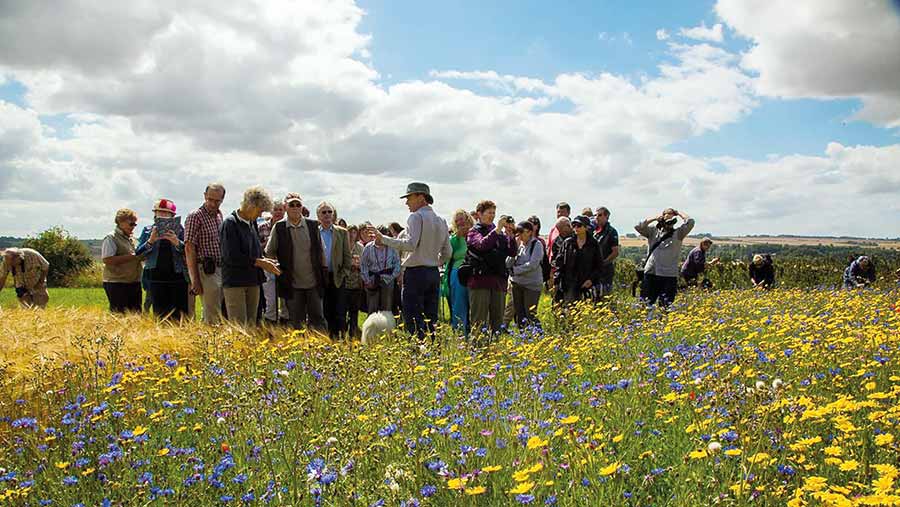
Or if you are after an in-depth analysis of regenerative agriculture and the trials carried out on the farm, a farm walk, led by Ian or a member of the team each Friday, provides just that for a fee.
Micro-dairy
FarmED aims to address the lack of opportunities for first-generation farmers by providing them with facilities and encouragement to get a foot on the farming ladder.
The farming centre has offered one young farmer the opportunity to start up a micro-business to gain experience that can be scaled up to bigger projects.
First-generation farmer Hallam Duckworth did not come from a farming background, but after studying agriculture at university he became passionate about animal husbandry and keen to supply quality, fresh produce to his local community.
© FarmED
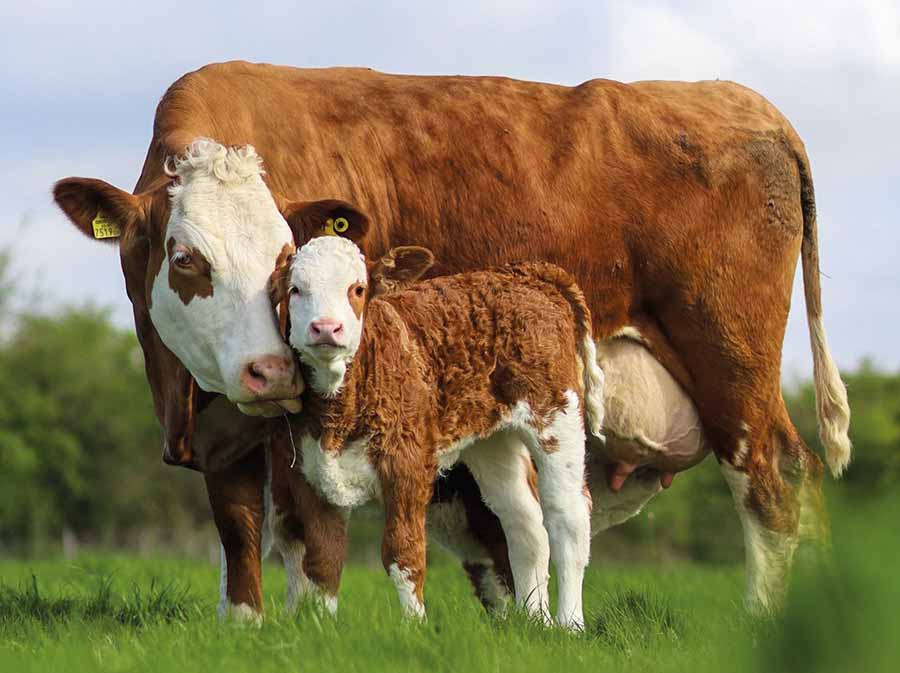
He got in touch with the farm about the possibility of starting up a micro-dairy and, in spring 2021, the farm welcomed the arrival of three Fleckvieh cows and calves.
Hallam now milks the cows once a day, and leaves the calves to suckle freely on their mothers.
He sells milk via a subscription scheme at £2/litre and supplies the café and shop, as well as making his own ice cream.
Rotation trial plots
The farm is demonstrating an eight-year rotation trial. Visitors can inspect the continuous cereals plot, heritage wheats, clover understories, cattle grazing herbal leys, agroforestry strips and wild bird seed plots.
Agricultural team lead Kate Henderson explains: “As a demonstration farm we test new ideas to inspire others to think about what they could do on their land and engage researchers and policymakers to understand the complexity of farming practices.
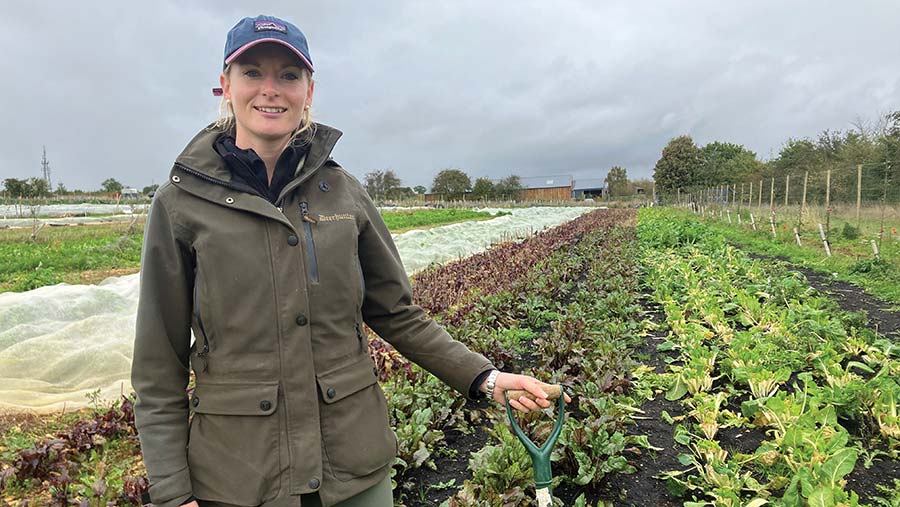
Kate Henderson © MAG/Emma Gillbard
“It’s important to trial new farming methods so growers can visit, get the conversation going and see if it could work for them,” she says.
Kate says the different effects on soil structure in the various plots are stark.
“We see more friable and water-retentive soils in the herbal ley compared with the continuous cereals, yet the continuous cereals offer the highest overall gross margin.”
For Essex mixed farmer George Young a visit to Honeydale inspired the integration of herbal leys and cattle into his arable rotation.
In the past four years, George has sown 100ha of herbal leys, which are grazed by cattle, and he says this forms the bedrock for his regenerative farming journey.
Heritage wheat varieties grown for their greater disease tolerance and reduced nitrogen requirements are also on show. Grown alongside an understory of clover, no pesticides or fertiliser are used.
A focus on farm-to-fork circular economies is important to the demo centre, which is why flour is milled locally and destined for sale in the shop and café.
Despite heritage wheats yielding 50% less than modern cultivars, a premium market offers 10 times more.
Kitchen garden
A community-supported agriculture scheme in the form of a 2ha kitchen garden also supplies nutritious fruit and vegetables to local people.
Not only does this help cut food miles and waste, but it actively encourages local people to get outside and learn about food production.
Local volunteers can join the initiative on Thursdays and Fridays to make the most of the community space and get involved with the project.
For new farming entrant Abi Gwynn, who is carrying out a one-year internship at the education centre, the kitchen garden provides a community hub that she’s keen to get involved with.
“It’s great to be working in the kitchen garden as it brings people back to the land. In today’s society, so many people no longer know their neighbours and an initiative like this brings people back together,” she says.
The kitchen garden is run by a group of five part-time employees who sell 180 seasonal veg boxes each week, all year round.
A subscription of £9/box is paid and whatever is harvested that week is divided equally.
A mission to promote fruit orchards and bee hives
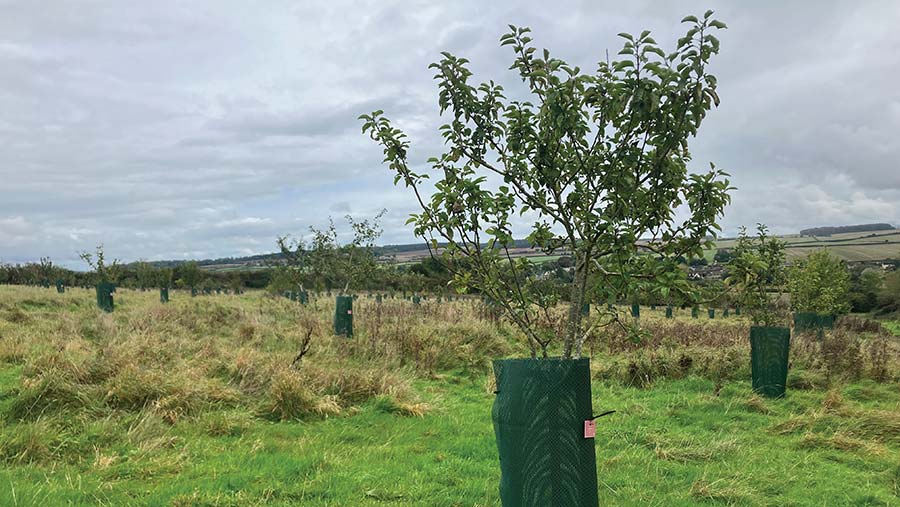
Orchards were once a common sight on many UK farms, but in recent decades 90% of traditional orchards in England and Wales have been lost to land use conversion.
Today, just 23% of fruit and vegetables eaten in the UK is grown domestically, but FarmED is on a mission to increase this.
© MAG/Emma Gillbard
The farm’s apple orchard is home to 144 trees. This include heritage Oxfordshire varieties such as Old Fred, Red Army and Blenheim Orange, which date back to the 1740s.
Other fruit trees include cherry, apricot, damson, mulberry, nectarine and peach.
A number of beehives are also dotted around the farm, benefiting from the diversity of the farm environment. This contributes to the farm’s output through pollination, while providing good-quality honey that is sold in the shop.
Courses and events
The FarmED education centre provides learning spaces and hosts events that inspire, educate and connect people to build sustainable farming and food systems.
The centre hosts a range of courses and events such as:
- Integrating livestock into arable rotations
- Establishing joint ventures
- Improving your farm rotation
- The benefits of incorporating green manures and cover crops
- Herbal ley establishment and management
- Sowing wildflower meadows
- Pastured poultry
- Setting up community-supported agricultural enterprises
- Holistic grazing practices
- Agroforestry workshops
- Entomology discussions
- Effective fruit tree pruning
- Nutrition and the benefits to humans.
See more upcoming events on the FarmEd website.