‘Compromised’ winter wheat varieties join latest Recommended List
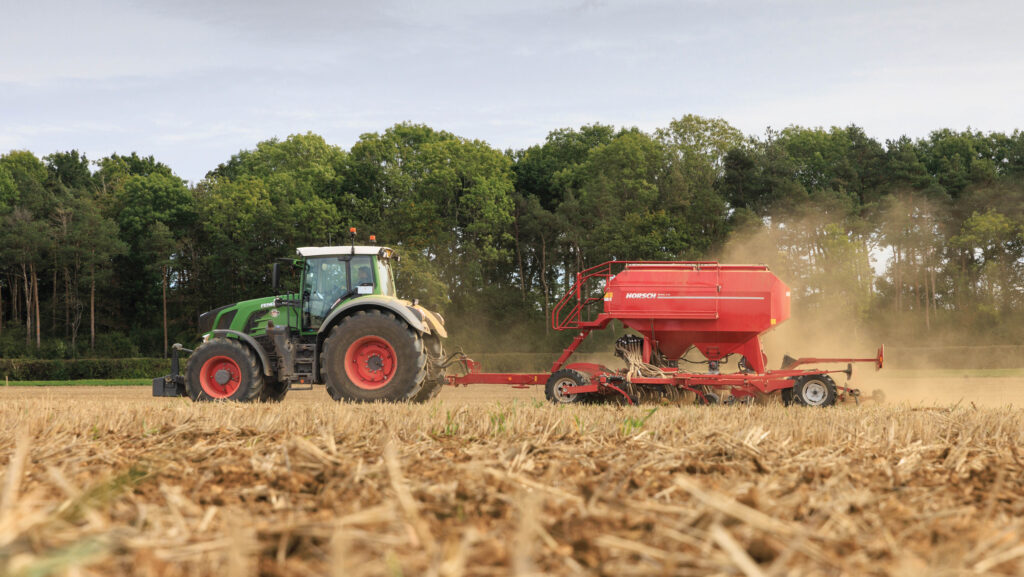 Drilling winter wheat © Tim Scrivener
 Some highly controversial decisions have seen eight new winter wheats added to the AHDB Recommended List 2026-27, several of which are being referred to as “Marmite choices”.
After yellow rust resistance collapsed last year, the new list includes some high-yielding hard feed varieties that are very susceptible to the disease.
There are also others with weak straw – described by the Recommended List (RL) team as coming with “agronomic compromises”.
See also: 11 new pulse varieties join PGRO Descriptive List
RL manager Paul Gosling confirms that in a departure from normal practice, the yellow rust ratings for both winter and spring wheat on the latest list are based on 2025 data only, rather than three years, so they should reflect the shift seen in the disease population.
As yellow rust virulence is predicted to spread to all areas of the UK next year, he acknowledges there may be further changes in resistance ratings during the 2026 growing season.
He says: “Farmers will be informed as soon as anything unexpected happens.”
The same varieties up for recommendation in a different year may not have been added, he admits.
“Given the unusual situation that developed, there was plenty of discussion around some of these varieties, most of which are hard feed types.
“Those in question all have other strong attributes that were considered desirable, although we recognise that most won’t still be grown in four to five years’ time.”
Clare Leaman, cereal variety specialist at Niab, believes the RL wheat committee could have been braver.
“We’ve got existing milling varieties that are very susceptible to yellow rust and growers have struggled with them, even with the additional margin on offer,” she says.
“Some of these new varieties will be seen as just too risky in the current climate.”
She also points out that older susceptible varieties had much higher ratings when they were first recommended.
“Keep an eye on the untreated yields of the newcomers as they’ve only had one year with bad yellow rust.”
Kirsty Richards, national technical manager for seed at Frontier Agriculture, highlights the mounting pressures that growers are contending with.
These include higher production costs, unpredictable weather patterns and changing pathogen populations.
“For this reason, as a company we’ve steered clear of the more controversial new varieties and looked for the ones that help manage risk, rather than add to it,” she says.
Group 1
The good news is that for the third consecutive year, a new provisional Group 1 variety, Arlington from DSV, has been added to the list.
With a treated yield of 99%, it sits just above Vibe and Cheer, but has a much better untreated yield of 94% – the second-highest of all the recommended winter wheat varieties.
Arlington’s grain quality includes a Hagberg of 309, a specific weight of 78.9kg/hl and a slightly low protein figure of 12.5%, like Zyatt.
With disease resistance ratings of 7 for septoria and yellow rust, along with 6s for brown rust and mildew, it brings orange wheat blossom midge (OWBM) resistance and has an 8 for lodging.
A Skyfall cross, Arlington also offers the wide drilling window typical of its parentage and will give growers more choice, notes Kirsty.
Clare agrees: “It’s another useful variety and it means that the Group 1 category continues heading in the right direction.”
Paul says Arlington’s Group 1 status will be confirmed in the spring after analysis of commercial quantities of grain by the millers.
The two new breadmaking winter wheat varieties |
||
|
|
Arlington (provisional Group 1) |
Grebe (Group 2) |
|
UK yield (% of control) |
99 |
103 |
|
Untreated yield (% of control) |
94 |
87 |
|
Hagberg (seconds) |
309 |
280 |
|
Specific weight (kg/hl) |
78.9 |
77 |
|
Protein (%) |
12.5 |
12.2 |
|
Lodging (with PGR) (1-9) |
8 |
8 |
|
Ripening (days +/- Skyfall) |
0 |
-1 |
|
Mildew (1-9) |
6 |
6 |
|
Yellow rust (1-9) |
7 |
6 |
|
Brown rust (1-9) |
6 |
5 |
|
Septoria (1-9) |
7 |
6.4 |
|
Note: On the 1-9 scales, high figures indicate that a variety shows the character to a high degree (eg high resistance) |
||
Group 2
Grebe is the only new Group 2 variety and enhances this end-market sector by bringing OWBM resistance.
With a treated yield of 103%, it is suitable for export and has achieved the hard wheat UKP branding.
“Grebe is very similar to Arnie, which joined the list last year,” says Clare.
“It’s only just behind Arnie for yield on 103%, offers short, stiff straw with a lodging rating of 8 and it has a septoria resistance rating of 6.4.”
The new variety has a Hagberg of 280, a specific weight of 77kg/hl and a protein content of 12.2%.
Soft Group 4
Sparkler from Elsoms is the only new soft Group 4 variety, which is classified as a UKS soft wheat for export and is rated “high” for distilling.
With a treated yield of 106%, it has given its best performance in the North and has a 7 rating for yellow rust, with a good septoria score of 7.2.
“Sparkler has a strong balance of features,” says Kirsty.
“The yield is a step on, it produces plenty of straw and its disease resistance package is good, with the exception of brown rust resistance which is a 4.”
Her only other caution is the rating of 6 for resistance to lodging with a plant growth regulator.
“Our advice would be to drill it a bit later and avoid exposed sites.”
Hard Group 4
Of the five new hard Group 4 varieties, many have agronomic issues that growers need to be aware of, our commentators agree.
Aintree tops the list with a treated yield of 110%, putting it well ahead of the existing variety comparisons, Champion and Scope, which are on 106%.
“We don’t often see a yield jump like that, and Aintree has been a very consistent performer in trials,” reports Paul.
“It was recommended because of its yield potential.”
The compromise is a yellow rust resistance rating of 3, which has caused controversy, he admits.
“Aintree was badly affected by the disease in 2025 and we had to discuss it long and hard before making our decision.
“For comparison, Champion and Scope are both 4s.”
Given the developing situation, its untreated yield of 85% is generous and is likely to fall, points out Clare.
“Aintree is a high-risk variety. Growers need to have enough spray days and time if they opt for a type like this.”
Kirsty agrees with that view. “It has a fantastic yield, but the barn fillers are the ones that have succumbed to yellow rust.
“Not many growers want to add to the pressure that they are already under.”
Also recommended were Defiance and Challenger, both of which have higher yellow rust ratings of 8 and 7, respectively.
Defiance has a treated yield of 109% and the highest untreated yield on the list of 95%, with a good combination of disease resistance scores and OWBM resistance.
Kirsty sees Defiance as a Champion replacement, although its lodging rating of 5 will cause some concern, she notes.
“Understand the risk as it is a very tall variety. Choose your sites with care.”
Challenger is a well-rounded option, with very high yields but without the agronomic risk, adds Clare.
Again, it has OWBM resistance and high untreated yield of 93%.
For Kirsty, Challenger would make a good partner variety to Defiance and a means of spreading risk. “You can drill it earlier,” she says.
Otherwise, newcomer Fowlmere has a treated yield of 106% but slightly lower disease resistance scores than the other newcomers and a 6 rating for lodging.
Its standout feature is a -2 for ripening, making it attractive to some growers.
“We have been lacking an early-maturing variety so that will appeal to some,” says Kirsty.
The six new winter feed wheat varieties |
||||||
|
|
Sparkler (soft) |
Aintree |
Defiance |
Challenger |
Fowlmere |
Guardsman |
|
UK yield (% of control) |
106 |
110 |
109 |
107 |
106 |
103 |
|
Untreated yield (% of control) |
87 |
85 |
95 |
93 |
88 |
87 |
|
Hagberg (seconds) |
226 |
277 |
260 |
295 |
299 |
246 |
|
Specific weight (kg/hl) |
76.7 |
78.7 |
77.0 |
78.6 |
79.8 |
75.8 |
|
Orange wheat blossom midge resistance |
No |
Yes |
Yes |
Yes |
Yes |
No |
|
Lodging (with PGR) (1-9) |
6 |
7 |
5 |
7 |
6 |
5 |
|
Ripening (days +/- Skyfall) |
+1 |
0 |
+1 |
+1 |
-2 |
+1 |
|
Mildew (1-9) |
5 |
5 |
7 |
7 |
5 |
5 |
|
Yellow rust (1-9) |
7 |
3 |
8 |
7 |
5 |
7 |
|
Brown rust (1-9) |
4 |
5 |
5 |
5 |
5 |
6 |
|
Septoria (1-9) |
7.2 |
6.3 |
6.3 |
6.1 |
6.1 |
6.0 |
|
Note: On the 1-9 scales, high figures indicate that a variety shows the character to a high degree (eg high resistance) |
||||||
BYDV resistance
Finally, Guardsman is a hard feed variety with a specific recommendation for resistance to barley yellow dwarf virus (BYDV).
Guardsman is a great story, highlights Clare, as it combines competitive yields with BYDV resistance genetics and a treated yield of 103%.
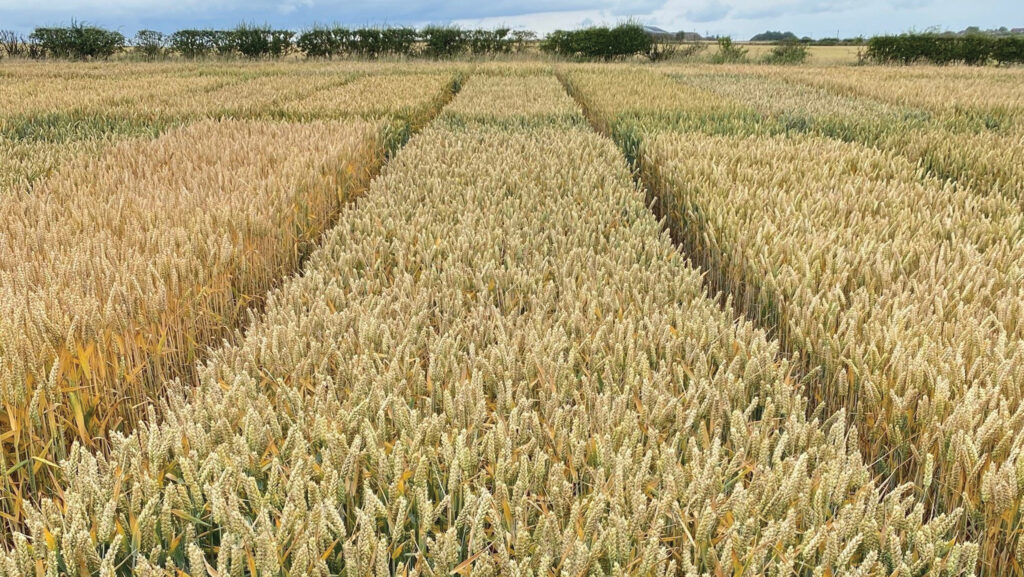
Guardsman hard feed wheat © RAGT
“The progress RAGT has made must be recognised,” she says.
“It’s also the only variety on the RL with resistance to yellow rust at the young plant stage, but it has very weak straw and a low-ish specific weight.”
Paul reveals that Guardsman was another variety that divided the wheat committee.