

Advertiser content
Why sugar beet variety choice is becoming more important
As sugar beet growers face a broader mix of on-farm challenges, variety choice is becoming a more important management decision than ever.
Establishment still underpins performance, but genetics are increasingly helping growers manage field-specific pressures such as weed beet, beet cyst nematode (BCN), virus yellows and cercospora, while protecting crop resilience and output.
For KWS sugar beet product manager Martin Brown, that shift means variety selection is no longer simply about choosing yield potential on paper. Instead, it is about selecting genetics that best match the practical pressures of individual fields and rotations.
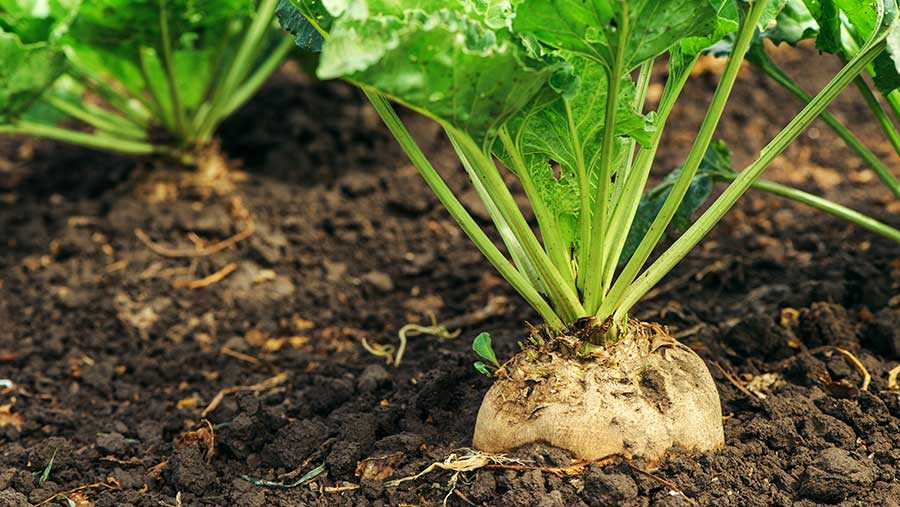
© KWS UK LTD
“Growers cannot change the conditions they have drilled into,” he says. “But they can assess how crops establish, how well they cope with field-specific pressures and where different varietal traits could add value in future seasons.”
He believes that matters even more in a crop like sugar beet, where margins have remained comparatively attractive when crops are well managed.
“Sugar beet has been up and down in recent years, but in general its margins still compare favourably with cereals,” he says.
“It remains a reliable crop to bank on, provided the growing process is properly managed.”

© KWS UK LTD
Strong establishment still sets the foundation
While much of the focus after drilling is on emergence, plant counts and early crop development, Martin says this stage of the season is also a useful point to reflect on the decisions that influence final performance from the outset.
Strong establishment remains the foundation of yield, particularly where seedbed quality has been compromised.
“Too often, especially on heavier soils in dry springs, cultivations have been rushed or insufficiently refined,” he says.
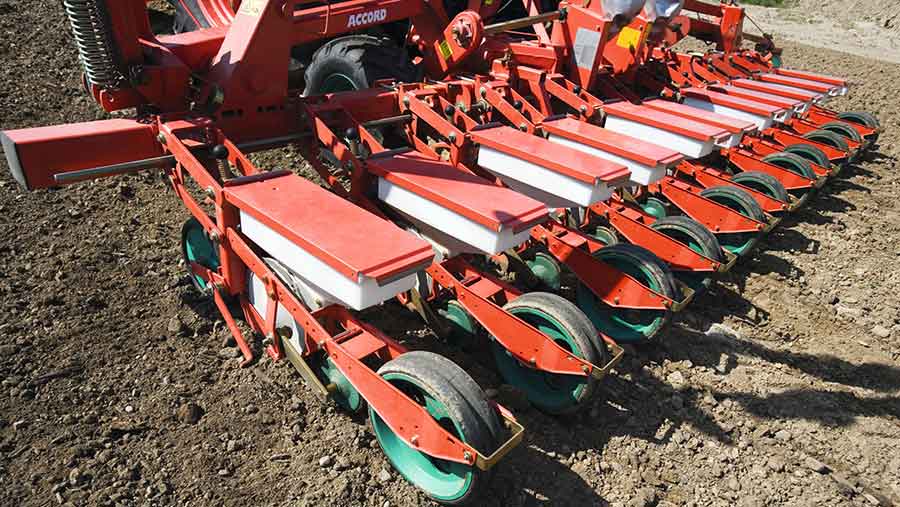
“That leads to cloddy seedbeds and poor seed-to-soil contact. Given growers are only placing 110,000-120,000 seeds/ha, every seed must count.”
He adds that modern machinery can sometimes tempt growers to push on when conditions are not ideal.
“Today’s heavier kit, paired with a temptation to push on regardless of soil condition, can come back to bite growers.
It may seem like you can get away with it at drilling, but the penalty comes later when plant stands are less than ideal and roots are small.”
But while seedbed conditions and drilling decisions are critical, Martin says variety choice is playing a bigger role in helping growers protect performance once the crop is in the ground.
© KWS UK LTD
Matching genetics to field pressure
KWS has developed sugar beet varieties with traits aimed at specific agronomic challenges, including BCN tolerance, virus yellows tolerance, cercospora protection and weed beet control through CONVISO® SMART.
“It was not long ago that rhizomania resistance was a niche trait, but now it is universal,” says Martin.
“Since then, we have added BCN tolerance, CONVISO® SMART for simplified control of weeds and weed beet management, virus yellows tolerance and, most recently, CR+ for cercospora. Each trait addresses a specific on-farm challenge.”
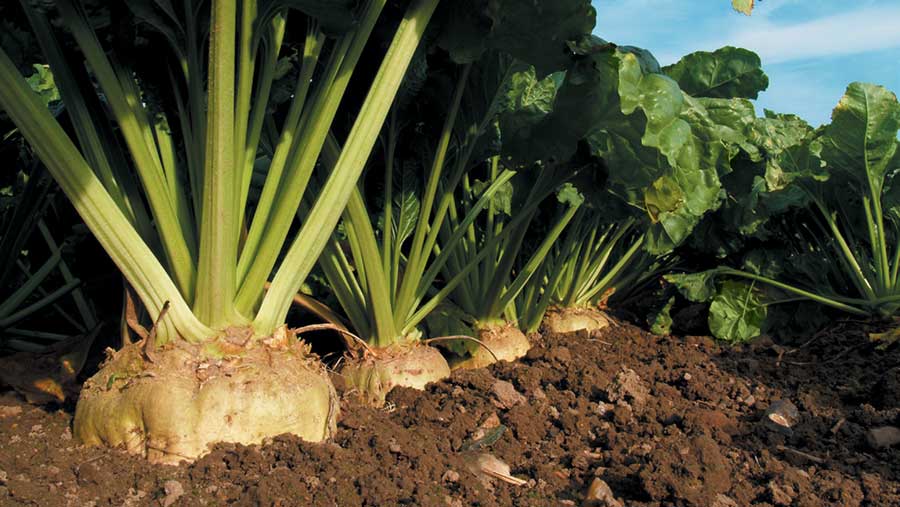
© KWS UK LTD
That, he says, reflects a wider change in how growers need to think about variety choice.
Rather than asking which variety looks strongest in a single situation, growers are weighing up more which genetics are best suited to the pressures they know exist on their own farms, whether that is weed beet pressure, known nematode issues or the need to maintain canopy health for later lifting.
Where CONVISO® SMART fits
For growers dealing with weed beet, Martin believes CONVISO® SMART will be an important part of the conversation.
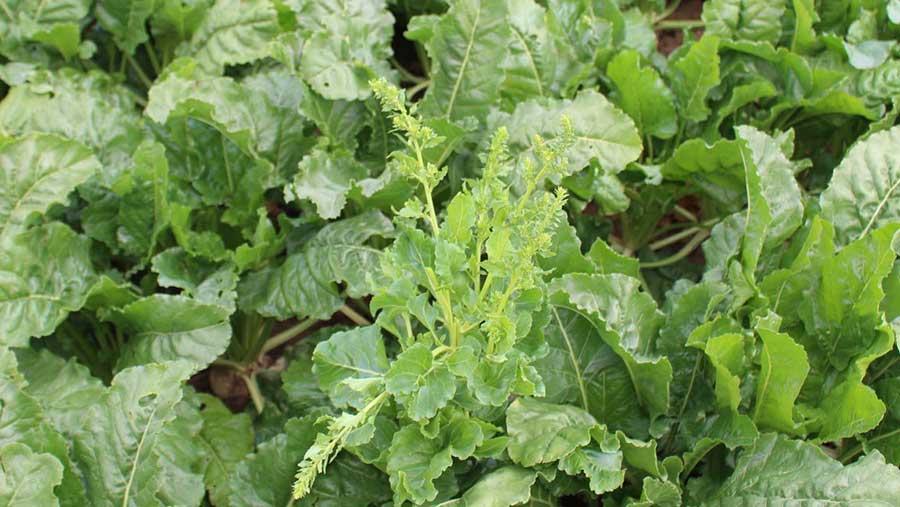
“If weed beet is limiting, CONVISO® SMART can open that land back up,” he says.
That is a strong message for growers where weed beet is compromising crop potential or narrowing rotational options.
In those situations, the value of the trait is not simply cleaner crops in the current season, but the ability to keep sugar beet in the rotation on land that might otherwise become more difficult to justify.
KWS has also developed stacked-trait CONVISO® SMART varieties, including SMART NELDA KWS, which combines weed beet control with BCN tolerance. For 2027 growers will have a second option which comes in the form of SMART ATTALA KWS, nearly 2% higher yielding than SMART NELDA KWS.
“Stacked-trait CONVISO® SMART varieties such as SMART NELDA KWS have opened up ground that was previously off limits by combining weed beet control with BCN tolerance,” says Martin.
For affected growers, that offers a more targeted route to protecting both crop performance and field flexibility.
Looking beyond early growth
Martin adds that the value of tailored resistance packages often becomes even clearer later in the season, particularly where disease pressure builds or crops are destined for later lifting.
“If BCN is present, pick a tolerant variety. If weed beet is limiting, CONVISO® SMART can open that land back up. For later lifts into December or January, canopy health and disease resistance are essential.”
That is why he sees variety choice as central to how growers manage risk across the whole season, not just at drilling.
The right genetics can help crops cope better with known pressures, protect green leaf area for longer and give growers more confidence in how fields will perform under different lift timings and management systems.
Lessons for next season’s decisions
With the current crop now in the ground, Martin says the immediate priority is to protect its potential. But he also believes the season ahead will provide valuable lessons for future variety decisions.
“As growers assess crop performance over the months ahead, the lessons from this year could prove just as valuable when it comes to choosing the right genetics for the future,” he says.
For KWS, that underlines a simple point: in modern sugar beet production, variety choice is no longer a background decision. It is an increasingly important tool in managing pressure, protecting output and keeping land productive.
Provided by
KWS is one of the world's leading plant breeding companies combining 165 years of heritage with leading edge technology and a commitment to develop and deliver varieties with the best yields, disease resistance, physical traits and resistance to abiotic stress.