Young farmer completes marathon 2,000-mile US harvest
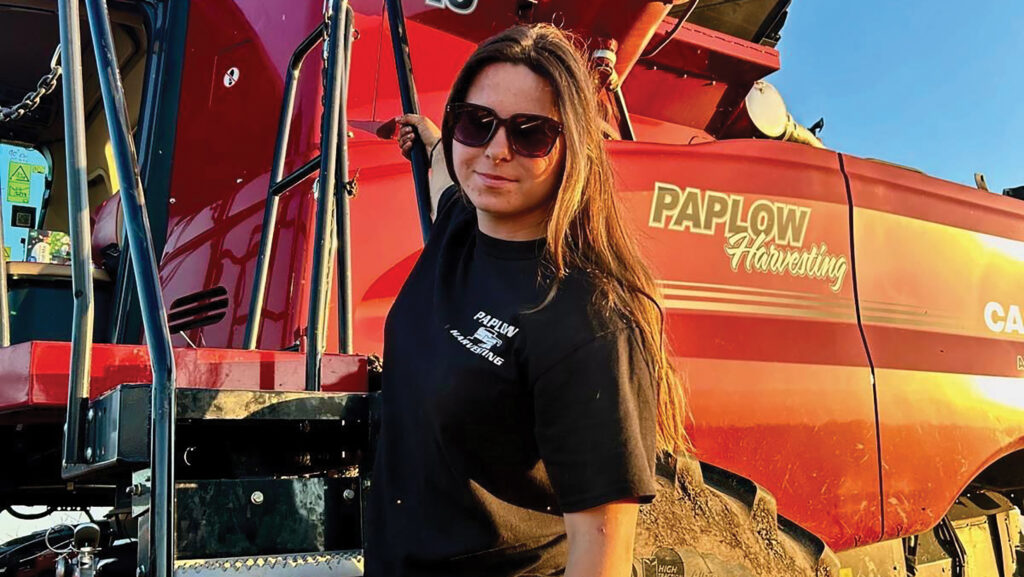 © Eleanor Gilbert
 When Eleanor Gilbert graduated from university, she knew she wanted to travel overseas – not looking out the window of a tour bus, but by completing a marathon 2,000-mile harvest across the United States.
In April this year, Eleanor packed her bags, boarded a plane to the US, and joined one of the few harvest crews that welcome female operators: Paplow Harvesting and Trucking, based on the Minnesota/Iowa border.
Eleanor signed up for an eight-month journey following ripening crops, from the southern plains through Kansas, Montana, the Dakotas and back to Iowa.
See also: Managing farms abroad: Experiences and challenges
Eleanor’s US harvest in numbers
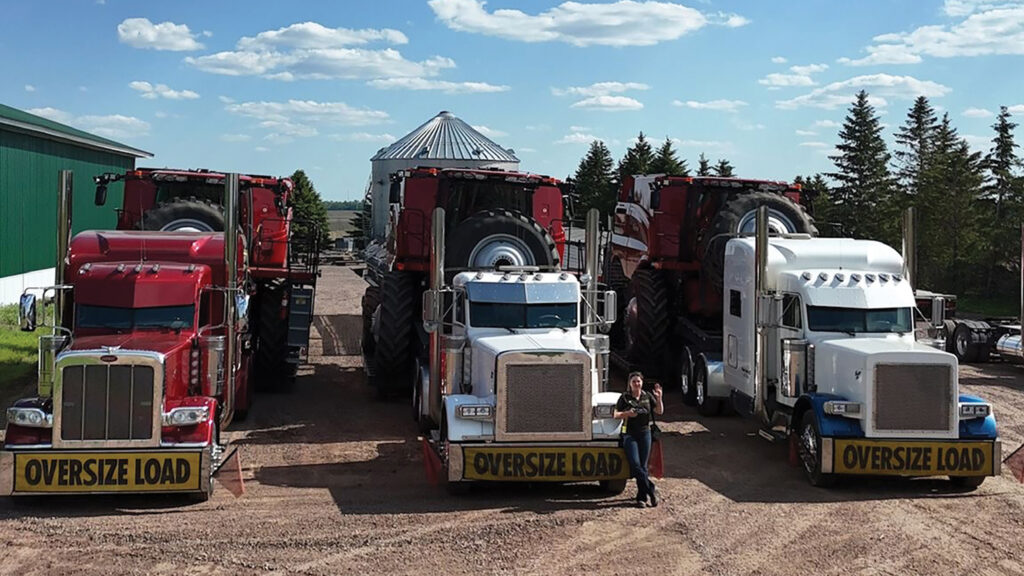
© Eleanor Gilbert
- 8 months on the road
- 8 US states
- 10 combines in the team
- 1,000 hours on Eleanor’s combine
- 3,817 miles hauling the combine
- 51,000ha of crops harvested
Eleanor says: “Completing a harvest abroad is something a lot of farmers say they wish they’d done when they were younger.
I didn’t want to regret missing that opportunity, and figured, why not do something I love while travelling through America?”
The harvest marathon saw her travel through eight states, harvesting 51,000ha.
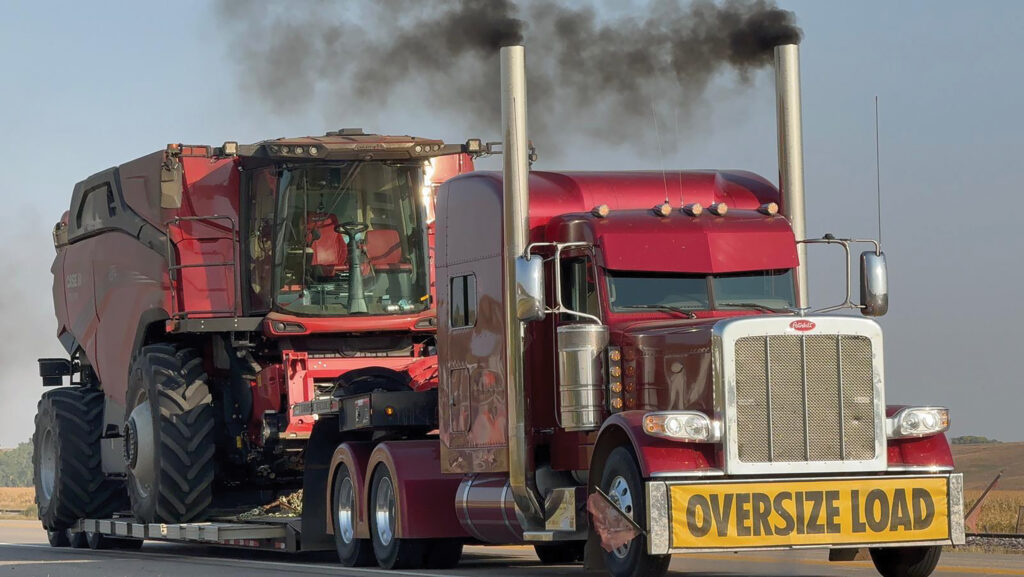
During this time,1,000 hours were clocked on her two brand-new combines, and she hauled the machine via truck more than 3,800 miles.
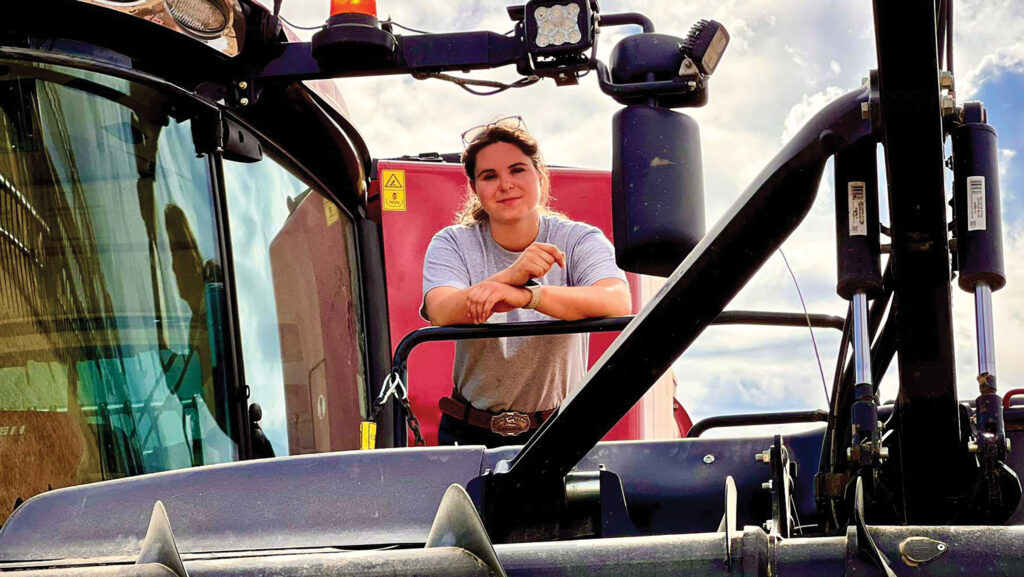
© Eleanor Gilbert
Proudest moment
Eleanor’s proudest moment of her travels came shortly after securing her Commercial Driver’s License.
She was handed the keys to an 18-gear truck and was tasked with travelling 700 miles from base, hauling the combine on a low-loader trailer, followed by a 45-foot draper header.
“My first trip was 700 miles from base to Kiowa, Kansas,” she says.
“The journey took two days to complete. There were just endless highways. It was so hot, we had to be careful of the heat rising from the road, with risk of tyre blow outs.
“When I eventually arrived in the small town. It just felt like something out of a movie.”
When she came to make her second trip from the base in Iowa down to Kiowa, Eleanor completed it in a day.
“I built up my confidence driving. It was tough, but I loved it – this was definitely something you wouldn’t see back home in the UK,” she says.
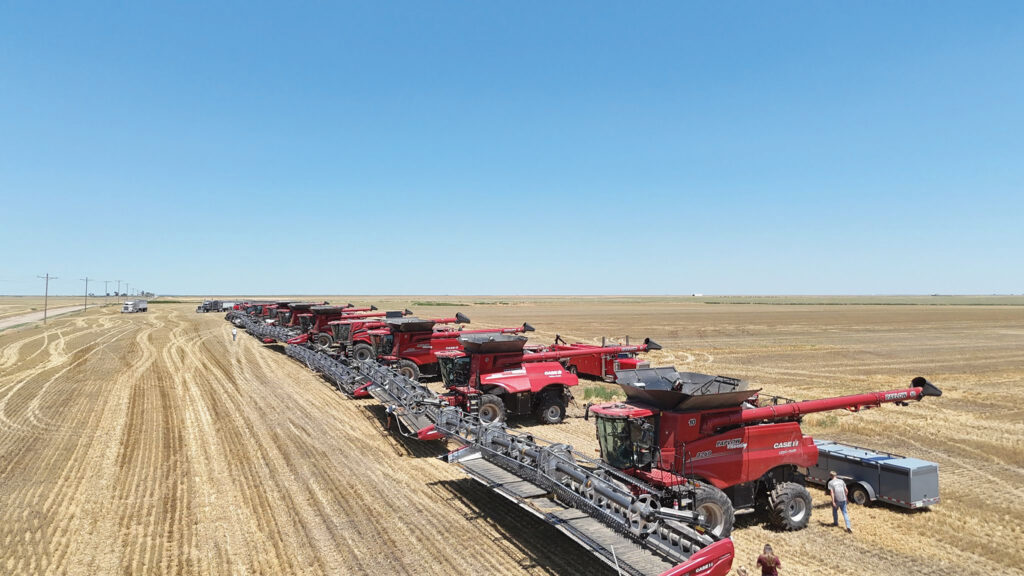
© Eleanor Gilbert
A typical workday
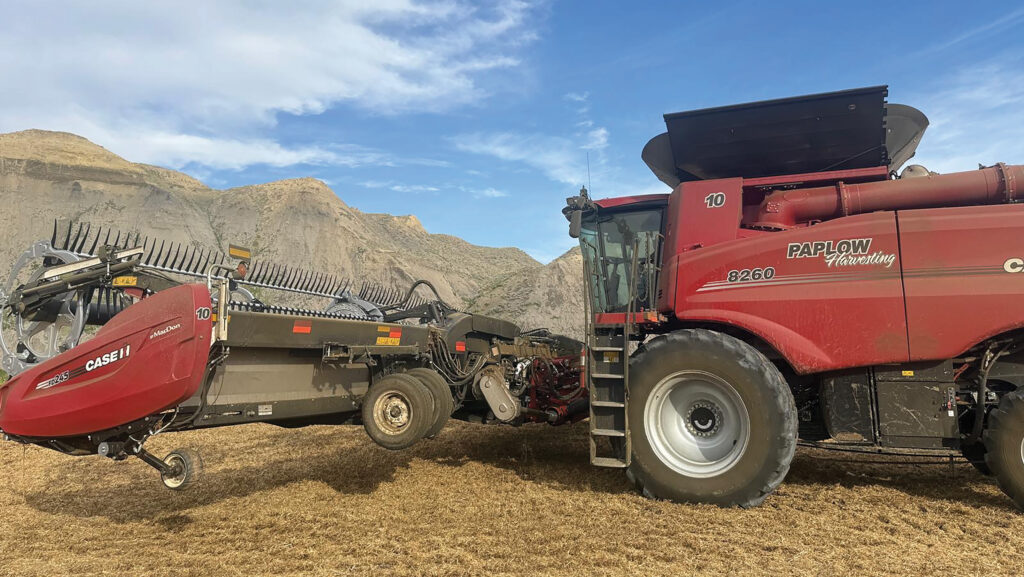
The crew at Paplow Harvesting and Trucking run 10 Case IH combines with 45-foot and 50-foot MacDon headers.
Life on the road, operating a combine, driving trucks, carting grain and maintaining equipment, generally starts at 7:30am, and can finish past midnight.
“We generally work at least 14-hour days and doing a 100-hour week in peak periods is not unusual,” she says. “The workload is about three or four times the intensity of a British harvest.”
Early on, time was spent in the workshop, setting up the headers, maintaining machinery and sorting paperwork, before heading out on the road where Eleanor operated combine number 10.
Half the crew usually head to Texas at the start of harvest, but extreme drought this year meant only two of the 10 combines were needed, as the main crop harvest started a lot later than usual.
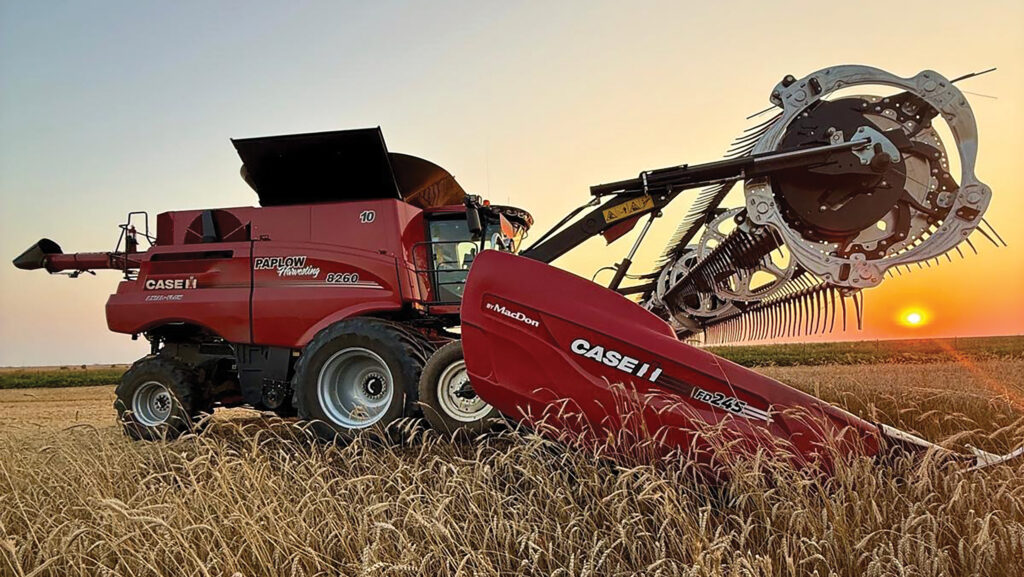
One of the fleet of 10 Case combines © Eleanor Gilbert
UK v US farming
From 40C droughts in Texas to snow and sub-zero temperatures in the Dakotas, the extremes of US farming were eye-opening.
“The weather is so different compared to the UK. Back home we say crops are droughted, but in America, they literally turn blue,” she says.
The weather can turn very nasty, very quickly.
“We’ve had to evacuate fields because of dust storms. The wind and rain can hit hard, but the sun is so strong crops can dry quickly so we can get back harvesting again,” she says.
“I’ve also managed to get the combine stuck in a mud pit – the soil types here are so variable,” she says.
The vast scale of US farming allows for a different cost of production. Yields are lower than the UK, with a winter wheat crop averaging 6-7t/ha.
Harvest logistics are lot simpler, making it easy to move machinery. “Fields here can be 1,000 acres (400ha) in size,” says Eleanor.
“The infrastructure is incredible. You can drive 45-foot headers down the road in self-transport mode and haul grain 30-40 minutes to the nearest elevator,” she says.
Crops harvested included wheat, barley, oilseed rape, lentils, chickpeas, beans, soyabeans and maize.
“Chickpeas are notorious for catching alight, so we have to be extra careful we blow down the cage veins and the concaves of the combines,” she says.
For Eleanor, the biggest difference between the UK and US comes down to scale.
“Farming here feels freer, bigger and more straightforward.
“The scale, the roads and the mindset are refreshing, especially as UK farmers face mounting pressure from government changes and low industry confidence,” she says.
© Eleanor Gilbert
The crew
Travelling with a group of 22 harvest crew workers felt like a safe way to explore a new country, all while expanding her practical farming knowledge.
“The work is hard, but the people make it worth it. It’s like being part of a big travelling family,” Eleanor says.
The team has operators from the UK, Ireland, Denmark and New Zealand, and from across the US.
Working, living, eating and sleeping in such a big group has its challenges.
“Honestly, the job is intense,” Eleanor says.
“It would be nice if we’d had more time for travel and days out, but it’s been non-stop work. Days off are for essentials: shopping, haircuts and prepping for the next leg of the journey.”
“The Paplow family are lovely. They provide meals twice a day – lunch and an evening meal.
“This is very important as when you are working remote you can be an hour and a half from the closest shop and quite often we finish late, so the shops are closed.”
What was truly inspiring was seeing the Paplow family dedicate their life to harvest.
Each year, the family sacrifice months of their lives to go on the road, taking their kids and their pets with them following the harvest across the country.
“It is a tough job, a huge responsibility and a real commitment,” she says.
After main crop harvest, came the fall harvest for grain maize and soyabeans, which finished in mid-November.
“At first, seven of us girls in the crew lived in an eight-bed camper – it was a bit of a squeeze.”
When the fall harvest rolled in and the weather turned cold and snowy, the team upgraded to more permanent accommodation near a town – a small luxury after months on the move.
© Eleanor Gilbert
Lessons from the Plains
Eight months, 51,000ha and thousands of miles later, Eleanor has learned more than just new machinery skills. Working abroad has taught her a lot about resilience, problem-solving, and adapting to specific scenarios.
“This experience has been incredible. It’s been tough, but I wouldn’t change a thing,” she muses. “You learn how to keep going when things go wrong. There’s always a way out; you just have to figure it out for yourself.”
Beyond the cab
Even on the road, Eleanor hasn’t stepped away from showcasing her journey on social media, documenting the experience via her Berkshire Farm Girl YouTube channel.
She has been uploading three 12-minute YouTube videos a week, filming from the cab and editing after work.
If that wasn’t enough, Eleanor has also been helping run her own business back home, where she manages a pumpkin patch, café and maize maze on the home farm.
“I’ve been managing that remotely. It’s been super successful. I can’t thank the team back home enough. I’ve been so grateful for their support.”
What’s next?
With harvest now wrapped up, Eleanor plans to go travelling for a month, making the most of her time abroad. She is also considering an Australian harvest in the near future.
In the meantime, upcoming projects back home include organising a Christmas tractor run in aid of Newbury Cancer Trust, alongside some well-earned time catching up with friends and family.
Her advice for anyone considering working abroad?
“Just do it. Research the crews, be ready for long hours, and embrace the challenge. It’s a marathon, not a sprint – but it’s an unforgettable way to see the world while doing what you love.
“You learn to work extremely hard. It has been one heck of an experience.”