

Transition Farmer: Improved water supply builds resilience
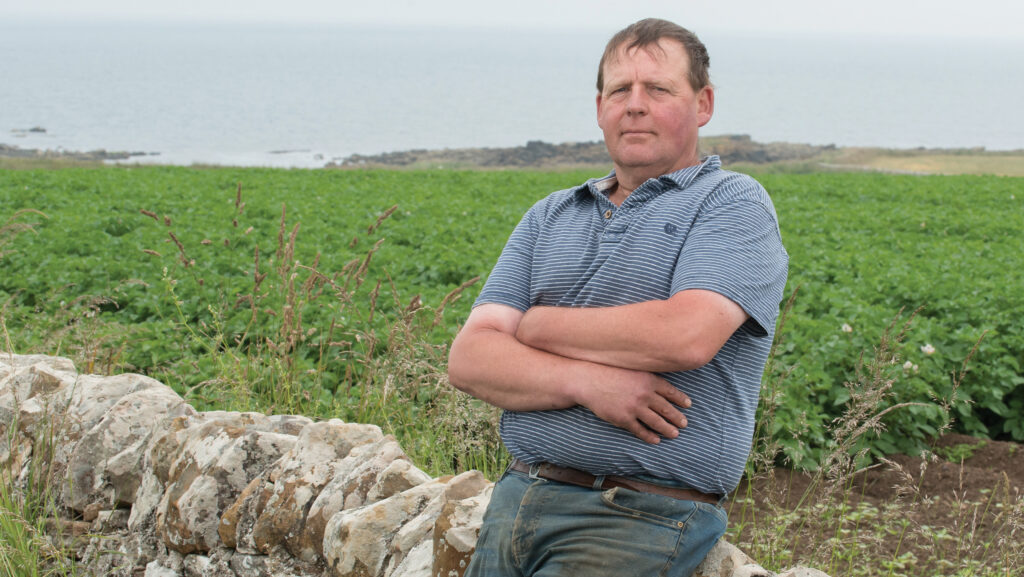 Alan Steven © Angus Findlay
 Farmers Weekly Transition Farmer Alan Steven has been improving water supply resilience and invested in a seeder for a cultivator to establish all his cover crops.
We catch up with him in Fife to find out how the farm’s Transition goals progressed in 2025.
See also: All updates from Alan Steven
Alan Steven
Farm facts
Hillhead Farm, Kingsbarns, Fife
- Farm size: 138ha
- Annual rainfall: 710mm
- Soil type: Loam
Improving water supply resilience has helped grower Alan Steven maximise returns from vegetable and cereal crops even after the drought-like conditions of early 2025.
The watercourse that Alan has historically abstracted water from dried up after weeks without rain.
With barley at a critical stage of establishment in May and high-value vegetables threatened, he tested for an underground water supply and hit the jackpot second time.
A borehole pump was acquired second-hand, a 25,000-litre reservoir created, and additional irrigation infrastructure laid for an outlay of about £50,000.
“We hired an 8t excavator to create a hole on waste ground, lined it with polythene and installed a float switch to control the supply of water from the borehole,” Alan explains.
Water resources
Although the reservoir is small, access to a water source made the difference between him selling the majority of his spring barley into the malting market instead of as lower value livestock feed.
“It kept the barley alive when the weather was in doubt, it paid dividends because it kept the screenings to the level required for malting,” says Alan.
“It also paid to irrigate, which often isn’t the case with cereals, because it only took an extra litre of fuel an hour to run two irrigators instead of one – one for the vegetables and the other for the barley – and that helped the engine perform better.”
The borehole pump is currently powered by a hired generator as it is in a location remote from an electricity supply.
“We will look at how much more we need to invest in the irrigation system and whether it makes better financial sense to buy a generator,” says Alan.
He has also invested in a seeder for a cultivator purchased two years ago and used this to establish all his cover crops.
Wheat establishment
While the winter cereals mostly went into the ground in good conditions, the later sown wheats took a hit from very heavy rain later in the autumn.
“We are very much in the hands of the weather gods, as the two extremes we have seen in 2025 showed.
“But having the extra irrigation in the spring certainly made life so much easier,” Alan reflects.
On the plus side, even with very high levels of rainfall, soil structure rapidly corrected following successive years when moisture has been below average.
Transition challenges
- Reducing cultivations
- Mild coastal climate
- Distance to market
Explore more / Transition
During the series we follow our group of 16 Transition Farmers through the challenges and opportunities as they seek to improve their farm businesses.
Transition is an independent editorial initiative supported by our UK-wide network of partners, who have made it possible to bring you this series.
Visit the Transition content hub to find out more.
