

Transition Farmer: Lack of rain puts soils to the test
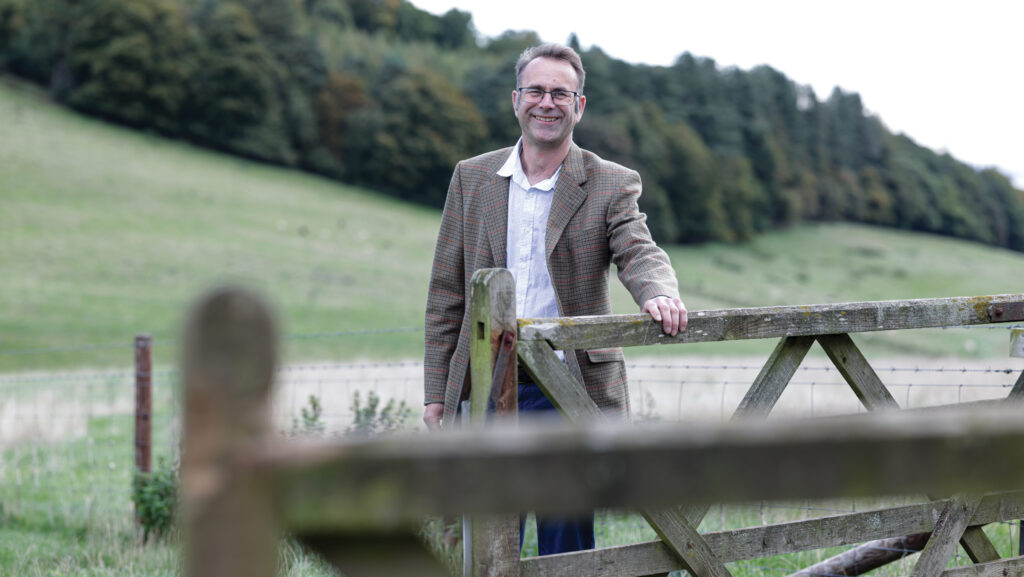 Philip Vickers © Dave Charnley
 Farmers Weekly Transition Farmer Philip Vickers has been improving the moisture retention capacity of his arable soils to deal with ongoing weather extremes.
We catch up with him in County Durham to find out how his Transition goals progressed in 2025.
See also: All updates from Philip Vickers
Philip Vickers
Farm facts
Raby Estate, County Durham
- Farm size: 1,250ha (part of wider land holdings across County Durham and Shropshire)
- Annual rainfall: 650mm
- Soil type: Loam, high magnesium content
If there was a year designed to test the Raby Estate’s Transition goals, it was 2025.
Just 0.6mm of rain fell during the critical spring growth period, exceptional for County Durham, and compounded by the Durham estate’s position in a rain shadow, sheltered by the moors.
Farm manager Philip Vickers expects extreme events like this to become more common.
This is a reason for improving the moisture retention capacity of soils, building up organic matter, and reducing compaction to improve performance in drought and deluge.
Performance in direct-drilled crops matched those conventionally sown, but were cheaper to establish and with minimal soil disturbance.
“Both systems had good and bad yields, it was all about drilling conditions and date,” says Philip.
Crop prospects
Early prospects for the cereals were good, but tillers were lost in the dry period and that checked yield, he adds.
“We had a less-than-ideal year in 2025 but so did most people.
“A positive that helped us financially was that by direct-drilling we didn’t incur the cost of heavy autumn cultivations.
“And although the very dry weather was unwelcome, it self-structured the soil – lots of cracks meant simple autumn establishment with two direct drills running easily through the soil.”
Overall, Philip says 2025 fell short on budgeted yield and prices, but a proportion of the cereals have forward sold “reasonably well”.
“We are not through the selling period and hoping it will continue to pick up.”
Introduction of bicropping
Another change of approach has seen bicrops of oats and peas and barley and peas grown.
Yields were in line with other spring-sown crops but produced a “ready-made” feed for the 600-head sheep flock while sale of the straw generated additional revenue.
Sheep were turned onto the autumn-established wheat fields in the first week of November to graze allocated parcels for up to five days.
This approach has become a feature of the system on the estate after a trial there found that managed grazing improved wheat yield by 0.8t/ha.
Fodder beet
With many livestock farmers short of forage this year, sale of fodder beet will help with sales figures as the crop bucked the general trend by performing well.
“Although the established plant stand was compromised with the dry spring, rain in June helped and the root yield has been reasonable,” Philip reports.
As he reflects on a year that wasn’t for the faint-hearted, his faith in the transition to a different way of farming is resolute.
“We haven’t experienced anything that particularly scares us in terms of our Transition goals.
“It has made us more determined and we have learned some valuable lessons from a difficult year.
“We have an excellent dedicated team that have embraced the changes and made the system work for Raby.”
Transition goals
- Maintain margins while changing approach
- Improve soil health and resilience
- Enhance the natural environment
Explore more / Transition
During the series we follow our group of 16 Transition Farmers through the challenges and opportunities as they seek to improve their farm businesses.
Transition is an independent editorial initiative supported by our UK-wide network of partners, who have made it possible to bring you this series.
Visit the Transition content hub to find out more.
