

Transition Farmer: Slurry lagoon gets the go-ahead
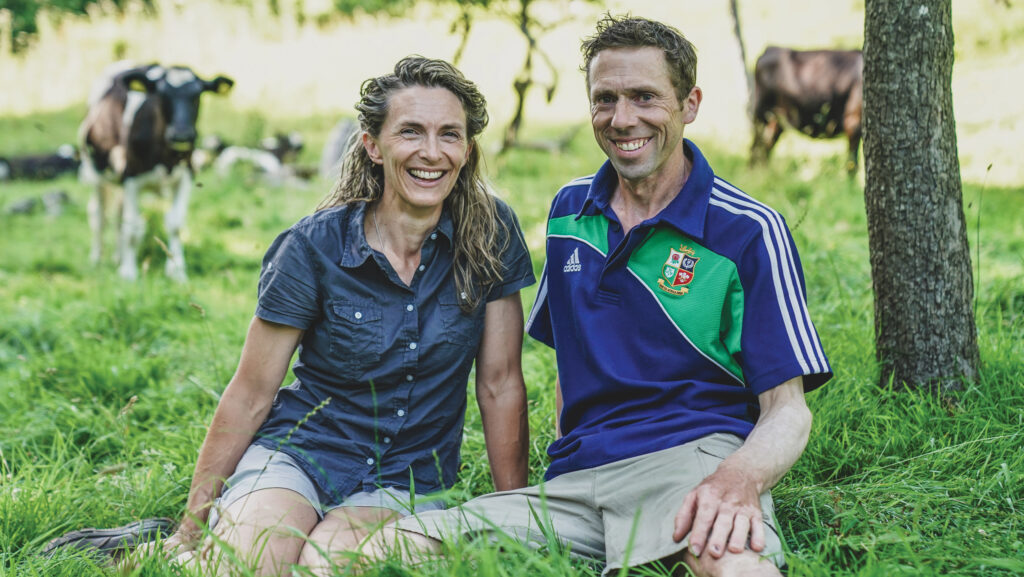 Rachel and Richard Risden © Emily Fleur
 Engaging with the Environment Agency (EA) has helped tenant dairy farmers Richard and Rachel Risdon find a way forward after unexpected challenges around creating slurry storage on a new holding.
We find out more as we catch up with them in Devon.
See also: More from Richard and Rachel Risdon
Richard and Rachel Risdon
Farm facts
Woodrow Barton Brampford Speke, Devon
- Farm size: 365ha across two holdings
- Annual rainfall: 865mm
Transition Farmers Richard and Rachel Risdon became tenants of their second farm, a 253ha holding in north Devon, in April 2024.
They factored a lagoon into their budget as existing storage was incompatible with running a 350-cow milking herd and complying with nitrate vulnerable zone regulations and Farming Rules for Water.
A consultant was hired to advise on the scheme but professional support fell short, including failing to survey the site and advising that the lagoon would require full planning permission.
The farm sits on the edge of the Exmoor National Park, where strict rules on air quality made the prospect of consent for an earth-banked lagoon unlikely.
The Risdons’ own research later established that if the lagoon was relocated a short distance from their preferred site, it wouldn’t need full planning permission or the requirement to satisfy those rules.
When excavation work started in August 2025, they were presented with another hurdle – there was insufficient soil to form the sides of the lagoon as planned and approval was required for materials to be imported.
With the clock ticking on their winter housing period, the Risdons did what many farmers are reluctant to do and contacted the EA.
The process that followed was very constructive, says Rachel.
Although derogations for spreading slurry outside defined periods are not routinely permitted, the business was granted a year’s grace to enable another consultant and surveyor to be instructed and the job completed.
A stability test is being carried out to check that all work done so far on the site they started excavating is correct before further material is added.
Rachel says contacting the EA proved to be the right approach.
“A lot of farmers, ourselves included, are very worried about contacting the EA.
“But when we held our hands up and told then what had happened, they were very reasonable because we had been really honest and open with them.
“We had started the process using a known local consultant and followed his professional advice.
“But it fell very short, and then he stopped answering our calls – the EA were sympathetic because they could see we had tried to do the right thing.”
Work will start on the 7,700cu m lagoon this spring and it is the remaining infrastructure project in the Risdons’ plans for their 10-year farm business tenancy.
Transition goals
- Securing adequate labour
- Better understanding Environment Land Management
- Reducing carbon footprint
Explore more / Transition
During the series we follow our group of 16 Transition Farmers through the challenges and opportunities as they seek to improve their farm businesses.
Transition is an independent editorial initiative supported by our UK-wide network of partners, who have made it possible to bring you this series.
Visit the Transition content hub to find out more.
