

Advertiser content
Transition in Scotland update: Greening and whole farm plans
The transition in Scotland away from the Basic Payment Scheme has started to happen. In this article, Lewis Butlin and Sara Barrett of Agrovista Rural Consultancy provide an update on some options and opportunities where detail is becoming more apparent.
It has been a long time coming, but Scotland’s transition to a reformed agricultural support system to encourage farm businesses to reduce emissions, improve biodiversity and increase food production in a more sustainable manner is now under way.
While the options available to farmers are starting to become clearer, as set out in this article, exact timescales are still unknown and delays in the rollout are already evident.
Funding for support is reliant on commitment from Westminster. A delay in the announcement of a long-term guarantee, which was eventually agreed in June with the Scottish Government, has not helped.
We at Agrovista will be keeping a very close eye on events so we can continue to help farmers with all aspects of guidance and compliance for the current and future schemes across Scotland.
© Agrovista Rural Consultancy
Introduction of enhanced greening
Environmental funding will be delivered to farmers through the existing mechanism of Environmental Focus Areas (EFAs), areas of arable land managed for the benefit of the climate and the environment.
But there will be significant changes to Scotland’s greening rules from 1 January 2026.
A new enhanced greening payment will be introduced and will be a supplementary payment to the Basic Payment Scheme in 2026. Each business qualifying for the payment will receive the equivalent of 30% of the current full BPS payment.
As a result of the changes, more farmers and crofters will be required to manage their land through Enhanced Greening.
This includes farming 5% of arable areas as EFA and protecting permanent grassland areas designated as environmentally sensitive.
© Agrovista Rural Consultancy
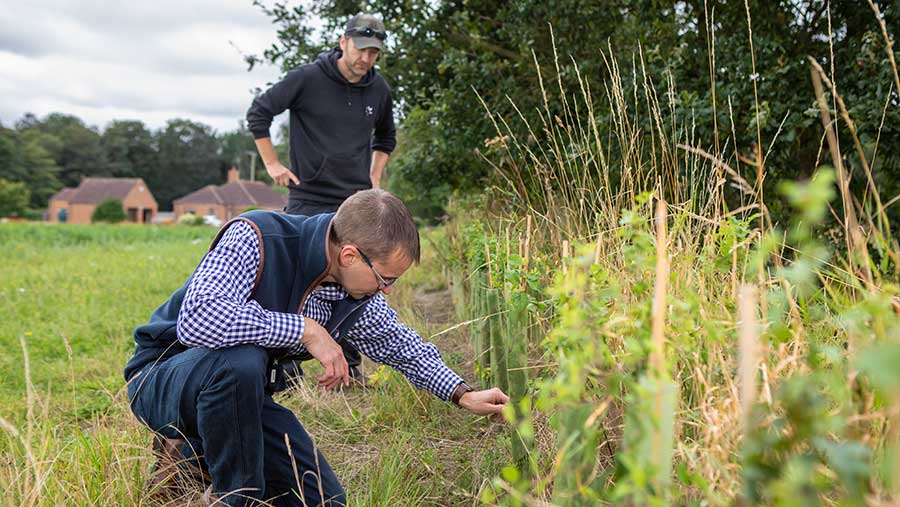
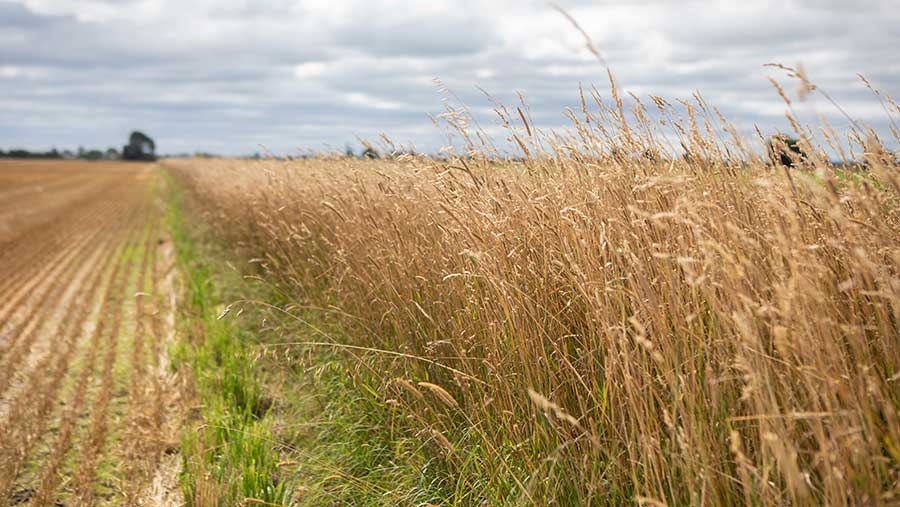
Eligible options for arable land include margins, fallow land, catch and green crops, nitrogen fixing crops and hedges.
Previous grassland exemptions have been removed under the revamped rules, so farmers with more than 15ha of arable land, including temporary grassland, will now need to manage 5% of that area as EFA.
This will be a new concept for many farmers and may, at first sight, present a challenge. However, the recently introduced options should make compliance relatively straightforward.
That said, option costs associated with establishment, long-term management, changes to productivity and any risks associated with their success should be considered carefully.
Arable land is currently defined as land cultivated for crop production, including fallow areas and temporary grassland, but excluding areas under permanent crops. It is expected that EFAs will increase to 7% for 2027 and is likely to include permanent grassland areas by 2028.
© Agrovista Rural Consultancy
It is also worth noting that in 2026 any permanent grassland used as EFA will also become arable for the purpose of the EFA calculation.
There will be a total of 11 EFA options available in 2026 including several new ones. These include:
- Herb and legume rich pastures – requiring temporary grassland to be seeded or overseeded, using a diverse species grass mix
- Unharvested crops – requiring an area 6m to 20m wide of crop left unharvested around arable fields until the end of 2026
- Low input grassland – permanent grassland that can still be grazed or mown but cannot receive inorganic fertilisers
- Low density trees – areas planted with 20-50 trees/ha of native or fruit trees.
Herbal leys have been widely adopted across England through the SFI scheme.
Experience has shown that this option is not suited to all farming situations and can be hard to establish well if the site is not favourable or seed mixtures are not right.
Any management restrictions and how they fit with current farming practices should also be considered.
Ongoing management also needs to be addressed, and will productivity be sufficient for the farm’s needs? These conversations need to be had ahead of applications being made.
We at Agrovista are well placed to give tailored advice through our network of consultants and agronomists.
© Agrovista Rural Consultancy
Whole farm plan
First introduced in 2025, the whole farm plan (WFP) is a way to measure the efficiency of individual farms’ agricultural practices.
Currently the WFP consists of five parts. Only two are required at present and through into 2026, but this will increase over time.
Other plans such as nutrient management planning will be introduced by 2028.
WFP is designed to help farmers find ways to:
- become more efficient
- reduce costs
- cut emissions
- improve biodiversity.
The WFP requirement applies to any agricultural businesses that claims Basic Payment Scheme (BPS) as well as for new support schemes introduced from 2025, such as the Future Farming Investment Scheme (FFIS).
Many businesses already have more than two plans in place, often required through Farm Assurance or supply chain contracts.
Provided existing plans meet the minimum standards and are in date when completing the Single Application Form in 2026, these businesses won’t need to take any further action.
By 15 May 2028, all businesses claiming agricultural support will have to partake, with all plans and audits in place that are relevant to their farm’s activities.
1. Carbon audit
This audit, a key part of WFP, is designed to allow businesses to assess and reduce their greenhouse gas (GHG) emissions from agriculture.
This is deemed essential for Scotland to meet its carbon reduction commitments and to improve farm efficiency and profitability by reducing use of resources and/or wastage linked to high carbon emissions.
All businesses will need to have a carbon audit in place by 2028 to identify potential changes to livestock and land management practices to help reduce emissions.
The audit must meet several minimum standards. This includes being aligned to PAS 2050, an internationally recognised standard that measures the carbon footprint of products and services, or being part of a supply chain contract.
The audit must also be updated every five years and be signed off by a suitably qualified person.
© Agrovista Rural Consultancy
Agrovista has been involved with carbon audits for several years and has a good understanding of the data collection and interpretation required to complete them.
The more accurate the figures going into the audit, the more accurate the results will be.
Some calculators enable comparisons with similar enterprises, which can give an indication of emissions, but no two farms are the same. The calculators are constantly updating as new research becomes available.
2. Soil analysis
Soil analysis is a popular choice under WFP. It is required for all Region 1 land claimed for BPS that receives artificial fertilisers and/or organic manures, apart from seasonal land and common grazing shares.
Land must be sampled every five years (by 15 May 2028 sampled at least once within the previous five years).
Soil analysis must be carried out by an analysis lab and include details on pH, phosphate, potash and carbon as a minimum.
There are many options available for soil sampling analysis, from the basic one hand-sample to multiple grid samples per field.
In addition, there are numerous options of laboratory analysis, from basic compliance requirements to more in-depth analysis.
At Agrovista we discuss all these options with our clients to ensure the right analysis and sampling method is carried out for individual farming systems.
3. Biodiversity audit
The government has indicated that from 2026 at least half the funding for farming and crofting will be targeted at biodiversity gain and climate mitigation and adaption.
The Biodiversity audit is the first step in enabling farmers to identify and assess current biodiversity on their farms and to help consider future management opportunities.
Initially, farmers are required to produce a habitat map of all land they manage on a permanent basis and identifying species, habitats and linear features.
The complexity of these maps will vary greatly from farm to farm. Agrovista can provide assistance in completing the biodiversity audit for farmers.
4. Integrated pest management plan
This plan must demonstrate the principles of IPM – prevention, monitoring, intervention and control.
Many supply chain contracts and quality assurance schemes are already requesting IPM plans so they should not be too difficult to complete.
Farmers are encouraged to seek advice of a BASIS qualified advisor to help obtain the maximum benefit.
5. Nutrient management plans
The current recommendation that businesses create a nutrient management plan for crops and grassland based on soil analysis results is likely to be compulsory from 2028.
The NMP should take account of all nutrient sources, including slurry and farmyard manure. It is worth noting that soil compaction and poor soil structure can affect crop nutrient uptake.
A VESS (Visual Evaluation of Soil Structure) guide can be used to measure soil structure.
In conclusion, the changes described in this article represent a significant change in mindset for a lot of farmers.
BPS effectively involved no costs and was 100% profit, but these new schemes will require active management and involve costs for their implementation and ongoing compliance.
This should not be seen as a barrier or concern.
Agrovista Rural Consultancy has an established understanding of these requirements – the key is to engage with us early so we can work together to ensure things are in place.
Essentials checklist
Farmers and crofters who intend to claim Basic Payment Scheme (BPS) must:
- check which audits and plans are required for their business
- ensure they have at least two audits and plans that are part of the whole farm plan by 15 May 2026
- ensure audits and plans meet the minimum standard required for the whole farm plan
- ensure individual audits and plans meet the validity period
- indicate on their Single Application Form (SAF) what audits and plans they have
- ensure copies of audits and plans can be shared with SGRPID if required
- keep a record of any actions taken based on the information from the audits and plans
- continue to obtain any additional audits and plans to ensure they have all applicable audits and plans by 15 May 2028 at the latest.
|
At a glance |
||
|
Type of audit/plan |
Who is it for? |
Frequency of update |
|
Animal health and welfare plan |
All farmers and crofters who keep livestock |
Annual review |
|
Biodiversity audit |
All farmers and crofters that claim permanent land |
Five-year review |
|
Carbon audit |
All farmers and crofters |
Five-year review |
|
Integrated pest management plan |
All farmers and crofters that use pesticides and herbicides |
Annual review |
|
Soil analysis |
All farmers and crofters that claim Region 1 land and apply artificial fertilisers and/or organic manures to it |
Five-year review (every Region 1 field sampled once over a five-year period) |
Provided by
Agrovista Rural Consultancy provides professional farming support to help your business maximise opportunities and improve efficiency.