

How farmers can transition from price-takers to price-makers
 © Joe Morris/iStockphoto
 Farm businesses are traditionally small-scale, primary production units that have little individual influence in a market driven by global forces and dominated by corporates.
But things are changing. Demand for natural assets and environmental goods is growing, and there is a greater appetite for collaboration both between farm businesses and along the supply chain.
See also: How farming brothers are preparing for business succession
Technology has also developed that can better support collaborations, improve market analysis and create platforms for direct sales.
While confidence is low among farmers and growers, could now represent the biggest opportunity for farm businesses to transition from being price-takers to price-makers?
Experts from the AHDB and Tesco, and three of our Transition Farmers, air their views on steps that could help make the shift and deliver a fairer share of the retail price.
Why farmers are usually price-takers
Farm output is largely in the form of commodities, whether cereals, meat or liquid milk.
These are sold into a bulk trading system where prices are influenced by global factors and large companies, says AHDB head of economics Sarah Baker.
Individual farms are Davids among Goliaths and do not have the negotiating power to command higher prices.
Strategies to become price-makers
However, there are options for farmers and growers to become price makers, including:
- Farmer collaboration
- Adding value
- Closer supply chain links
- Better use of market intelligence
Farmer collaboration
Collaboration allows farmers to capture more value in the supply chain through strategies such as product pooling, joint processing and collective marketing.
This larger scale makes the co-operative more attractive to buyers who can cut administration and transport costs and secure consistent quality and quantities by dealing with a single seller.
The scale therefore gives farmers more leverage in negotiating contracts and increases the likelihood of securing better prices across the group.
Improving economies of scale also allows strategic investments to improve efficiency.
For example, co-ops can more easily invest in processing equipment and machinery to bypass middlemen, add value and take more of the supply chain profits.
Essentially, by uniting, farmers create a bigger, stronger entity with shared resources, allowing them to dictate terms rather than passively accept whatever price buyers offer.
“It used to be that a farmer neighbour was a business’s closest competitor,” says Sarah.
But now there is a growing recognition that farms are stronger together, and cluster group numbers are rising.
“Clusters can share resources and are able to spread marketing costs.
“They can also command better prices in burgeoning markets like sales of natural assets,” she says.
Companies looking for carbon or nutrient offsetting are more likely to want to deal with a single entity offering larger capacities, so a cluster will have more clout when negotiating prices.
Adding value
While co-operation can make adding value simpler via shared processing equipment, it is also a primary strategy for smaller, individual farm businesses wanting to become price-makers.
A co-operative venture will help market the product differentiator, opening potential new outlets for produce.
For the smaller businesses, taking on roles typically held by middlemen, processors and retailers via direct selling is a key strategy to keep more profit on the farm.
Key to the process is differentiation between a commodity and a product with a unique selling point, says Sarah.
That selling point may be traceability, organic certification, or higher level environmental or animal welfare work that contributes to the production process.
It may also be a switch to a livestock breed or crop variety with perceived quality benefits.
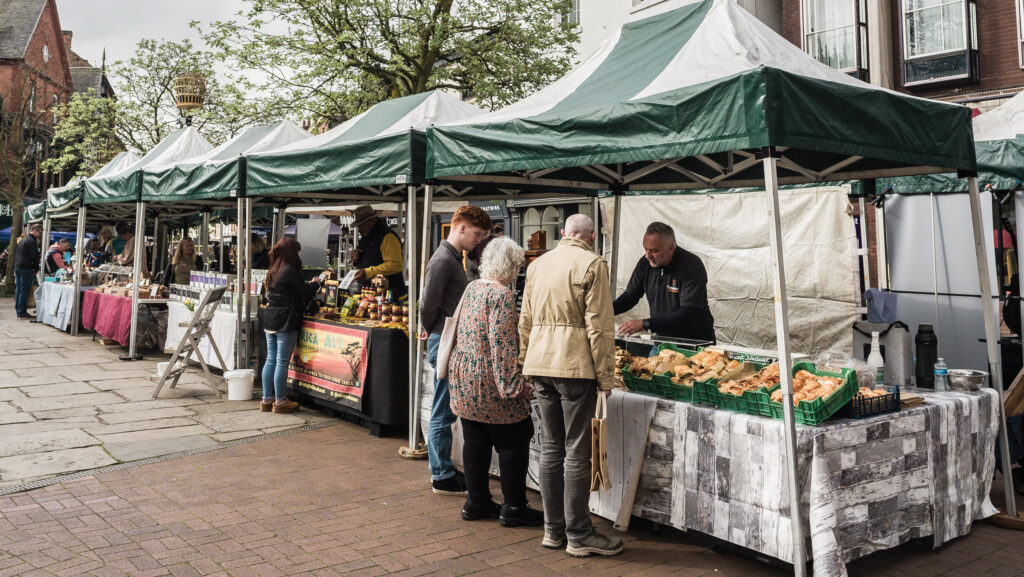
Selling products direct to consumers through farmers’ markets, online stores, vending machines or farm shops cuts out intermediaries and builds a relationship with the buyer.
Digital selling platforms and social media are relatively recent developments that make the process of promoting products easier than it has ever been, adds Sarah.
Whatever the strategy and scale of the business, having a brand is fundamental.
A brand will help promote and explain the benefits and the value of the changes to attract customers and act as a foundation on which to build their trust.
Closer supply chain links
Traditionally there has been a gulf between farmers and the big retailers at the end of the supply chain.
But pressures from environmental legislation and changing customer requirements in recent years mean primary producers and buyers are now more closely aligned, with many shared goals.
For example, extreme weather events are more common and represent a financial threat to the entire supply chain.
Meanwhile shifts in consumer demand towards sustainable environmental and animal welfare practices are recognised as issues that the farmers themselves have direct control over.
It adds up to an increased demand for those farmers and growers who can demonstrate good practice and a higher level of business resilience.
This represents a marketing opportunity to work more closely with buyers and secure better returns.
Transition Project partner Tesco is one retailer that already pays a premium to producers who are helping to meet their shared objectives.
The retailer has recently published a report on UK agriculture which marked a further strengthening of ties with farmers across all sectors.
Tesco’s Greenprint for UK Farming report, developed with Harper Adams University, was published in 2025 and outlined recommendations for sustainable UK agriculture.
The report voiced concern over uncertainty caused by government policy and called for a clear political strategy, new incentive schemes, innovation and practical solutions for the industry.
It cited changes to agri-environment schemes, high investment costs and increased exposure to risk for blocking uptake of actions that would make farms more sustainable.
During research for the Greenprint report, farmers were asked for feedback on what would help them during the transition period.
This information was used to develop Tesco’s policy and farmer incentive systems, says the supermarket’s head of sustainable agriculture, Natalie Smith.
Natalie explains that the policy is to help farmers transition to net-zero farming by sharing knowledge, trialling new tech and providing incentives through its long-standing sustainable farming groups.
The groups cover pork, lamb, potatoes, beef and dairy and deliver better returns as producers commit to shared goals.
Each group’s approach is formed around member feedback but members of the lamb group, for example, are working together to monitor and reduce emissions from their production systems.
The farmer members are then paid a premium for their produce when they meet mutually agreed environmental and welfare standards.
“The dairy group was launched amid milk price volatility back in 2007 and bases prices on production costs to ensure participating farmers remain financially sustainable,” says Natalie.
Members of the dairy group will earn up to an extra 2.5p/litre if key targets on emissions reduction, animal health, feed conversion efficiency and genetic improvements are achieved.
Sustainable Pig Group farmers earn incentive payments for reducing emissions and improving welfare, biodiversity and soil health – a similar approach to the beef group.
“Tesco has launched further support through its baselining initiative to establish targets for soil, water and biodiversity improvements,” says Natalie.
Organised in conjunction with Soil Association Exchange, the baselining project will pump in an additional £750,000, on top of previously announced £800,000, for dairy farmers to carry out baselining, bringing total spend in this area so far to more than £1.5m.
This investment into the sustainable farm groups, to gain accurate data on soil health, water quality and biodiversity, will guide further targeted investments for group members.
Better use of market intelligence
Market intelligence significantly empowers farmers to become price-makers, says Sarah.
“If farmers and growers accept whatever is offered for their livestock or crops they are potentially missing out on opportunities to make more money,” she insists.
With online platforms and a huge bank of information available through the ADHB, it is possible to make informed decisions based on real-time and historical data.
“This can identify demand and supply levels, suggest price trends and indicate when and where to sell produce to make the biggest margin,” Sarah explains.
In the short term that might be fluctuations in spot prices allowing a producer to jump on a price spike. Data provided by the AHDB can also aid medium-term strategies by highlighting trends that point to future price peaks and troughs.
This enables growers to plan planting regimes and manage storage to better meet periods of high demand and make better prices.
In the long term, analysis can highlight consumer demand for specific product traits such as higher-value goods that command higher prices.
Case study: Eddie Andrew, Cliffe House Farm, South Yorkshire
© Eddie Andrew
Farmers can become price-makers but it needs a totally different mindset, says Eddie Andrew.
“The key is to stop thinking like a commodity producer – because commodity producers are always going to be price-takers,” he says.
There are a number of options like branding your product and attaching a backstory or adding value, for example by processing your own raw materials.
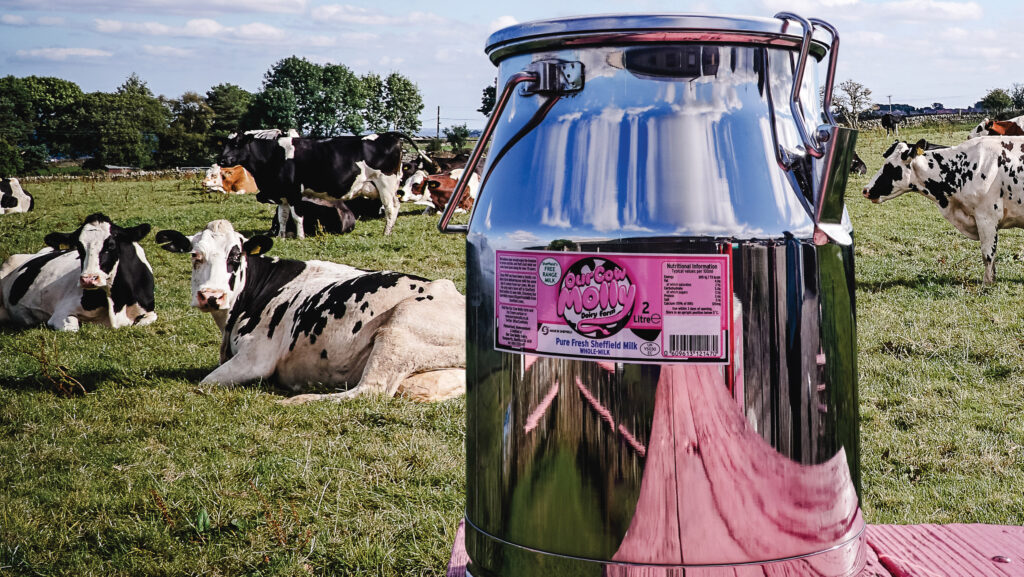
Cliffe House Farm has its own Our Cow Molly milk brand which is supplied through doorstep deliveries to individual customers and wholesale to coffee shops and larger-scale outlets such as Sheffield University.
The brand is promoted through social media, a useful tool in becoming a price-maker because provenance and traceability benefits can easily be explained, increasing demand.
The farm pasteurises its own milk, increasingly using renewable solar energy which adds appeal to environment-conscious customers. It also produces ice cream and other dairy products, sold direct without losing returns to a middleman.
One product line that is gaining popularity is raw milk, and Eddie believes this is an area where more farmers could set a higher price.
“If dairy farmers are looking to add value then the raw milk market could be worth getting into because it doesn’t require the investment in pasteurisation equipment,” Eddie points out.
At Cliffe House Farm a two-litre bottle of raw milk with lower production costs sells for £3, which is more than the farm’s pasteurised equivalent.
There are extra rules on hygiene but Eddie says they are not prohibitive and the Food Standards Agency will provide advice.
Another venture that has allowed Eddie to set prices is the installation of two vending machines. The machines returned more than £95,000 to the business last year with low installation and running costs.
Machines include a system to take payments and monitor stock and, unlike a farm shop, there are no extra staff requirements.
One machine sells ice cream, the other offers milk, butter, honey, bacon and eggs – some of which are supplied by neighbouring farms.
Vending machines are an excellent price-making opportunity for you and your neighbours, says Eddie.
Case study: Matthew Williams, Criddon Hall Farm, Shropshire
Matthew Williams © Richard Stanton
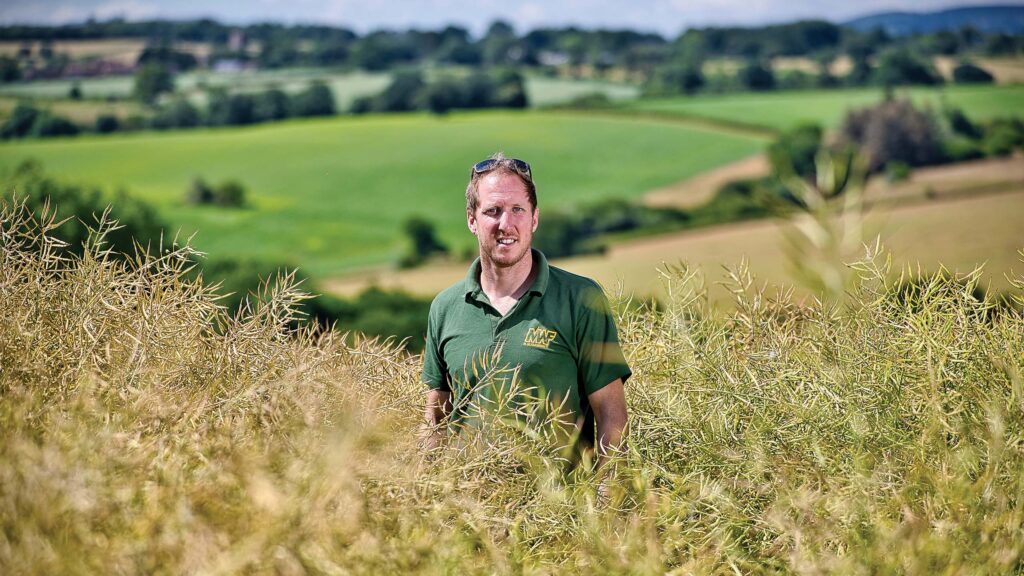
Taking the basic price for grain is not an option for first generation arable grower Matthew Williams who has built up a portfolio of more than 1,250ha of farmed land in less than a decade.
Matthew contract farms much of the area for clients and owns a small hectarage. All of this has been achieved without receiving farm support payments, a factor that has put prices into sharp focus.
Key to this is using market intelligence to command better grain prices.
Matthew studies data from traders and independent analysts as often as five times a day to identify price shifts in grain markets and then acts swiftly when the price is right.
Playing the market with this intense focus has improved returns by tens of thousands of pounds a year compared with being a passive price-taker, Matthew says.
“The target is to continue refining the process to maximise grain prices.
Matthew has also sought out ways to maximise the value of his crops. All 567ha of winter wheat are sown with milling varieties – a big shift away from feed wheat varieties.
Another venture to gain a bigger share of the grain price has been to collaborate across the supply chain in a link up with low-input grain traders, Wildfarmed.
Wildfarmed offers its growers a significant premium which exceeded the average milling wheat price by more than £100/t in 2023-24.
It then markets its low input approach – no insecticide, no fungicide and no herbicide applications – by connecting farmers, millers and bakers with consumers.
“We are gaining a better understanding of what customers want, but we are also able to discuss the important issues we face, like prices, and we are all moving forward together. ”
Case study: JM Stratton, East Farm, Wiltshire
Collaboration with other farms is providing landscape scale to generate revenue streams and create a louder voice to influence UK policy, according to JM Stratton’s business development manager Ed Shuldham.
East Farm is part of two collaborative initiatives with neighbouring producers. One is a farm cluster, Wylye Valley Farmers, which acts as a not-for-profit, social and community exercise to demonstrate ideas on environmental issues and sustainable farming.
The second initiative is the Environmental Farmers Group. It is also a collaboration and was set up with local farms to trade natural capital assets at a landscape scale.
The group has 585 members covering more than 340,000ha, and this scale offers farmers more clout when negotiating and trading natural capital services.
“Private purchasers want to see the biggest benefits achieved for their input and this means working at landscape scale,” says Ed.
“We work together as a professional team to negotiate with buyers and set a price for our assets that accurately reflects their worth.”
The aim is to become a trusted supplier of quality natural assets for public and private bodies such as the UK’s water companies, developers and corporate organisations.
Mapping opportunities
A second report on the state of farming published last year was Lloyds Bank’s Farming with Nature: Mapping the Growth Opportunity for UK Agriculture.
Working more closely with its clients, the report pinpoints how farmers can maximise prices from climate change and biodiversity ventures.
Researchers used geospatial data, on-farm assessments and new economic insight to establish how farmland interacts with nature. In total a 5.1m hectare area was assessed, making it the largest mapping exercise of its kind.
Of that, 1.2m hectares was identified as having the highest potential for farm incomes from habitat creation, carbon stores and boosting beneficial species.
It also identified 600,000ha of land prime for tree and hedge planting.
Crucially, the report combines detailed national and regional opportunities, identifying where specific practices will deliver the greatest impacts for rural businesses.
Andrew Walton, chief sustainability officer at Lloyds Banking Group, says: “Our latest insight shows how targeted support can strengthen farming businesses and help restore ecosystems.
“As the UK’s largest agricultural finance provider, we’re committed to supporting individual farming businesses that sit at the heart of the UK’s rural economy.”
The bank has launched an Agricultural Transition Finance loan designed to help ease cashflow pressures and support farmers as they make critical investments in long-term sustainable farming ventures.
Explore more / Transition
During the series we follow our group of 16 Transition Farmers through the challenges and opportunities as they seek to improve their farm businesses.
Transition is an independent editorial initiative supported by our UK-wide network of partners, who have made it possible to bring you this series.
Visit the Transition content hub to find out more.
