

How to review the farm business and shape its future
 © FLPA/Wayne Hutchinson/Shutterstock
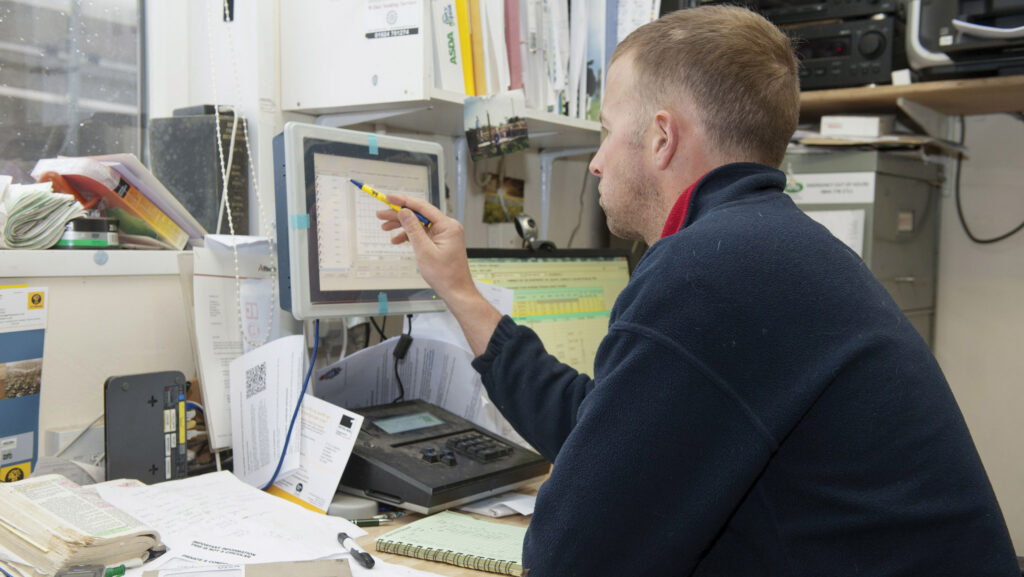
 Conducting a business review should take place in most farms offices as 2026 unfolds, following a rollercoaster 18 months for the industry which has delivered even more change and less certainty.
In England, without the safety net of the Basic Payment Scheme (BPS) and following the sudden closure of the Sustainable Farming Incentive (SFI), cashflow pressures are rising as most commodity markets remain unexciting.
See also: 12 key takeaways from Batters’ Farm Profitability Review
For these farm businesses, a review is an opportunity to assess past performance, consider the current status and develop a future strategy – with the aim of identifying opportunities, setting a direction and creating an action plan.
Elsewhere, farmers in Scotland and Wales also need to make longer-term strategic decisions.
Despite disparities in farm support, involvement in environmental and greening measures is becoming a key requirement for them to keep receiving financial backing.
In this scenario, a business review will be important for all these reasons, as well as to identify the costs of additional planning and implementation as new schemes are introduced.
What is a business review?
A business review is a comprehensive analysis of a farm’s financial health and operational efficiency.
It allows farmers to understand the true business performance, make informed decisions and, where necessary, secure funding.
Put another way, it’s a strategic health check that provides clarity and a route for developing a more successful farming operation. Even businesses that are performing well will benefit from the process.
Lews Butlin, rural business consultant with Agrovista, describes a business review as a “non-blinkered look” at whether the current situation is working.
“You have to be honest,” he stresses. “It quickly becomes apparent when the figures are in front of you if things aren’t right.
“Then you can consider what needs to be corrected and work out ways to do it.”
Why carry out a business review?
Every farm business is unique and will want different outcomes, but there are some common reasons for undertaking a review:
- To prepare for policy changes
- To make informed, data-based decisions
- To improve business resilience and long-term sustainability
- To facilitate discussions with family, stakeholders and financial partners
Another reason for conducting a business review is that it builds confidence and puts the business owner in control, creating the right environment for continuous improvement.
“There are occasions when the bank manager will have stepped in and instigated the process,” says Lewis.
“So it’s also a good opportunity to restructure any loans and overdrafts and secure funding for a new project or diversification.”
Where to start
Often seen as a daunting task, completing a business review takes time.
As well as being a look back at what’s been achieved and how the business has performed, it also identifies its strengths and what the next steps should be.
As Paul Dennison, farm business consultant with Strutt & Parker explains, a business review will shape the strategy of how to move forward – something that many may have shied away from because of uncertainty but important as a way of regaining control and addressing challenges with greater confidence.
“We are operating within a very different policy framework and with changed commodity markets,” he says.
“Those who can adapt and change the quickest will survive, which is why every farm will benefit from doing a review.”
Paul acknowledges that a lot of information needs to be pulled together before the review process can start, but stresses that it’s an important stage of the task.
“Start with the numbers,” he advises.
By that, he means tax accounts, management accounts, sales contracts, bank statements, yield data and environmental scheme details, as well as an assessment of current infrastructure and staffing.
“This shows what resources a farm has got available – such as machinery, soils, grain storage, livestock housing, labour and working capital – so that it’s clear where any investment or change in direction is needed.
“By doing this, it’s easier to identify any big things that need changing or if it’s just little tweaks to ensure that the business remains compliant and fit for the future.”
The use of farm business software makes the information gathering phase much easier, adds Paul, as so much information is held by the programmes and extracting it is straightforward.
He also recommends using five-year averages to level out any extremes or anomalies and explains that there are key areas for investigation.
Areas to investigate
- Enterprise gross margins
- Fixed costs (per hectare or livestock unit)
- Machinery and labour costs
- Borrowing levels and interest payments
- Cashflow position
- Profit requirements
What analysis should be done?
Financial, operational and risk analysis all have a place in a business review.
Benchmarking is useful, believes Paul, as it allows a farm’s financial and physical performance to be compared to similar businesses or industry standards, to identify strengths and weaknesses.
“It helps you to ask the right questions,” he suggests.
“That should lead to some good discussions and ultimately better decision making.”
Lewis Butlin agrees that benchmarking is good for understanding more about how the business is performing but stresses that they must be like-for-like comparisons.
“We’ve seen some good progress with input costs, fuel consumption and maintenance costs, where knowledge exchange through benchmarking groups has worked. If costs are creeping up or productivity is slipping, it really helps to identify some actions.”
Farm business reviews must also consider risk, he advises, as this helps to stress test the business.
Price volatility and extreme weather have become commonplace, while reliance on support payments is another concern.
Knowing what impact a £30/t drop in the grain price or fertiliser price rise of 20% would have on the business is important, as is the ability of the current set-up to service debt and pay suppliers on time.
“On some farms, we are now starting to look at life after the SFI,” he says.
“Those who are currently in a scheme need to be aware of which actions are working, agronomically and financially, and which are unlikely to remain if funding is withdrawn.”
© Nick Spurling/FLPA/imageBROKER/Shutterstock
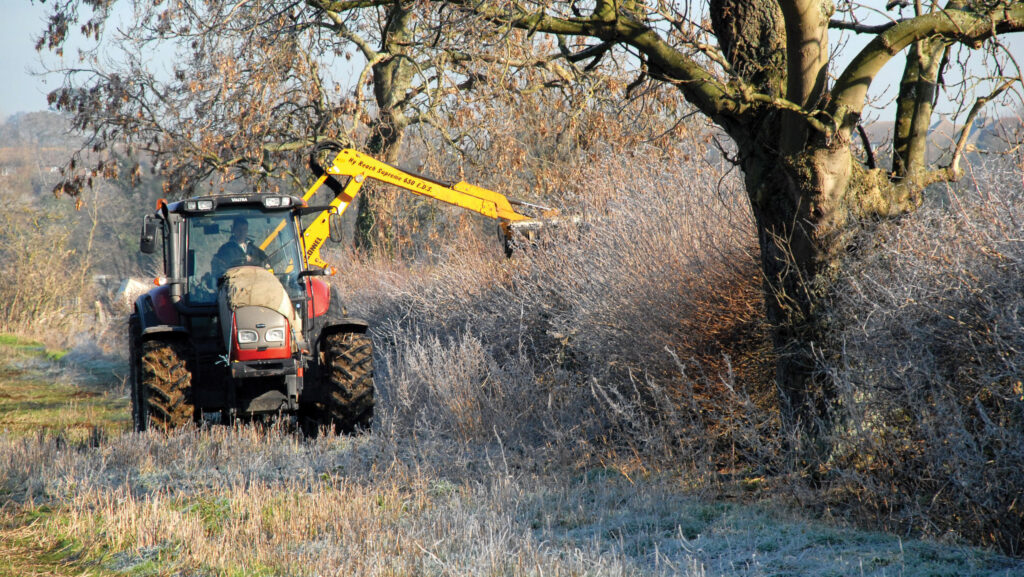
Having grass leys in the rotation, for example, may be supporting a new sheep enterprise and adding income, while including legume fallows may be providing a yield benefit to the following wheat crop.
“These figures really need investigating. In eighteen months, a legume fallow without any income attached to it really has to be doing its bit to keep its place.”
Budgets have a central role, notes Paul Dennison, who recommends establishing a baseline budget, before any changes are made, to see what it looks like and whether it meets the business needs.
“Then you can introduce changes and look at their effect on the baseline. That helps to set a plan and timeframe of how to move the business forward.”
Producing detailed budgets and plans, along with a monthly cashflow, identifies any pinch points.
“Review your budget and cashflow at the half-year point and start to budget for the next financial year. Put in sensitivities and see what the impact will be.”
Paul’s final point is that simple answers are hard to come by.
“It goes without saying that every farm is different, especially when it comes to how the dynamics work. We tend to come back to the farm business with three or four scenarios and then cost them out.
“Of course, diversification projects and new income streams don’t always appeal, while some will even be considering downsizing. ”
Turning analysis into action
A business review should end with a small number of clear, achievable objectives.
Traditionally a review might have had a lifespan of five years, but that has changed as the transition has progressed and schemes have become short-term.
“Looking ahead for five years is very difficult at the moment,” admits Lewis.
Instead, he suggests that the review becomes the farm policy and is actively managed, being re-visited every 12 months. Paul Dennison agrees.
“Treat it as a live document. Update it and review it as necessary – be prepared to put the time into it and to be critical.”
Bringing in other experts is often advised. The bank manager, accountant, agronomist, nutritionist or vet all hold specialist knowledge about the farm and can be used as trusted advisers, especially where the next generation is taking a more active role.
“If the action plan includes establishing a new poultry unit, for example, it will need at least three years of budgets and a breakdown of the finance costs. The bank manager has to be involved in this type of project.”
Tough questions
- Is this enterprise profitable without support payments?
- Is management time being rewarded?
- Could the same land and buildings be used more effectively?
- Would contracting options be more cost effective?
- Could a machinery sharing arrangement work on this farm?
- What should we stop doing?
- Are all partners/family members aligned on the future direction of the business?
- Can the business survive a major unforeseen event?
The bank’s perspective: budget or business review?
According to Richard Thomas, head of landed estates and agriculture strategy at Barclays, there are differences between conducting a business review and preparing a budget.
“A business review is a broader conversation than a budget,” he says.
“While a budget is mainly focused on the numbers and future projections, a business review looks at how the business has been performing and where it is heading.
“It brings together past performance, future plans, cashflow, borrowing needs, capital investment and the wider sector issues that could affect the farm.”
In practice, a budget often feeds into a review, he explains.
“Where they differ is that a review goes beyond the numbers to focus on the overall direction of the business.
“So although it is a look back to see how the business has been performing, the main focus is forward-looking.”
Measure progress
Up-to-date financial accounts are the key requirement for a business review, with records from previous years needed to show how the business has fared over time, he adds.
“It is also useful to have a picture of the value on farm, including machinery and equipment, any hire purchase or loan agreements, livestock or produce and land holdings.
“This means the discussion can be as productive as possible.”
Richard views a business review as an ongoing conversation rather than a one-off exercise, but says that the frequency of discussions will depend on what is happening at the time.
“Some of our customers have a lot going on, so need regular contact, while others are content with less frequent reviews.
“Either way, our focus is to agree a level of contact that supports the business.”
Benchmarking can be helpful to inform the discussion, acknowledges Richard, but shouldn’t be used as the sole measure of success as no two farms are the same.
“A business that looks strong on paper may still have significant commitments, while one that is weaker on benchmarks may be more resilient due to diversified income.
“That’s why the focus is always on the individual farm,” he says.
Set targets
He notes that most farm businesses work with a number of advisers, making it easier to have the right advice available when making important decisions.
“Start by thinking about what the business wants to achieve, so that the conversation is focused and useful,” he says.
Like other advisers, banks are there to work with farmers and help them achieve their ambitions in a responsible way.
Given current uncertainty with farm policy and future funding, forecasts should be based on what is known and within the farmer’s control, continues Richard.
“If additional commitments are being considered, it’s good practice to understand how the business would perform if income streams change.”
“A business review should remain flexible. It can be updated as information becomes available.”
Where opportunity in the form of expansion or diversification is on the table, the first question to ask is whether it suits the existing farm and the people running it.
“Experience, capacity and time are just as important as the financial case,” advises Richard.
“Some projects integrate quite easily, others need significant involvement.
“Researching the opportunity, understanding the operational demands and being realistic about what can be managed are important steps before committing to a new project.
“This is where farm advisers and consultants can be invaluable – they will have seen other farm businesses go through similar processes and set up new ventures, so they are familiar with any pitfalls.”
Explore more / Transition
During the series we follow our group of 16 Transition Farmers through the challenges and opportunities as they seek to improve their farm businesses.
Transition is an independent editorial initiative supported by our UK-wide network of partners, who have made it possible to bring you this series.
Visit the Transition content hub to find out more.
