OFC report: Tough choices today protect your farm tomorrow
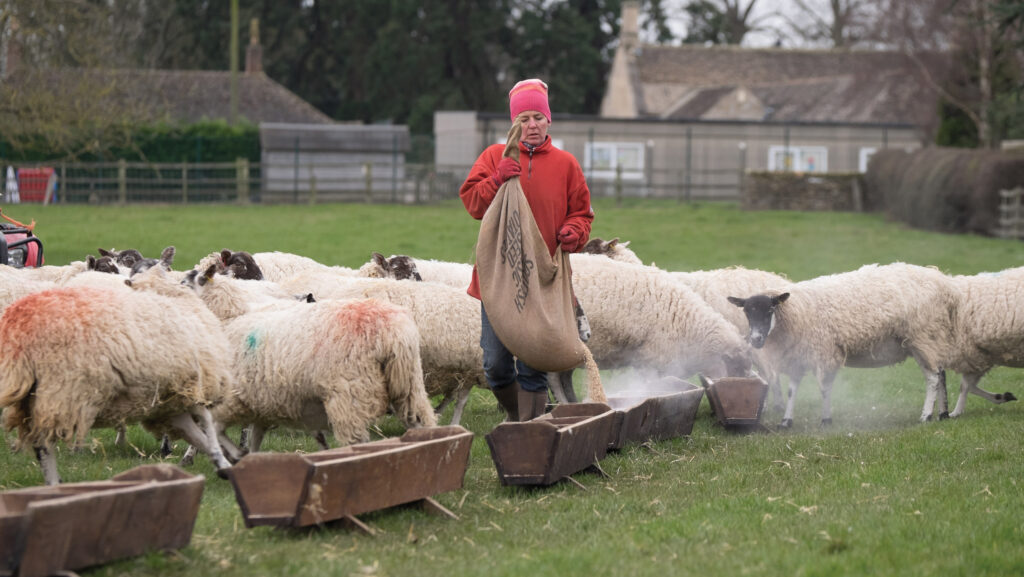 © Tim Scrivener
 UK agriculture is standing at a crossroads, and the roadmap to a new future, according to a fresh report from the Oxford Farming Conference (OFC), isn’t going to be set by government alone.
It will be designed inside farm offices and at kitchen tables across the country.
The report, written by Dr Louise Manning, starts with a stark message for every farm business: in a post-subsidy world, you must become an “investible product” – or risk not being here at all.
“A business that does not have a formal strategic plan and a plan for either family or management succession is not a viable business,” says Dr Manning.
“If farm businesses are servicing finance or providing products into a supply chain, but cannot demonstrate their short- and long-term economic viability, why would any other business, given a choice, do business with them?”

Louise Manning © EPIC
Strategic thinking
Commissioned by OFC director and Worcestershire grower Ali Capper for the conference’s 90th anniversary next month, the report reflects her desire for this landmark year to focus on looking forward, rather than back.
It calls for a radical shift in mindset across the industry – from defensive, short-term survival thinking to opportunity-driven, mission-led strategy.
But it also notes that if individual farm businesses are expected to raise their game, the wider system must do the same.
One of the report’s most urgent warnings is that the UK lacks a strategic direction for its food and farming sector, and that absence of vision is dragging down confidence, investment and long-term planning across the board.
“We don’t see a clearly articulated strategy for the future,” says Dr Manning.
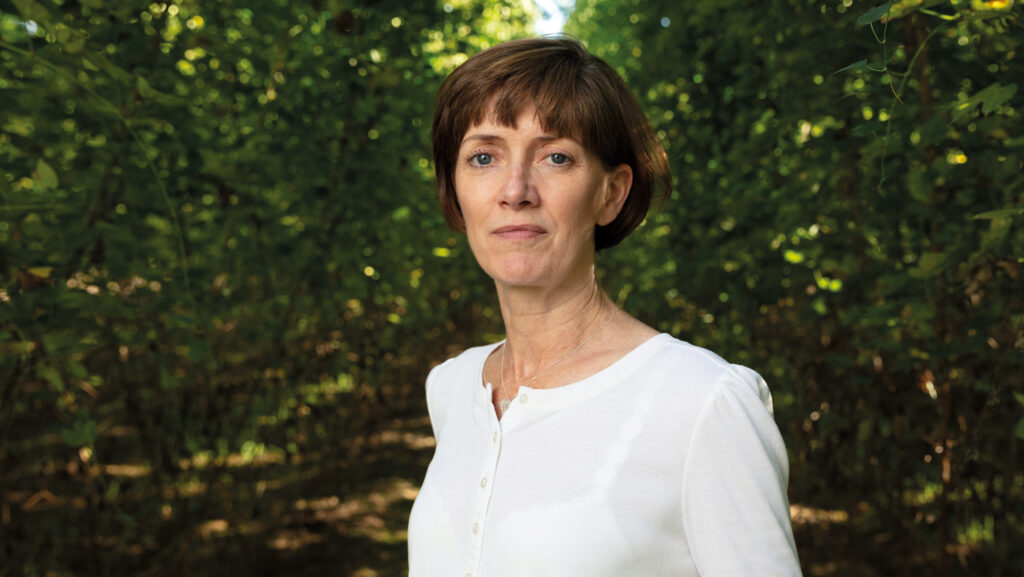
Ali Capper © NFU
“What we see is policy overload. It’s almost a new policy every week. Businesses get to digest one thing and then the next agenda comes along.”
For farmers facing multiple challenges including climate volatility, input inflation, shifting customer requirements and post-Brexit uncertainty, that churn is crippling.
“Without a clear strategic context, the industry cannot align and move forward. Farming businesses will simply stop investing and move their attention elsewhere,” says Dr Manning.
Government influence
Ms Capper agrees that strategic clarity matters, not because farmers need government to hold their hand, but because government shapes the environment they operate in.
“The government actually does have a lot of impact on agricultural production and trade,” she says.
“If the government just decided to be positive about the food that was produced in the UK, that would give agricultural businesses a different level of confidence.”
Instead, English farmers face disappearing direct subsidies, rising interest rates, frozen environmental payments, lopsided trade deals, and intensifying competition for land from housing, energy, reservoirs and data centres.
If something does not change, Ms Capper warns that the results will be stark.
“We will become a country that imports food. We won’t grow it,” she says.
Business discipline
The pressures driving the country toward that scenario are already building, with lenders and supply chain partners increasingly judging farming businesses by the same standards as any other enterprise.
The report says this will demand a dramatic upgrading of business discipline.
But Dr Manning is clear that making a farm business an “investible product” does not have to be complicated.
It is, at its core, about getting clarity on what works and what doesn’t. Which enterprises return profit? Which drain it? What assets can be better leveraged? What should stop? What can evolve?
Answering these questions honestly can lead to difficult decisions, and Dr Manning’s family, who farm in Herefordshire, have not been immune.
She says: “My husband had to take my father-in-law’s life’s work off the farm.
“There was no longer a business case for being a hop farmer on our farm because we had verticillium wilt and there was increasing foreign competition.
“He had to put the emotion to one side and say ‘this enterprise has to go.’ That’s a really hard thing to do, and I think anybody who’s advocating that has to understand what that means in practice.”
But, having been through the process herself, she insists farm businesses must take this approach – no matter how tough it is.
“If they don’t, they are unlikely to be here in the future,” she says.
Three mindsets
Her experience reflects a wider pattern the report highlights – how farmers respond mentally when faced with difficult decisions.
It identifies three prevailing mindsets: the doom-loop, the drawbridge, and the growth mindset.
Dr Manning explains that the doom-loop is triggered by “lack of confidence and trust”, while the drawbridge is pulled up when “doing nothing is seen as the least risky option”.
But, she adds, mindsets change when incentives do.
“Farmers will be opportunity-driven when they are presented with a value proposition that works. As Jerry Maguire in the film said, ‘show me the money’.”
How to improve financial performance
Margins may feel squeezed, but it is often possible to find further efficiencies if farmers really scrutinise the business, says Dr Manning.
Savings can be achieved by – among other things – cutting waste, improving performance, sharing machinery, adjusting rotations or brokering smarter deals.
“If you are expending energy for no return, the activity is either a hobby or you are an exhausted owner of a charity,” she says.
One other way to unlock potential income is collaboration. The report focuses strongly on the importance of farmers working together and explores the reasons why they don’t currently.
It notes that generational divides, sectoral silos and regional rivalries are deeply rooted – though Dr Manning does not see any of these problems as insurmountable.
“Necessity is the mother of invention, especially when business as usual is no longer an option,” she says.
“If there is a clear value proposition for collaboration, then farmers will collaborate, and that can come in many forms – straw for muck deals, bed and breakfasting your neighbours’ sheep on your arable acreage over the winter on stubble turnips, or a shared grain store.
“If the divisions in the sector are making business models unviable, this will have to change or the sector will disappear.
“Tradition and technology can go hand in hand, but if tradition is a barrier to viability then history shows that farmers will shift.”
Team game
Dr Manning also points out collaboration can be as simple as thinking about “who is on your team”, with accountants, solicitors, agronomists and vets all part of a wider circle that can help build resilience into the business – both economically and mentally.
This ties into the report’s central message: focus not on limitations, but on agency.
Deciding what you want to achieve, what you will keep doing, what you will stop doing and what you will do instead allows businesses to take control of the future, even in the midst of so much global uncertainty.
Dr Manning builds on this point by explaining that businesses don’t always need to rely on expansion as the key to improving profitability.
Opportunity
“Being opportunity driven and being growth driven are not necessarily the same thing,” she says.
“I could reduce my dairy herd, change my breeding strategy and the quality characteristics of the milk and sell direct to consumers. This is a degrowth strategy.
“But my strategy, however, is opportunity driven, and could drive more profitability and more time with my family, so economically and socially for me and my family, it is a growth strategy and something worth investing in.”
The report makes one thing clear – the industry cannot assume tomorrow will look like yesterday. Whether through reinvention, refinement or collaboration, UK farming will need to redefine what a resilient and profitable future looks like, and take deliberate steps to build it.
Questions the report urges farmers to ask themselves
- Who am I?
- What is important to me?
- What is my legacy?
- What am I going to do if I am not “the farmer”?
- Am I asking too much of the next generation?
- Can I trust the next generation?
- What are my values and aspirations and the mission I have signed up to?
- Will it change with the next generation, or a new generation?
- What is important for us and the business?
- What are our values and aspirations, as individuals and collectively?
- What is important to others when they engage with the business?
- How does the internal and external positioning of ‘value’ create opportunities for the business?
- What is the family entity doing, and not doing?
- What is the purpose, the values and mission that underpin those activities?
- What are the intended outcomes and impacts of those activities e.g. what is the intended return on capital, what lifestyle outcomes are important, and what social impact is important?
- What milestones can be developed to monitor business performance to deliver the mission, outcomes and impacts determined?
The Oxford Farming Conference runs from 7-9 January 2026. Find out more and book tickets.