Advice on minimising IHT impact on pensions
 © Tim Scrivener
 Private pension funds inherited between married couples and civil partners will remain free of inheritance tax (IHT) after 6 April 2027, but in other circumstances they may be subject to the tax.
This is a concern for anyone with a sizeable personal pension as, in addition to any IHT due on the value of the pension fund, the beneficiaries of anyone who passes away after the age of 75 will also pay income tax when they draw from that fund.
See also: Longer payment window for inheritance tax needed – Lords report
In combination these two layers of tax can add up to an overall rate of 67%, depending on the marginal income tax rate of the person receiving cash from the pension fund.
In some instances, the rate can be even higher.
However, in many cases action can be taken to minimise the impact of this change.
Tax-free sum
Provided an individual has reached the age of 55 (and in cases of certain health conditions, younger), they can draw from their personal pensions.
Up to 25% of the amount built up in any personal pension can be taken as a tax-free lump sum, subject to a maximum of £268,275. Income tax is due on anything drawn down after that initial sum.
“People are reviewing their funds,” says chartered financial planner Stuart Coombe, of Old Mill.
“In the first instance, check who are the beneficiaries of the pension fund – private pension funds are often used to provide a cash sum for non-farming children, but it may now be worth changing this so that your spouse or civil partner inherits IHT-free after April 2027.”
Currently in the vast majority of cases there is no tax on pensions when someone dies before age 75. However, death after 75 means beneficiaries (including spouses and civil partners) pay income tax at their marginal (highest) rate on any cash drawn from an inherited pension fund.
As a result of the change from April 2027, some pension fund holders are already taking, or will take, their tax-free lump sum sooner than they might otherwise have done.
However, Stuart cautions that if this is simply paid into the pensioner’s bank account, the IHT liability will not be reduced.
“Where it would reduce IHT would be if it was gifted (subject to a seven-year timeframe in most cases) or put into assets where IHT relief was available, for example farming assets if there is scope for this under the £2.5m allowance.
“It very much depends on how any tax-free funds are going to be used – for many of those over the age of 75 taking the tax-free cash will be the right thing to do.”
Personal pensions holding farming and commercial assets
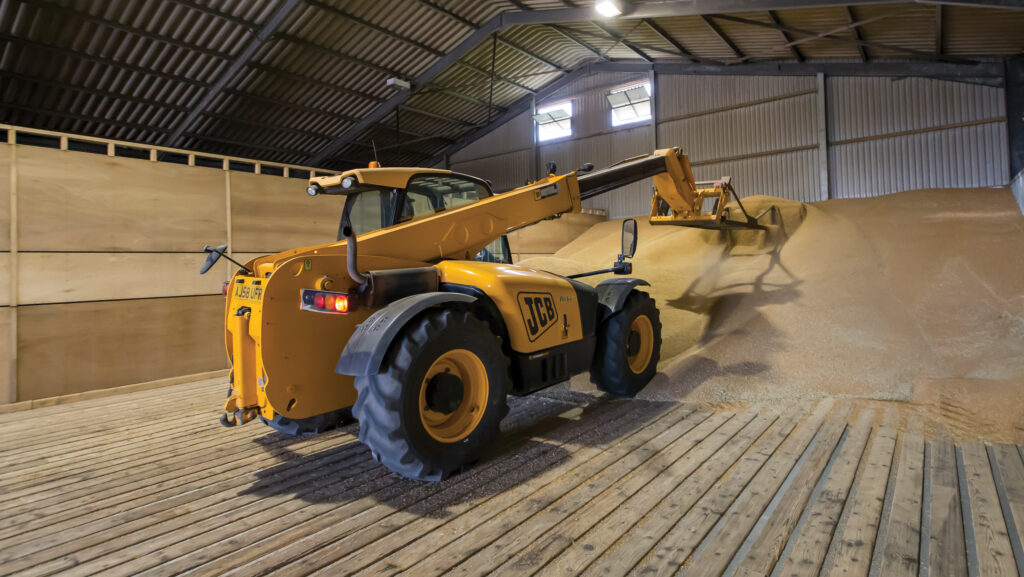
Many farmers have used either self-invested personal pensions (Sipps) or, in the case of those trading as a company, small self-administered schemes (SSASs), to invest in business assets including farmland and grain stores, for example.
This gains income tax relief at up to 45% on the pension contribution for the taxpayer, while providing an asset for the business to use without tying up its capital, with the business usually paying a commercial rent to the pension fund.
April 2027 brings the prospect of 40% IHT on the value of these Sipp and SSAS funds, compared with the possibility of 100% or at least 50% relief if these were held as qualifying agricultural assets.
© GNP
This means that extracting assets from a pension fund to gain IHT relief will be worthwhile for some people, says Stuart. “But farmers are not particularly cash-rich and the transaction has to be at full market value.”
However, given the reduction in IHT exposure that such a move could bring, banks may be happy to support lending applications for this purpose, he says.
Stuart points out that some pension assets would not attract IHT relief. For example, an office building brought out of a pension fund would achieve no IHT relief if it is a rental only, non-trading building.
Many considerations
Naomi Neville, lead rural partner at law firm Irwin Mitchell, warns that a review of a Sipp or SSAS with the possibility of extracting assets needs a high level of tax and legal advice.
“There should be no knee-jerk reaction to the IHT on pensions threat,” she warns. “Extracting assets is more likely to be cost effective for significant size pension schemes,” says Naomi.
The considerations include what structure should follow the removal, and any protections that need to be put in place.
“For example, it needs to be clear where the assets will be going and how they will be owned.
“Partnership or company structures may need adjusting, fresh agreements between owning and occupying parties may be needed, and wills must be reviewed to make sure they remain suitable following any changes.”
Changes in title need to be seen through, and the trustees of the pension fund will need to be satisfied that any decisions are in the best interests of the scheme.
Naomi suggests considering the unthinkable, such as two deaths happening in quick succession, and how the tax and other implications of this might be protected.
She also points out that the legislation is still in draft form and much guidance is yet to be issued.
Everything will depend on individual circumstances, says Naomi, and extracting assets from pension funds may not be the most tax- or cost-efficient solution to the IHT threat.
However, drawing cash from a pension fund, even if it means paying income tax on that cash, may provide the ability to make gifts sooner than otherwise planned and either start the seven-year clock ticking, or to make such gifts IHT-free, through the use of an option to make gifts out of normal income, Naomi points out.
Such gifts are exempt from IHT (and not subject to the usual seven-year survival rule), provided the donor is left with enough income to maintain their normal standard of living.
Further tax considerations on pension asset extraction
Gary Markham, director of farms and estates at tax adviser Land Family Business, highlights some further tax and other points when considering extracting assets from a personal pension fund.
- Assets must be bought from the pension fund for cash at market value, which must be established by an independent valuation.
- Pension funds are not subject to capital gains tax.
- Those with rollover cash get a double benefit, as they can invest the rollover funds into qualifying farm and commercial pension assets as well as securing IHT relief by extracting the assets from the fund.
- In some circumstances, IHT relief may be available immediately but in most cases there is a two-year ownership period during which the (new) owner must have owned the land and occupied it for agriculture in order to gain agricultural property relief. Where land is let, the period is seven years.
- Stamp duty land tax applies to transactions to acquire land or buildings from a pension fund.
- There is a potential value added tax (VAT) trap. Where an asset is sold out of a pension fund, VAT may have to be paid back if work has been done – for example, a new building or significant other work in the past six years.
- The pressure on professional advisers’ time and the long lead time for setting up bank loans means those considering such a move need to allow more time than they might expect to arrive at and enact decisions.
Beware loss of RNRB
“One thing for smaller estates to be wary of is the potential loss of the residence nil rate band (RNRB) through putting former pension assets back into the business or personal hands,” warns Naomi Neville, of Irwin Mitchell.
The RNRB is an additional IHT-free allowance worth £175,000 to each individual if they are passing on their main residence to a direct descendant – either a child or a grandchild.
However, for every £2 that the net value of the estate exceeds £2m, the RNRB is reduced by £1.
Key points – personal pensions and IHT
Current position
Pension funds are not subject to IHT, providing that death benefit payments are at the discretion of the trustees, which is the case for the great majority of pensions.
Where pension fund holders die after age 75, their beneficiaries have to pay income tax at their marginal rate when they draw from an inherited pension fund.
Where the pension fund holder dies before age 75, receipts going to beneficiaries will be exempt from income tax.
Position from 6 April 2027
Pension funds left at death (at any age) will fall into the IHT net.
However, leaving your pension fund to your spouse or civil partner will still be tax-free.
After IHT has been paid, withdrawals from the pension fund will be liable to income tax at the beneficiary’s marginal rate if the deceased was 75 or older.
For a 45% rate taxpayer when drawing down the funds this gives a combined income tax and IHT effective tax rate of 67% on the funds at death.
Agricultural and other business assets held within Sipps and SSASs will not qualify for any agricultural property relief or business property relief, when outside the pension fund they may qualify for either 100% or 50% relief.