How padel can make a profitable farm diversification
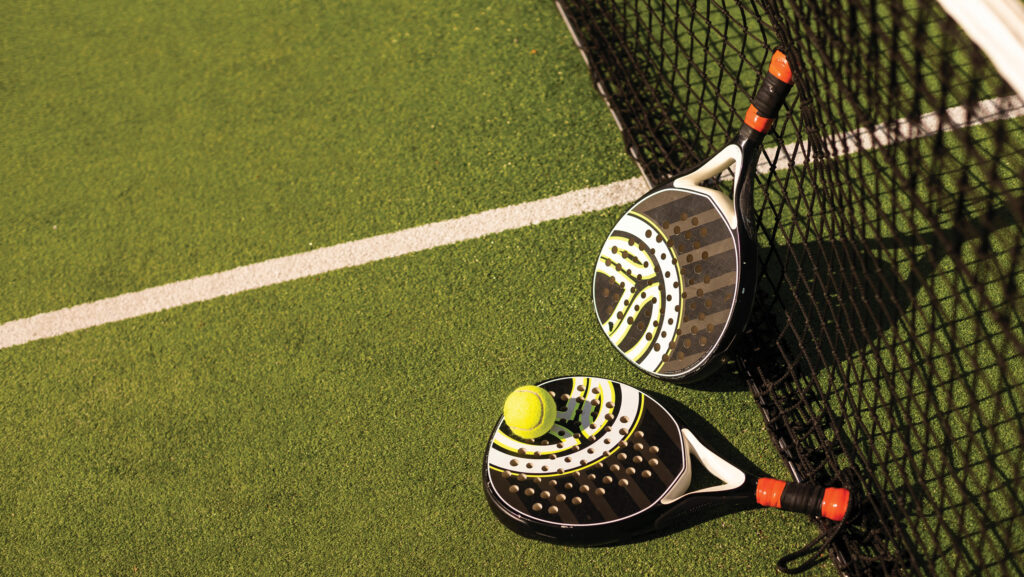 © Adobe Stock
 From the outside, it looks like any other on-farm grain store, but as the door opens, the scene is far from typical.
There’s brightly coloured carpet surrounded by glass and steel mesh walls, sofas, vending machines full of sporting equipment, a drinks station serving locally ground regenerative coffee and a pumping disco soundtrack.
Welcome to the world of padel.
See also: What’s hot and what’s not in the farm diversification market
If you haven’t jumped on board yet, padel is the sporting phenomenon that has gripped much of Europe and Latin America and is now sweeping across the UK.
Spain is the sport’s epicentre, with about 20,000 courts, but with more than 1,100 courts and new ones opening all the time, the UK is one of the world’s fastest-growing padel markets.
To the uninitiated, the sport, which was invented in 1969 in Acapulco by Mexican businessman Enrique Corcuera, looks like a cross between tennis and squash and can be played on indoor and outdoor courts.
Like tennis, you hit a ball over a net, although the court is about one-third of the size.
Like squash, you can also hit the ball after it has bounced off the walls or even hit it onto the walls on your side of the net first.
Padel, though, is much more than a hybrid sport and has its own unique characteristics.
A big part of its appeal is that it’s much easier for beginners to pick up; the serve is underarm, the rackets are smaller, with no strings, and you don’t need to hit the ball so hard.
It’s also mainly played in a doubles format, which makes it more social and much less strenuous than squash or tennis.
Many people who take it up quickly become addicted, and it’s ideal for families.
Diversification opportunity
Padel is becoming more common on UK farms as the hunger for diversified income to bolster the increasingly meagre returns from traditional agriculture.
Spotting an opportunity, farmer and entrepreneur Norman Paske set up his own consultancy business, PadelMagic UK.
“Last year, we installed about 30 courts on farms and rural estates,” says chief executive officer Adam Phelps, who is also from an agricultural background.
“This year it will probably be double that.”
As well as installing courts for others, the team runs its own padel centres on leased sites under the PadelX.Club brand.
“Our first club at Todenham Barn in the Cotswolds now has 600 registered players on two courts in a relatively rural location.
“The farm’s livestock enterprise was becoming more extensive, so we were able to reimagine the buildings,” says Adam.
A new club at the Royal Agricultural University has just opened, while one at Burghley Park Golf Club near Stamford is coming soon.
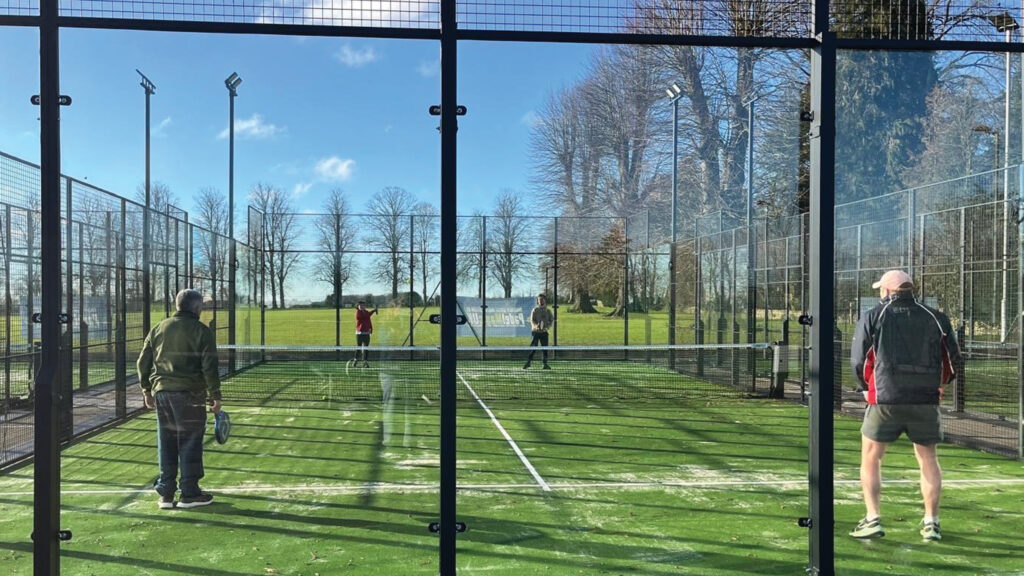
Outdoor padel court at RAU © PadelX
Given that installing two courts can cost around £75,000, and covering them if needed can easily double the bill, PadelMagic, as well as other firms, also offers farmers a hybrid option where the company pays for building the courts, provides a booking system, and, in return, takes a percentage of the court fees.
Court fees
The level of court fees could be what determines a venture’s survival if the UK padel market becomes oversupplied.
This has happened in other locations, notably Sweden, where exponential growth in just a few years was followed by a raft of closures, says Adam.
“In the UK, there’s a lot of money that’s come from private equity.
“And people with very big pockets are coming into commercial units on an industrial estate and putting in eight or nine courts.”
Fees for such courts will have to reflect the commercial rents being paid, which could benefit smaller farm-based operators, he reckons.
“At some courts in London, you can pay £100/hour. Our average charge is about £30/hour.
“As a result, we’re busy, and our model is based around making it affordable for everybody.”
Padel considerations
- Do you want to fund the whole project or work with a partner?
- Will you run the courts yourself or go for a joint venture?
- What type of court – indoor or outdoor – can you offer?
- What are the local planning considerations?
- Are there other padel courts in the area?
- Is the local community going to be supportive?
Planning
For those tempted to jump in, Adam’s advice is to first check their planning situation.
“Padel has a noise element to it, which could be an issue if your site is near a residential area.
“But that can be mitigated if your courts are inside a building.”
Redundant grain stores are ideal because they are generally tall enough to cope with the lobbed shots that are part of padel.
“You really need a height of 7m to the apex of the building,” he says.
If the building has been redundant for long enough, permitted development could be an option as Class Q and Class R cover sporting activities.
If not, a planning application for a new development or change of use will be needed.
“A lot of it is about education,” says Adam, who also runs a specialist planning team.
“A lot of planners who are confronted with an application haven’t got the foggiest idea what a padel court is or what it entails.”
Access, insurance and the provision of equipment also need to be considered, he adds.
“I think there’s quite a lot of people out there that have heard about padel down the pub, have said, ‘yeah, let’s start a club’, but are hugely naive about cost and process.”
Farm and estate planning
Padel developments can also help contribute to wider estate and farm business planning, says Florence Wolfe-Jones, of Knight Frank’s Rural Consultancy team.
Florence is just about to apply for planning consent to redevelop a redundant farmyard on a large estate in south-east England that she helps to manage.
A padel development with two outdoor and three or four indoor courts sits at the heart of the plans.
A number of drivers, including tax planning, delivering for the local community and placemaking, lie behind the project.
“One of the things that emerged from a strategic review was that our clients want it to be a living part of a thriving community, providing jobs and business opportunities for local people, not just a pretty place they wander round.
“We also have this tricky site with traditional and modern farm buildings that’s become a bit of an eyesore because some of them are literally falling apart.
“We could have spent a lot of money just repairing them, but we wanted a purpose to bring them back to life. Buildings are better when they’ve got an actual use,” says Florence.
“Considering the wave of interest in the sport and the growing demand for clubs, padel seemed to tick all the right boxes.”
Generating more trading income is also a good way to help with inheritance tax planning, she adds.
“Rather than leasing the site to an operator, we plan to run it in-house. It will be a great piece of placemaking for the estate and the local community.”
Case study: Podington Padel
Two courts housed in a grain store opened on the 800ha Bromborough Estate in north Bedfordshire earlier this year.
So far, the venture, which was financed in-house, has been a great success, according to farm manager Andrew Mahon.
Using the barns for padel made sense because a change of cropping reduced the need for grain storage.
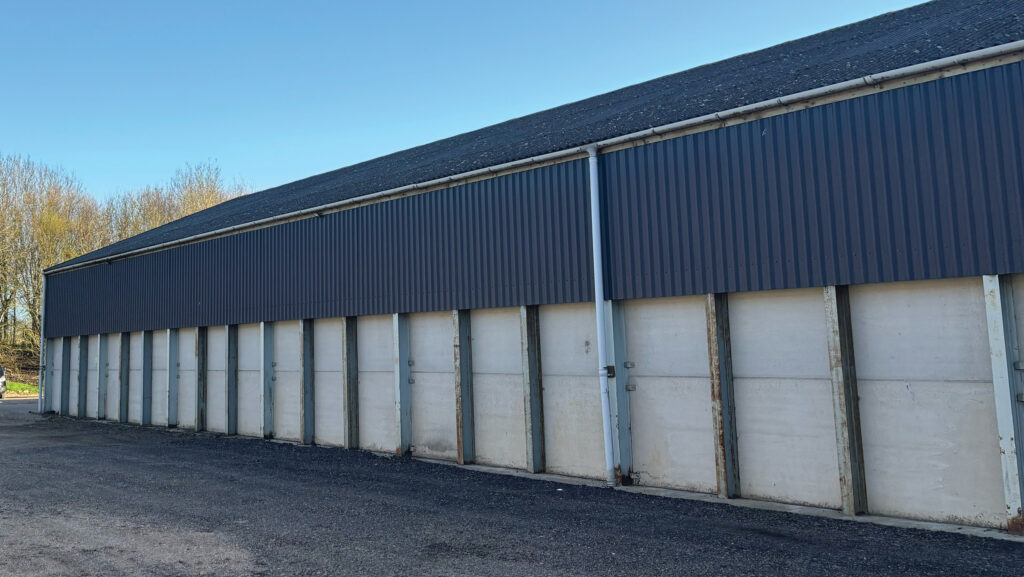
Former grainstore © Andrew Shirley
“We’ve been really busy with lots of people playing a couple of times a week and we’re booked out every evening.
“Families love it because we’ve made a commitment that we’ll always provide free rackets and balls,” says Andrew.
Vending machines
For those who want to upgrade their kit, Andrew has just installed vending machines where rackets can be rented and balls purchased. Better rackets are also for sale.
The courts are open until 11pm every night. “We get young guys who’ll play rather than go to the pub,” says Andrew.
The courts cost £36-£40/hour to rent, and are booked and paid for through an online system that also provides players with a security code to access the site and enter the barn.
In theory, the site could run unmanned, but Andrew says he or a member of the estate team try to meet-and-greet first-time players.
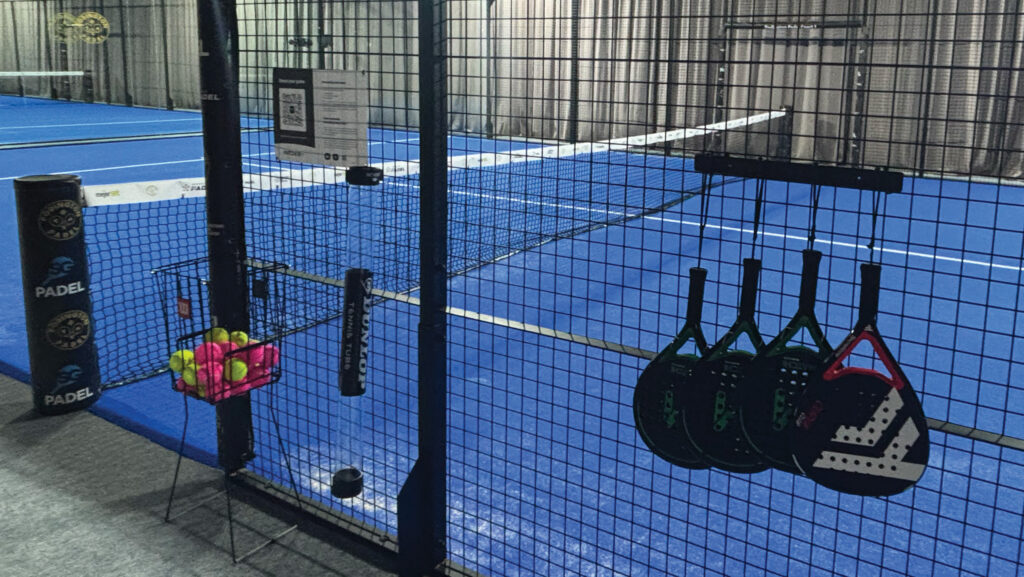
Podington Padel court © Andrew Shirley
“It’s good to get to know your customers, and you don’t always see a lot of people when you are farming these days.”
Local support
The village has been very supportive of the venture, and local residents get a discount on court costs.
Some community social events during the summer are also in the pipeline.
Andrew has become such a fan of the game that he’s even trained as a coach.
“I just wish I had time to play more. In the evenings, when I’m free, the courts are always busy,” he says.