Key structural considerations before converting a farm building
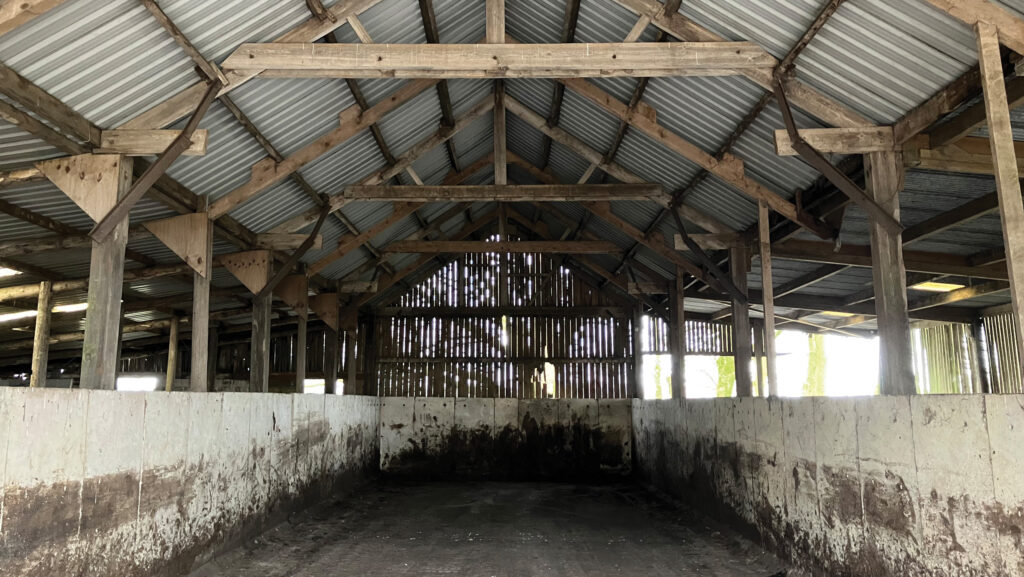 © Savills
 Many 20th-century farm buildings are being repurposed for diversification projects, but their conversion and change of use needs more care and attention at the early stages, advises Savills architect Andrew McRoyall.
His main concerns are the structural integrity and safety of buildings originally meant for one purpose when converted for another very different use, often involving occupancy by high numbers of people for many hours, such as farm shops, cafes, restaurants and attractions like play barns.
The additional loading on converted buildings can render them unsafe, says Andrew, giving the extreme example of a Dutch barn, which in its original state bears very little weight, with no walls and a very light roof.
See also: Farm building planning – health and safety obligations
Don’t assume that a building is safe simply because it has stood for a long time, he warns.
“When there is a plan to convert a farm building, a structural engineer’s report should be prepared to at least establish the condition of the frame and foundations, which will help with an assessment of whether a building is capable of conversion to the intended use,” he says.
If the building is inadequate, then decisions can be made about what work might make it suitable and the cost/benefit of doing so.
Building regulations on fire safety and occupancy standards should also be taken into account.
When converting an agricultural building for alternative use, several factors increase structural demands and classification including:
- Heavier cladding or roofing materials
- Higher density of occupation
- Hours of use for that occupancy
- Additional internal loads such as insulation and fixtures – for example, lighting and signs, also heating and ventilation equipment
- Adding mezzanine floors, which is a fairly common adaptation.
These changes can take a building way beyond its original design parameters, and without a proper assessment by a qualified person, the risks include structural failure and non-compliance with building regulations.
British Standards
Following a revision introduced in 2014, there are just two British Standards for farm buildings – Class 1 and Class 2 under BS 5502 (Agricultural buildings).
Prior to this there were four classes, each with a decreasingly shorter lifespan and more limitations on occupation.
Most farm buildings constructed over the past 45 years were built to meet the older Class 2 requirements, says Andrew.
These had a minimum design life of 20 years and an occupation restriction of no more than six hours a day at a density of two persons/50sq m.
The higher standards used for Class1 buildings mean these are expected to last at least 50 years and can cope with unlimited human occupation.
Class 2 structures can be up to 35% weaker than Class 1 equivalents, particularly at beam and purlin junctions, he warns.
Class 2 structures use thinner steel and the connections between the steel and the roof are less strong.
The lower load bearing of Class 2-4 structures was shown by the reported collapse of thousands of farm buildings in the winter of 2010-11, after heavy snowfall. Fortunately, no injuries were reported.
For those who have already converted buildings and are concerned that all may not be as it should be, a retrospective assessment can identify improvements to make sure it is fit for purpose for the current use and not leaving staff, customers and the business exposed to risk.
Andrew estimates the cost of a structural engineer’s report at between £750 and £1,000 in most cases.